
The latest innovations in healthcare, including diagnostic imaging, clinical audio capture, AI translation and engagement, help for eating disorders and gaming.
Welsh government invests £12 million in diagnostic imaging upgrade
The Welsh government has invested more than £12 million to replace ageing imaging systems across several health boards, including Aneurin Bevan, Cardiff & Vale, and Hywel Dda.
The funding is to replace obsolete CT, X-ray and bone density scanners that have become increasingly unreliable and difficult to maintain. By installing the latest digital technology, the initiative wants to reduce downtime caused by equipment breakdowns and ensure that patients across Wales are seen and treated more quickly.
The investment includes more than £6.7 million for nine new digital X-ray rooms across the Betsi Cadwaladr, Cardiff & Vale and Swansea Bay health boards. Furthermore, nearly £2 million will be used to upgrade fluoroscopy equipment at University Hospital Llandough, providing high-resolution, real-time imaging during complex diagnostic and treatment procedures.
These modern systems offer improved ergonomic features, such as automated positioning, which enhances staff efficiency and allows for a higher throughput of patients.
“We are replacing ageing equipment with the latest technology in a bid to improve the resilience, reliability and efficiency of diagnostic services across Wales,” said Jeremy Miles, cabinet secretary for health and social care. He noted that the new scanners will help increase the number of scans performed and improve patient flow through the healthcare system.
The upgrades also ensure that more patients can benefit from minimally invasive procedures supported by advanced imaging in radiology departments.
Heidi launches first hardware for clinical audio capture
Healthcare AI platform Heidi has launched Heidi Remote. This purpose-built wearable tool is designed to provide reliable audio capture in NHS and other clinical settings, moving away from bring-your-own-device workarounds.
The device addresses a gap in the hardware layer of healthcare, where ageing terminals and personal smartphones struggle to support the high-quality audio required for accurate AI scribing.
The hardware is specifically engineered for demanding medical environments, where noise levels can exceed 100 dB. Weighing 21g and offering 14 hours of battery life, the microphone clips onto clinical attire and functions independently of Wi-Fi, syncing data automatically once a connection is restored. This ensures that clinical notes remain accurate and consistent, regardless of room acoustics or background interruptions. By removing the need for a laptop or phone to be placed between the clinician and patient, the tool also helps to maintain more natural, face-to-face interactions.
“AI scribing has transformed how clinicians manage documentation, but the weakest link has always been the tool in the room,” said Heidi co-founder and chief executive Thomas Kelly.
A research report by Modality Partnership indicates that such technology can halve the time GPs spend on paperwork. This reduction in administrative burden allows healthcare professionals to redirect their focus towards direct patient care and more complex clinical tasks.

LanguageLine rolls out secure AI translation for NHS trusts
California-based LanguageLine Solutions has launched its AI translation app in the UK to provide British public and private sector organisations – including the NHS – with free access to secure, automated translation.
The deployment is one of the largest single releases of AI language technology in the country, designed specifically for regulated industries where data protection is paramount. The platform allows users to translate text and documents quickly while maintaining an integrated link to professional human linguists for quality assurance and complex content.
The app addresses growing concerns regarding the security and compliance of public AI tools by offering an enterprise-grade environment. It features a built-in quality-evaluation tool that scores every translation, giving users the choice to accept the output immediately, request AI-driven improvements, or escalate the work for human review and formatting. This ecosystem is intended to support multilingual communication at scale, and the company claims that it ensures that language barriers do not compromise the speed or safety of service delivery in healthcare and government settings.
“Free access to the AI translation app gives our clients the option to start translating quickly and confidently,” said Antonio Tejada, the firm’s vice president of translation and localisation. The system provides entry-level AI tools for everyday workflows. For organisations with high-volume requirements, the service also offers a corporate tier including advanced features such as automated subtitling and video translation.
Bramacare launches AI platform for real-time eating disorder risk
Bramacare, a specialist transitional eating disorder service for adults, has launched AMY, a clinician-developed AI platform designed to support specialist eating disorder and rehabilitation services.
The firm says that the system arrives amid a 40% post-pandemic surge in young people seeking treatment, a trend that has seen the NHS struggle to meet its one-week urgent referral targets. AMY functions as a unified system that integrates physical health monitoring with multidisciplinary care planning, specifically aligning with the Medical Emergencies in Eating Disorders (MEED) national guidelines.
The platform’s AI engine provides continuous, real-time risk stratification for complex concerns such as self-harm, falls and medication-related risks. By automating monitoring schedules and flagging missing observations, the tool reduces the administrative burden on clinical teams. Version-controlled care plans ensure that every clinician – whether a GP, consultant, or occupational therapist – is working from the same up-to-date patient record, effectively eliminating the data fragmentation that often hinders specialist care.
“Specialist eating disorder care is one of the most clinically complex areas of medicine,” said Sachindev Ramoo, clinical lead and co-founder of Bramacare. He explained that AMY was built to provide teams with a faster, safer way to make decisions while ensuring clinical governance is structural rather than merely procedural.
The system is set for its first NHS trust pilots later this year.

Docplanner scales patient access with Twilio-powered AI voice agent
Global healthcare platform Docplanner has partnered with customer engagement specialist Twilio to launch Noa Booking, an AI-powered voice agent designed to automate appointment scheduling.
Using Twilio’s programmable voice infrastructure, Docplanner can now offer patients a way to book appointments and receive instant confirmations via WhatsApp or SMS without the delays typically associated with traditional call centres.
The implementation addresses a challenge for healthcare providers which often struggle to scale administrative support across different time zones and languages. Early data indicate that doctors using the AI agent have seen twice the number of bookings compared to those relying on manual systems, with many appointments being secured outside of standard office hours. The platform’s ability to handle localised accents and provide a human fallback option ensures that the technology remains accessible to less tech-savvy users while maintaining clinical reliability.
“Docplanner is laser-focused on giving doctors and practices the tools they need to spend less time on admin and more time on what really matters – caring for their patients,” said Jake Kanter, vice-president of sales, EMEA, at Twilio. Chris Honey, product director at Docplanner, added that the scalability of the system ensures they can maintain the highest quality of service as they expand into markets such as Spain and Brazil.
Future updates to the AI agent are expected to include support for appointment cancellations, referrals, and insurance verification.
Hertfordshire Community NHS Trust to roll out ambient voice technology
Hertfordshire Community NHS Trust is set roll out its AI-powered ambient voice technology (AVT) following the successful completion of the largest pilot of its kind in England’s community and mental health services.
The Trust has signed a three-year contract for Accurx Scribe, which will be made available to more than 1,000 clinicians. The technology transcribes consultations in real time and automatically generates draft clinical notes and letters, which are then reviewed and approved by staff before being added to the patient record.
The decision to scale the technology follows a six-month pilot where 150 clinicians used the system to scribe over 13,000 consultations. Early data from the trial showed rapid adoption, with 2,500 notes generated in the first month alone across 13 different services. By reducing the administrative burden, the Trust expects the technology to support approximately 250,000 appointments per year, aligning with the NHS 10 Year Plan’s focus on using innovation to improve productivity and respond to growing patient demand.
“Ambient voice technology enables clinicians to be much more present with patients, and spend less time completing documentation after appointments,” said Elliot Howard-Jones, chief executive of Hertfordshire Community NHS Trust.
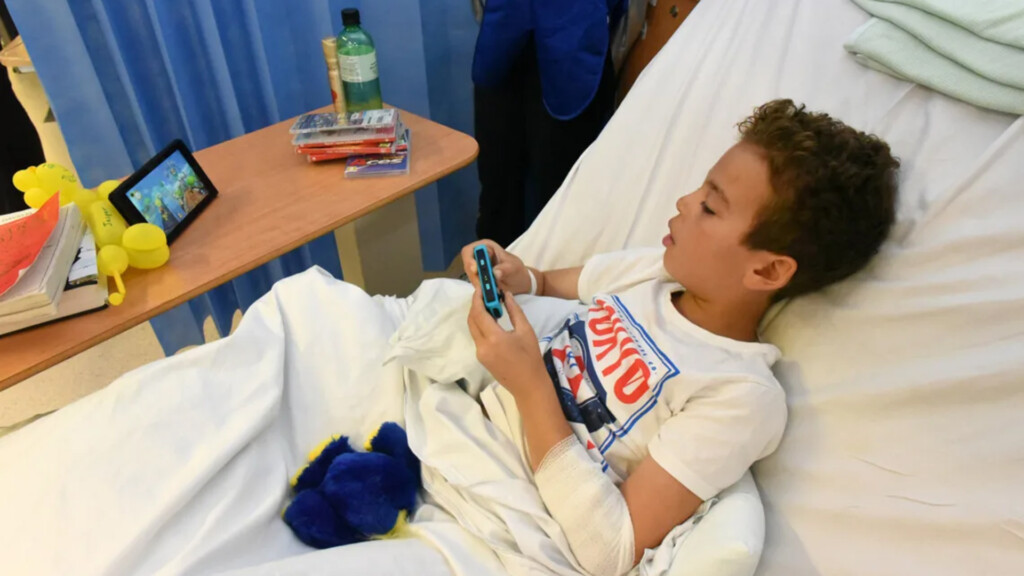
Starlight and STEALTH partner to launch new hospital gaming resource
Children’s health play charity Starlight has launched a new dedicated gaming service to support children undergoing treatment in hospitals and hospices across the UK.
The initiative is bolstered by a partnership with gaming accessory leader STEALTH, which has donated more than £27,000 worth of equipment – including controllers, headphones and racing wheels – to create a new Active Gaming Box. To date, more than 240 healthcare settings, including children’s A&E departments and mental health teams, have received the resource.
As well as entertainment, the Active Gaming Box is designed function as a therapeutic tool to aid physical and emotional recovery. By pairing STEALTH accessories with consoles and movement-based games like Ring Fit Adventure, the resource encourages gentle exercise that can support physiotherapy goals, such as building strength and balance. This active approach to gaming helps reduce patient anxiety, provides a sense of progress, and offers a much-needed distraction during long hospital stays.
“Play has an extraordinary ability to reduce stress and bring joy during some of the toughest moments in a child’s life,” said Nicola Wilson, Starlight’s head of corporate fundraising.