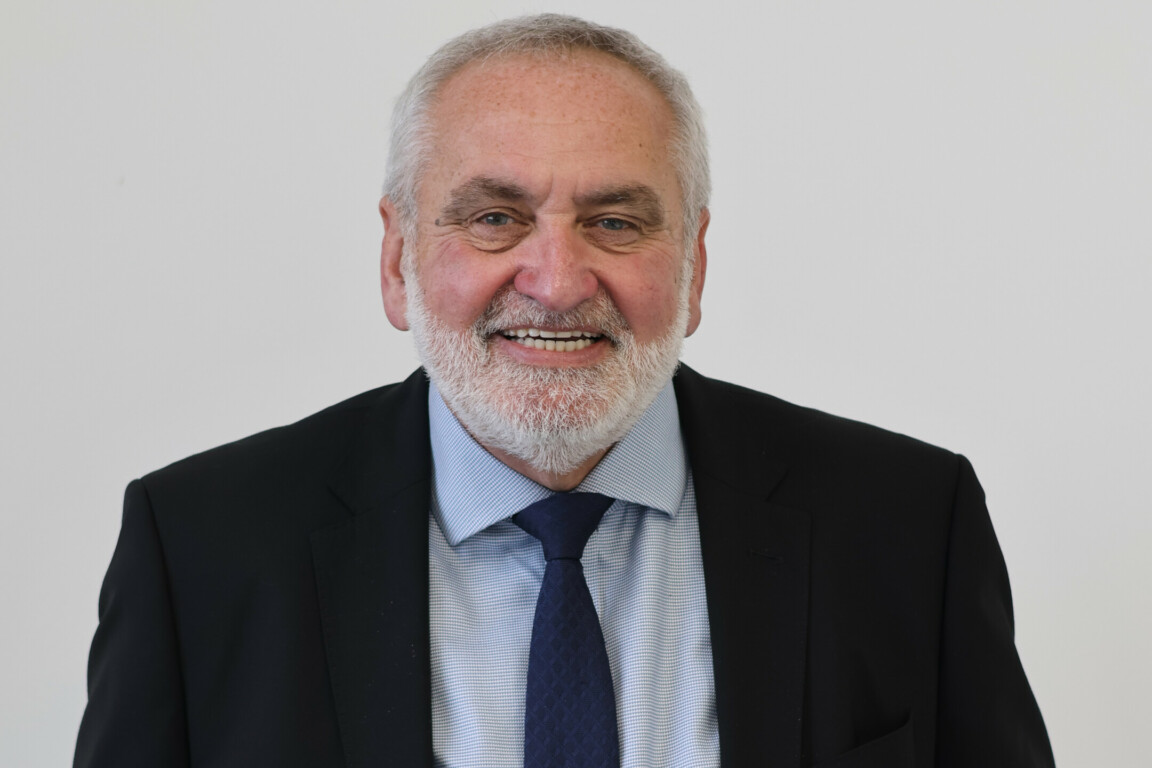
The former chief executive of Nuffield Health says that societal change, the pressure of costs and demand for healthcare have changed the healthcare landscape since COVID-19.
Steven Gray, the former chief executive of Nuffield Health, has returned to the sector in a new strategic role with Maulin Group. As the landscape for both NHS and independent organisations becomes more complex, Gray sees an urgent need for integrated expertise that can help providers navigate risk, strengthen governance and adapt to shifting models of care.
Here, he talks to Healthcare Today about the shifts in the healthcare-provider landscape, how to handle clinical risks and why a professional services triage system is appealing.
What are the biggest shifts shaping the healthcare-provider landscape at the moment?
It is a broad question, but the direction of travel is clear. The healthcare landscape in the UK has shifted dramatically, with more change in the past five years than in the previous 15 years. The COVID-19 pandemic accelerated trends that were already emerging, acting as an extreme stress test on the system.
Emerging from that period, several significant shifts have become apparent. The most profound is the change in societal attitudes towards healthcare. People now recognise far more acutely that they must take responsibility for their own health and wellbeing. This shift was necessary. A model designed in the 1940s simply does not function in today’s environment.
Alongside attitudinal changes, rising costs are placing further strain on the system. Over the past five years, staffing, buildings, equipment and capital have all become significantly more expensive. Borrowing is no longer cheap, and investors now require higher returns, reducing appetite for investment.
The third major pressure is volume. Demand for healthcare has risen sharply. The pandemic backlog remains unresolved more than five years on, and population health has deteriorated. More patients now present with multiple long-term conditions, and for the first time in many years, average life expectancy in the UK has begun to fall. The system faces more patients, with more complex needs, requiring more interventions at a higher cost.
“Patient quality and safety have come to the forefront more than ever before, largely for negative reasons.”
It might seem brief – only 15 months – but how have pressures around risk, regulation and patient safety changed since you stepped down from Nuffield Health?
Patient quality and safety have come to the forefront more than ever before, largely for negative reasons. High-profile cases, alongside rising litigation and pressure from insurers to minimise claims, have all contributed to this renewed focus.
Two factors appear to be at play.
First, there is an economic dimension that few would acknowledge publicly. Many surgeons lost significant income during the pandemic, and it appears that some may have increased their volume of procedures to make up for that shortfall. The trend towards increasingly episodic interventions – treating single issues in isolation rather than considering the whole patient pathway – has also intensified. This short-term approach risks undermining longer-term outcomes and, in some cases, may compromise safety.
Second, there has been a realisation that high-quality care can no longer be taken for granted. There have been too many examples showing that entering a hospital does not always guarantee access to the best expertise and practice. As a result, scrutiny has tightened, driven by some deeply troubling incidents.
The challenge now is to prevent bureaucracy from obstructing progress. Process must not get in the way of improvement. Efforts by the government and NHS leadership to reduce layers of quangos and streamline decision-making are therefore understandable. But regulatory bodies must not only be fit for purpose, but fit for the future.
Healthcare organisations – whether providers, practitioners, or regulators – risk losing focus when they are constantly looking over one shoulder at financial pressures and over the other at media attention or political noise. This distracts from the central task: caring for patients. The system needs stability so that providers and clinicians can focus wholly on patient care.
Is the rise of integrated advisory firms a response to the financial and regulatory strains that providers now face?
One of the reasons for being drawn to the Maulin Group is that it brings together areas that are usually treated in isolation. Rather than focusing solely on the size of legal claims, how to reduce indemnity cover, or what technology might be required, it takes a much broader view. It operates almost as a professional services triage system, recognising that many independent providers – and many NHS trusts, for that matter – simply do not have the resources to carry out robust clinical governance reviews, quality reviews, or to update their protocols and processes.
Approaching organisations with a triage mindset – conducting a full scan of their needs and directing resources to where they are most needed – allows issues to be fixed at source. This can be done from a clinical, administrative, or leadership perspective and amounts to a comprehensive quality review. The Maulin Group can offer this through its professional support services, which is precisely what makes the approach appealing.
Do you anticipate more providers – both NHS and independent – turning to external partners for risk, legal or governance support?
I think so. If you take those two things, the economic factors and the risk factors, it means let’s stick to what we’re good at. If we focus on that, we’re not looking over our shoulders, so we can concentrate on what we do and bring the experts in to handle everything else.
When I was looking at Nuffield Health, we started to build different competencies, different functions, even different service lines, until it reached a point where, in one of our medium-sized hospitals, we were doing 46 different specialities. There’s no way we were going to be experts in all of those specialities in a 60,000-square-foot hospital. So we focused on the 12 we knew we could be really good at.
You have to know what your core areas of competence are. For smaller companies, the things that got them to where they are now need to be the things that take them to the next stage too, rather than constantly adding new functions.
Bringing in experts is more important in healthcare than in any other sector I can think of.
How do you expect specialists like Maulin Group to change the way healthcare organisations manage clinical risk?
You genuinely have two options. You bring the experts in to do the assessment. Then you look at the results and decide whether a particular skill is something you need to develop internally. If it should be a core competency, then you develop it. If not, you treat it as an outsourced competency. It depends on the organisation.
Both options are valid. But in the short term, healthcare provision in the UK is going to become even more fragmented. There will be more independent providers, more SMEs offering different elements of healthcare. A provider might handle one part of a patient pathway, but go elsewhere for diagnostic imaging or for cancer treatment.
A group like the Maulin Group can help knit those relationships together, ensuring they have the right legal and insurance cover across the whole network.
“Trusts could save substantial amounts by using a group like Maulin to improve clinical protocols.”
The government has made a great deal about the public and private sectors working together. How is that collaboration in the UK evolving? And where does Maulin Group fit into that picture?
I think there’s a short, medium and long-term answer to that. In the short term, it has become more difficult for independent companies working with the NHS. In the short term, commissioning has been harder, and there has been less work coming from the NHS to the private sector over the past twelve months compared to the previous three years. That’s a temporary dip, though, and common sense tells you it won’t last.
In the medium term, health secretary Wes Streeting has recognised that external investment is essential, both for capital and service provision. This medium-term shift will begin to take effect in the first quarter of next year, once we enter the new NHS year in April. The purse strings will start to relax, and investments in neighbourhood health centres will increasingly go to the independent sector rather than the NHS, because we can deliver the same service for about a third of the cost. This has been proven.
Looking further ahead, the third phase will probably occur under the next parliament. We need a government with a 10-year horizon to implement lasting fixes. That’s when potential funding models could change, creating a system less reliant on the state and involving the holy trinity of state, individuals, and corporates in funding healthcare.
For the Maulin Group, the timing is perfect. It is well placed to provide relatively quick wins in both safety and cost. Trusts could save substantial amounts by using a group like Maulin to improve clinical protocols. This creates a win-win: better outcomes for patients while reducing costs. The economic need, the clinical efficacy need, and the increasing use of independent providers in partnership all point to the value of Maulin Group’s services.