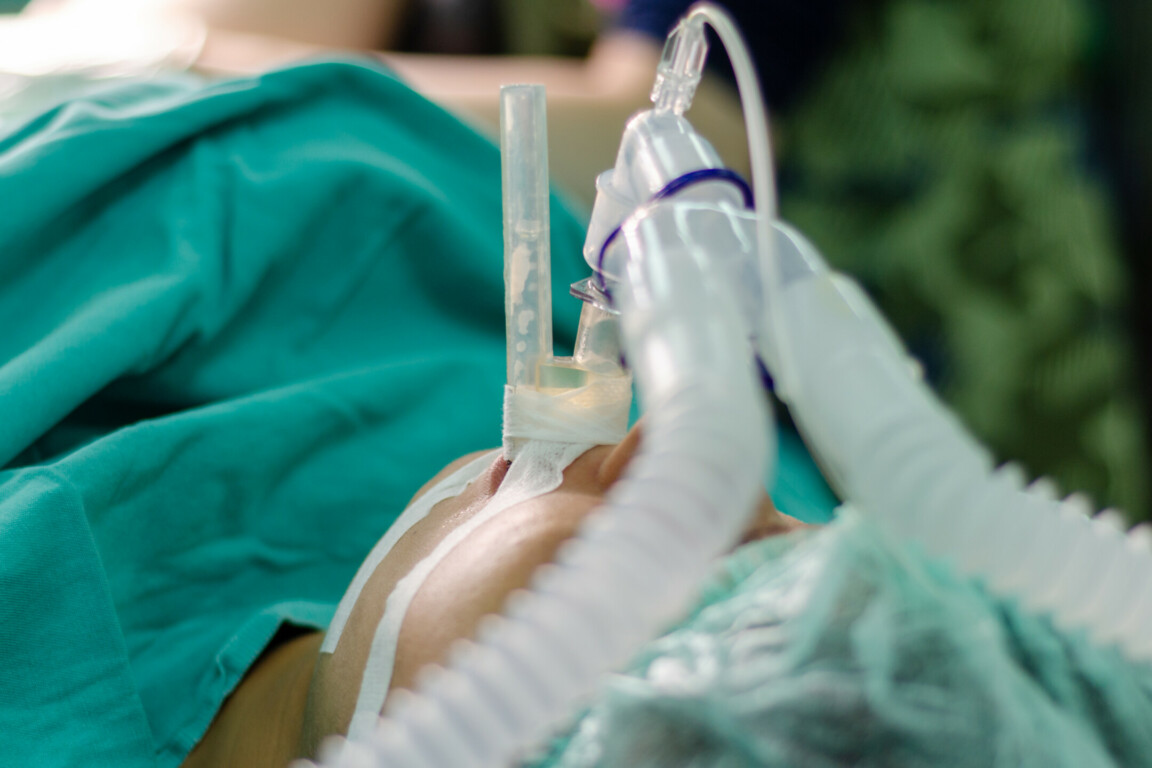
A UCL and Severn Major Trauma Network study finds that inserting breathing tubes before hospital arrival could save 170 lives in Britain each year.
Trauma patients urgently requiring a breathing tube are more likely to survive if the tube is inserted before arriving at hospital compared to insertion afterwards, suggests a modelling study led by researchers at UCL and the Severn Major Trauma Network.
Although there has been a lack of high-quality evidence on the best time to start certain types of care for major trauma patients, such as the insertion of breathing tubes, researchers found that prehospital emergency intubation of high-risk trauma patients could improve 30-day survival by 10.3% and could save 170 lives each year in the UK.
Prehospital intubation needs to be administered by an advanced critical care team, specially trained and equipped to administer the anaesthesia required to facilitate the insertion of breathing tubes. In the UK, this is currently provided only by the air ambulance services.
“The airway is a top priority in major trauma, but the question of whether we should intubate before hospital arrival is unsettled because we cannot ethically conduct a randomised trial,” said joint first author Amy Nelson from UCL Queen Square Institute of Neurology.
“Emergency care decisions made before hospital admission depend on the combination of many measurements taken under pressure. We used these measurements to answer the question in steps: We first built a machine-learning model to identify high-risk patients, then we modelled the impact of early intubation in this group, which showed us that prehospital intubation saves lives.”
Machine learning model
For the study, researchers analysed data from 6,467 trauma patients treated at Southmead Hospital Major Trauma Centre, Bristol.
They used AI-assisted modelling to predict both who would need intubation and who would likely survive – to isolate the impact that intubation had from other factors such as the injury severity. A new machine learning model they developed predicted outcomes based on eight routinely collected prehospital measurements.
The researchers found that among high-risk patients who were identified by the model as needing intubation (229 patients), those who received it before arriving at hospital were 10.3% more likely to survive (within a 30-day period) compared with those who did not.
By scaling up their findings relative to national trauma incidence, the researchers estimate that if every trauma patient who needed prehospital intubation was given it, 170 lives could be saved each year in the UK – roughly one life saved every other day.
Additionally, they conducted a cost-effectiveness analysis, finding that cost savings would be in the range of £101 million annually for the UK, due to reduced costs of further care and lives saved.
“In medicine, action and inaction are not morally asymmetric. When we cannot have randomised controlled trial evidence for an intervention, we must use the best available alternative: causal inference from real-world data, assisted by artificial intelligence, the only technology with the power to address the complexity of biological systems,” said joint first author Parashkev Nachev at the UCL Queen Square Institute of Neurology.
The study was funded by Wellcome and the National Institute for Health and Care Research, UCLH Biomedical Research Centre.