Add us as a preferred source
The latest investment rounds, grants, and strategic partnerships across healthtech, medtech and life sciences, featuring an intimate female health brand, virtual patient simulation and a frontline workforce AI platform.
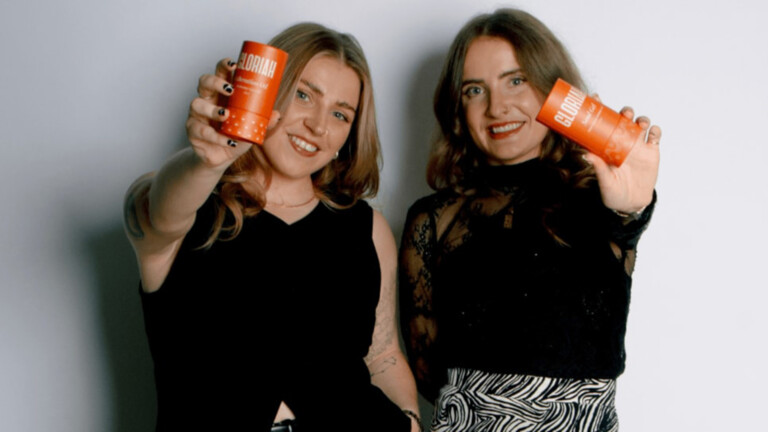
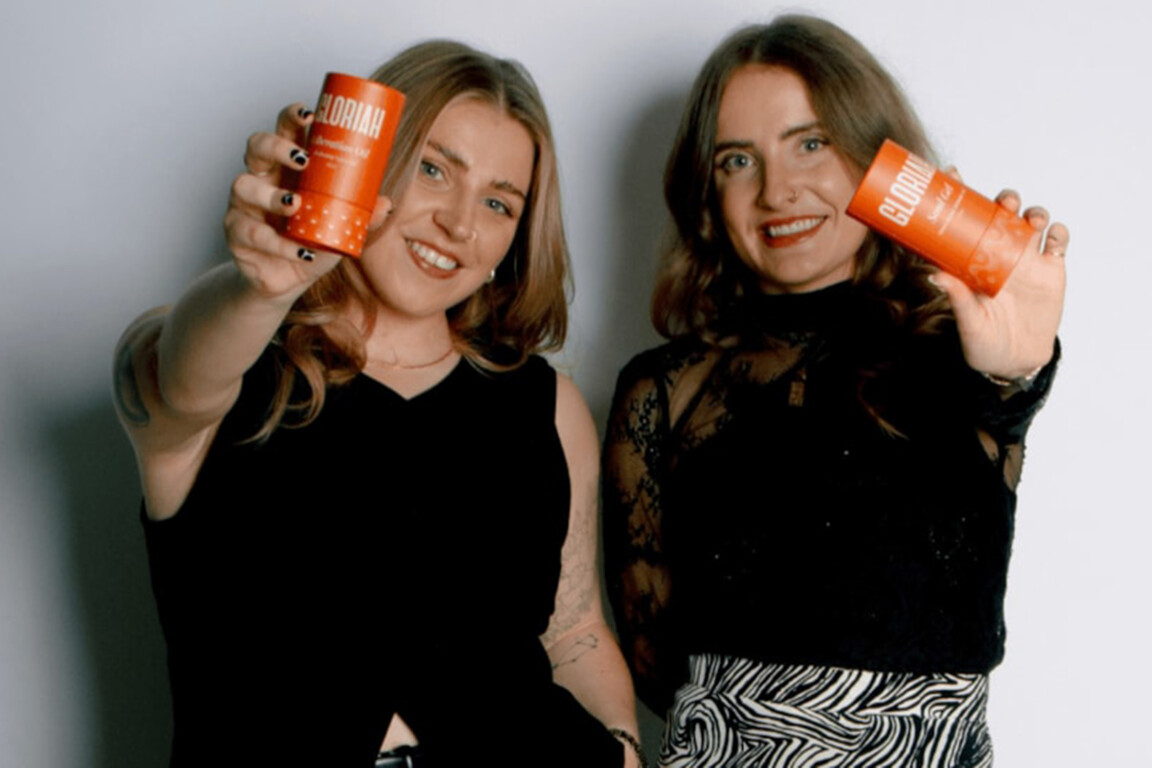
GLORIAH lands £600,000 seed round
Edinburgh-based female health brand GLORIAH has closed an oversubscribed £600,000 seed funding round, exceeding its initial £500,000 target.
The round was led by Gabriel Investment Syndicate, with participation from Highland Venture Capital, Investing Women Angels, Apollo and Scottish Enterprise.
Founded in 2021, GLORIAH develops modern intimate health products designed for women experiencing hormonal changes and menopause, including its Soul Gel lubricant and Liberation Oil. The brand has built strong consumer momentum – it recently exceeded 7.5 million views in a single month across social media – and is launching on Boots.com alongside a confirmed QVC UK slot and upcoming distribution on Amazon US.
The capital will be used to scale its UK retail footprint, prepare for US market entry, advance regulatory work, and accelerate marketing efforts.
“GLORIAH exists because too many women are still expected to tolerate discomfort, embarrassment or dismissal when it comes to their intimate health,” said co-founder Jessica-Rose Watson. “We want to change that by giving women products, education and language that help them feel seen, informed and able to advocate for themselves.”
XRlabs raises $8.4 million seed round
London and Palo Alto-based surgical intelligence startup XRlabs has raised $8.4 million (£6.5 million) in a seed funding round led by Playground Global, with participation from Eka Ventures. Alongside the investment, former Medtronic chairman and chief executive Omar Ishrak has joined XRlabs as chair of the board of directors.
XRlabs develops a device-agnostic software platform that embeds real-time physical AI and computer vision directly into the operating theatre. By acting as an external intelligence layer over existing 4K 3D scopes, navigation equipment and pre-operative CT and MRI imaging, the platform delivers real-time, anatomy-aware visual and workflow support without requiring hospitals to replace hardware.
The seed financing – complemented by a compute allocation on the UK AI Research Resource (AIRR) – will be used to expand the company’s engineering and clinical teams, advance regulatory approvals across the UK, EU and US, and scale clinical trials across international partner institutions.
“Our conviction is that the operating room is the next frontier for physical AI,” said Ali Haddad, founder and chief executive of XRlabs. “Surgery generates extraordinary data, yet almost none of it becomes intelligence in the moments that matter most. This financing lets us change that at scale, moving Surgical Intelligence from landmark first cases to foundational infrastructure in every operating room.”
Unravel Health secures €2.96 million seed funding
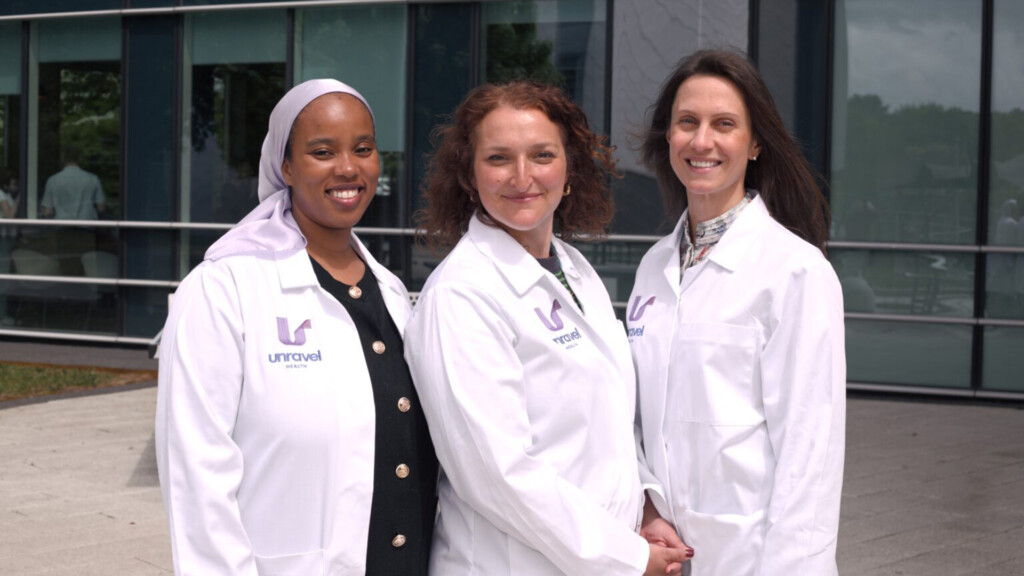
Stevenage Bioscience Catalyst-based healthtech company Unravel Health has announced a €2.96 million seed funding round to develop saliva-based technology designed for regular, at-home hormone monitoring.
The round was led by Conduit Connect and Henry Engelhardt, with participation from Leo Capital, Embryo Ventures, Hermesa, follow-on investor Zinc, and a group of angel investors.
Building on over a decade of research at the University of Glasgow, Unravel Health addresses the limitations of single blood tests by enabling continuous tracking of hormone fluctuations over weeks and months. The platform aims to provide women and clinicians with detailed data to better understand symptoms such as migraines and mood changes, and to evaluate how medications impact hormone levels.
“That’s what we want to do at Unravel Health – bring this detailed understanding of how hormones change over weeks and months into healthcare,” said co-founder Liza Levy.
adsilico raises £10 million Series A
University of Leeds spinout adsilico has secured £10 million in a Series A funding round led by PXN Ventures, with continued participation from existing investors Northern Gritstone and Parkwalk.
Founded in 2024, adsilico uses generative AI and physics-based simulation to assess medical device performance across diverse virtual patient populations. Its Virtual Chimera platform constructs realistic digital hearts and blood vessels from anonymised scans to model how implants like heart valves and stents perform across varied anatomies, addressing demographic gaps in traditional clinical trials – where women and other cohorts are frequently underrepresented.
The Series A capital will be used to expand the company’s heart models, scale its technology into neurovascular devices such as brain aneurysm flow diverters, and more than double its team from 14 to 34 employees.
“Patients miss out on the chance of a life-saving device, or face uncertainty about whether it will work for them, because people like them weren’t represented when it was designed and tested,” said chief executive and co-founder Sheena Macpherson. “This investment enables us to grow our team and extend our reach beyond virtual hearts into new therapy areas.”
Firstwork raises $15 million Series A
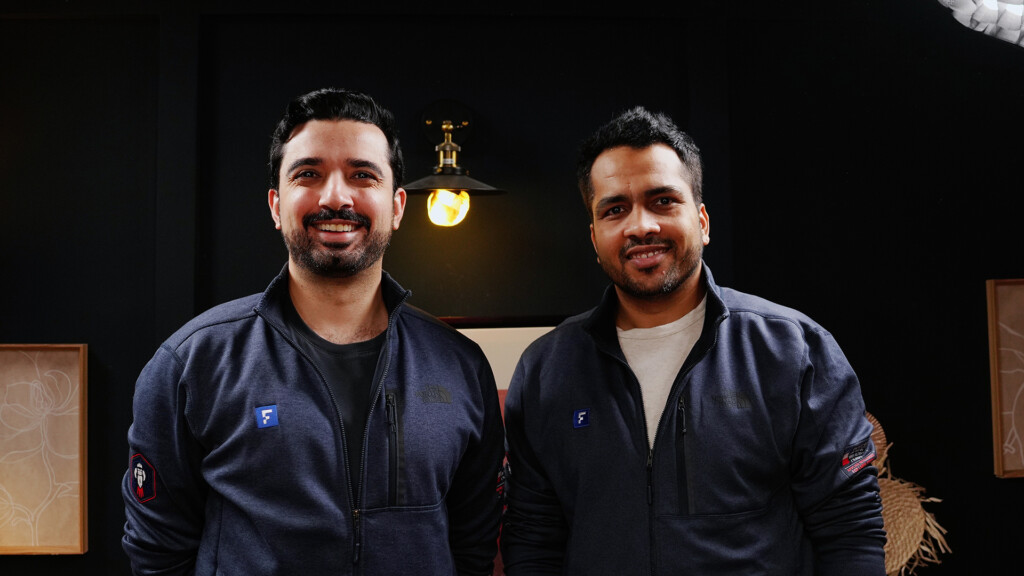
New York-headquartered applied AI startup Firstwork has secured $15 million (£11.2 million) in a Series A funding round led by Earlybird Venture Capital to fund its push into Europe.
The round included participation from Legion VC, Deel Ventures, and existing investors Gradient and Y Combinator, taking the company’s total funding to $20 million.
Founded in 2024, Firstwork develops AI agents designed to automate administrative operations involved in preparing frontline employees for work and managing ongoing compliance across healthcare, logistics, and energy sectors. The platform integrates with existing HR, payroll and screening systems to handle background checks, right-to-work verifications, document management, and worker support, reducing the time spent on new hire administration by up to 90% for clients including Deel, Job&Talent, Relay and Wonolo.
The capital will fund expansion across the United States and Europe, grow its applied AI, research, engineering, and go-to-market teams, and broaden its agent workflows into areas such as credential renewals and recurring training.
“The systems employers rely on were built to record what happened, not to actually do the work,” said co-founder and chief executive Vardhan Kapoor. “Applied AI changes what is possible. We can now give every frontline worker the kind of support that used to be reserved for the top of the labour market, from the moment they apply through every stage of their employment.”
Undecimal Bio launches with $18 million seed round
Cambridge and Tel Aviv-based platform biotechnology company Undecimal Bio has launched with an oversubscribed $18 million (£14 million) seed funding round. The round was co-led by 4BIO Capital and IQ Capital, with participation from Verve Ventures, Harel Tech, Entree Capital, Kerna Ventures and Saras Capital.
Spun out from Eleven Therapeutics, Undecimal Bio uses its AI-enabled platform, DELiveri, to decode the “deliverome” and overcome the “liver trap” in genetic medicine. By combining synthetic biology with agentic AI to screen large combinatorial libraries of candidate ligands at single-molecule resolution, the platform identifies conjugates that carry small interfering RNA (siRNA) medicines into cell types beyond the liver.
Operating out of laboratories at the Cancer Research UK Cambridge Institute, Undecimal will use the capital to advance the DELiveri platform, expand its research team and progress its internal therapeutic pipelines, starting with an initial focus on renovascular diseases.
“The hard problem in RNAi was never the silencing, it was getting the molecule to the right cell,” said Yaniv Erlich, chief executive and co-founder of Undecimal Bio. “Our in vivo validated DELiveri platform can screen large chemical spaces at an unprecedented pace, generating massive data for our legions of AI agents to decipher the structure-activity relationship and score the best candidates.”
Microbiotica closes £36 million Series C
Cambridge-based biopharma company Microbiotica has secured the first close of a £36 million ($48 million) Series C funding round. The financing was led by the British Business Bank, with participation from Tencent, IP Group, Cambridge Innovation Capital, Flerie Invest, Seventure Partners, and all existing Series B investors.
Spun out of the Wellcome Sanger Institute in 2016, Microbiotica uses a genomics-driven platform combining bacterial culture collections, human reference genome databases, and machine learning to identify live biotherapeutic products (LBPs).
The Series C proceeds will primarily fund a randomised, double-blind, placebo-controlled Phase 2 clinical trial of its lead oral candidate, MB310 – a once-daily capsule comprising eight live gut commensal bacterial strains designed to repair the gut epithelial barrier and promote sustained clinical remission in ulcerative colitis.
The capital will also support Microbiotica’s broader precision microbiome pipeline, including MB097, an immuno-oncology asset currently being evaluated alongside MSD’s KEYTRUDA (pembrolizumab) in advanced melanoma.
“This financing marks an important next stage for Microbiotica and reflects the significant progress we have made in translating our powerful genomics-driven microbiome platform into clinical-stage products,” said chief executive officer Tim Sharpington. “We are now focused on taking MB310 into Phase 2 clinical development, where we have an opportunity to further establish MB310 as a breakthrough treatment option for people living with ulcerative colitis.”