Add us as a preferred source
The latest investments in digital health and life sciences, including a seed round for an ophthalmic delivery platform, Series D funding for an oncology platform and a share placement for a digital healthcare and weight-loss clinic.
Healome Therapeutics raises £2 million in oversubscribed seed round
Birmingham-based biotechnology company Healome Therapeutics has closed an oversubscribed £2 million seed financing round to accelerate the development of its proprietary eye-drop matrix technology.
The round was led by Empirical Ventures, with participation from DEBRA Research, Cure EB, Oshen Bio and existing early-stage backer SFC Capital.
The University of Birmingham spin-out will use the capital to fund advanced preclinical development, scale up its Good Manufacturing Practice (GMP) manufacturing infrastructure, and advance regulatory engagement with the MHRA and FDA as it targets its first-in-human clinical studies next year.
Conventional ophthalmic treatments for ocular surface diseases suffer from poor retention rates, with standard liquid eye drops clearing from the eye within minutes. This forces patients to adhere to intense dosing regimens of up to 20 applications per day, which can drive adherence rates down to 20% in chronic-use patient populations. This severely limits the real-world therapeutic efficacy of both small molecules and complex biologics.
Healome bypasses this retention barrier through a smart, structural polymer platform. Built on established pharmaceutical- and food-grade polymers, the eye-drop matrix behaves as a standard liquid when applied, but rapidly restructures upon contact with the ocular surface to form a clear, lubricating and protective gel matrix. Because the system avoids complex chemical modifications, it simplifies manufacturing scale-up and regulatory approval pathways. The platform has already demonstrated preclinical success, delivering an anti-scarring biologic to severely injured and infected corneas, resulting in rapid healing with minimal side effects.
A focus of this financing round is the clinical translation of the platform to address severe and rare disease manifestations. Strategic investment from DEBRA Research and Cure EB will directly support R&D targeting ocular complications associated with epidermolysis bullosa, a rare genetic condition affecting roughly 500,000 people worldwide. Between 5% and 20% of these patients suffer from severe ocular complications, including recurrent corneal abrasions and chronic pain.
“Using our matrix to extend residence time of novel and existing therapeutics opens the door to reduced dosing, better adherence, and ultimately improved outcomes across a range of indications,” said Healome chief executive Richard Williams. “This financing lets us drive the platform toward the clinic.”
Alchemab Therapeutics extends Series A funding
Clinical-stage biotechnology company Alchemab Therapeutics has extended its Series A financing round with a £25 million investment from the British Business Bank. The transaction is the largest individual investment in a life sciences company to date by the UK government’s economic development bank.
The capital injection brings Alchemab’s total Series A funding to £109 million. Funds raised will accelerate the development of the company’s clinical pipeline and expand its antibody database from 500 million to more than one billion sequences.
Traditional drug discovery approaches focus on target identification based on disease pathology, often designing synthetic compounds to inhibit aberrant proteins. Alchemab instead focuses on disease-resilient individuals. The company’s platform integrates sequencing of human antibody repertoires with machine learning and lab-based validation to mine these naturally protective, autoprotective immune signatures. Via AI-derived algorithms to search through patient-derived immune datasets, Alchemab uncovers naturally occurring protective antibodies that can be developed into therapies.
The potential of the platform was validated by the development of the company’s first clinical asset, ATLX-1282. The antibody therapeutic, currently in clinical development for the treatment of amyotrophic lateral sclerosis (ALS), was licensed to Eli Lilly in a deal worth up to $415 million (£307 million). Under the agreement, Alchemab leads early Phase 1 clinical testing, after which Lilly assumes responsibility for global late-stage clinical development and commercialisation.
Founded in 2019, the Cambridge-based company has a syndicate of specialist life sciences investors, including SV Health Investors, RA Capital Management, DCVC Bio, Eli Lilly, Lightstone Ventures, Ono Venture Investment and Camford Partners.
“This investment provides further validation of the sustainable, long-term potential of our drug discovery platform and will enable us to further accelerate our pipeline of first-in-class antibody therapeutics for conditions with significant unmet need,” said Alchemab Therapeutics chief executive officer and co-founder Jane Osbourn.

Draig Therapeutics raises $65 million Series B
Wales-based clinical-stage biopharmaceutical company Draig Therapeutics has closed an oversubscribed $65 million (£50.5 million) Series B financing round.
It was led by new investor Deep Track Capital, with significant participation from Janus Henderson, Marshall Wace and Jefferson Life Sciences, alongside the British Business Bank.
The capital will accelerate Draig’s clinical pipeline of modulators engineered to restore functional neural signalling balance in the brain. Specifically, the funding will advance the company’s lead therapeutic program, DT-101, through its ongoing Phase 2 clinical trials to treat major depressive disorder (MDD) and fund the progression of its preclinical pipeline – which includes selective GABA-A receptor modulators – toward first-in-human studies.
Draig’s lead candidate, DT-101, is an orally administered positive allosteric modulator of AMPA receptors. Rather than directly activating the receptor, DT-101 is engineered with a wide therapeutic index and a pulsatile pharmacokinetic profile designed to amplify the brain’s natural response to glutamate. This aims to rebalance excitatory neural circuits, delivering a rapid and robust antidepressant response while simultaneously mitigating cognitive impairment. The candidate is currently undergoing evaluation in two distinct clinical studies: a potentially registrational global Phase 2 monotherapy trial enrolling over 300 MDD patients, and a secondary Phase 2 study evaluating DT-101 as an adjunctive therapy alongside standard-of-care antidepressants.
“Major depressive disorder remains one of the largest unmet needs in medicine. This new financing will enable us to accelerate the development of our pipeline and bring us closer to our ultimate goal: to restore the brain to a healthier state and enable patients to live their best lives,” said Draig Therapeutics president and chief executive officer Ivana Magovčević-Liebisch.
Leo Cancer Care raises $65 million Series D
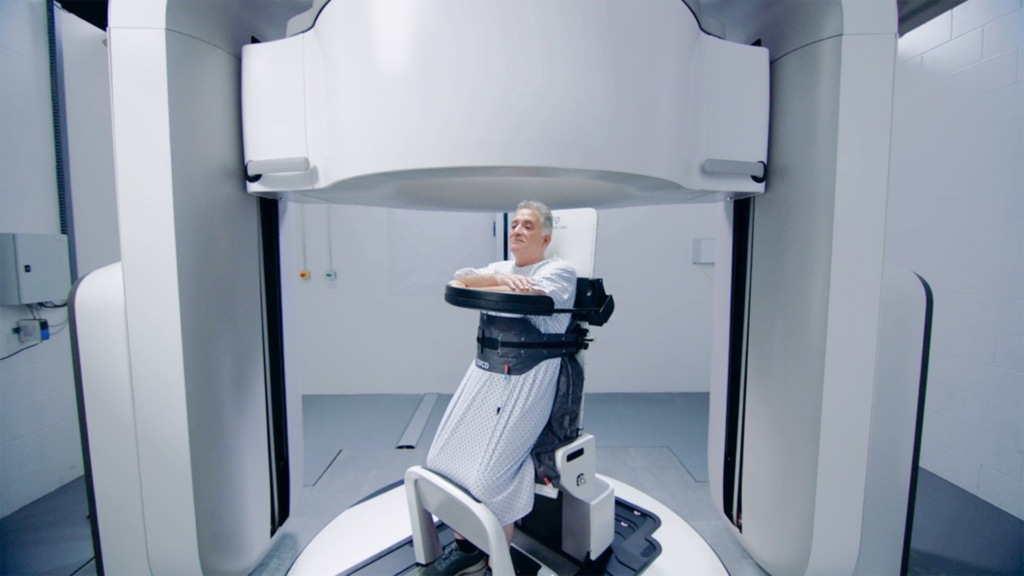
Medical technology company Leo Cancer Care has closed an oversubscribed $65 million (£50.5 million) Series D round to expand the manufacturing, commercial deployment and clinical development of its upright radiation oncology platform.
The round was led by Silicon Valley-based venture firm Yu Galaxy, with participation from Eventide Asset Management alongside continued support from existing institutional backers.
The capital injection will scale the global commercial footprint of the company’s hardware and software across photon therapy, proton therapy and clinical imaging modalities, while funding a new strategic partnership with an international healthcare corporate partner.
Conventional radiation oncology is fundamentally constrained by heavy machinery. Leo Cancer Care has an upright treatment and imaging platform. Built on the principle that the human body is more stable when seated or standing, the system uses a fixed radiation beam and rotates the patient in a specialised chair. By removing the need for a rotating gantry, the system reduces the physical footprint of a proton therapy suite by approximately five times, allowing advanced particle therapy to be retrofitted into standard, pre-existing radiotherapy vaults at a fraction of the traditional capital cost.
For children, Leo’s platform integrates a gamified educational software program designed to prepare paediatric patients for treatment to reduce or eliminate the need for daily clinical sedation.
“Our treatment approach is to reimagine how care is delivered, designed around the patient rather than the machine, so advanced treatment can reach communities that never had access before, without compromising quality,” said Leo Cancer Care chief executive officer and co-founder Stephen Towe.
Neuronostics secures £3 million equity funding
Bristol-based medical technology company Neuronostics has raised £3 million in an equity funding round co-led by deep-tech specialist Empirical Ventures and The FSE Group.
The British Business Bank’s South West Investment Fund, Ascension Ventures, QantX, New Wave Venture Partners and Angel Investors Bristol also participated. The equity round was further leveraged by a £400,000 Innovate UK Investor Partnerships grant.
The fresh capital will be used to support three core strategic priorities: navigating US regulatory and reimbursement pathways ahead of a planned FDA submission later this year, accelerating clinical adoption across the NHS, and expanding the software platform to identify neural biomarkers of drug response in clinical pharmaceutical trials.
Clinical epilepsy diagnosis is currently hampered by diagnostic delays and high rates of clinical uncertainty. The primary bottleneck is that standard, non-invasive electroencephalogram (EEG) recordings – the primary clinical tool used to measure brain activity – remain inconclusive in over 70% of initial investigations.
Neuronostics uses computer algorithms to analyse background brain activity across eight predefined computational biomarkers derived from peer-reviewed neuroscience. The platform generates an objective clinical decision support report in under five minutes from a standard EEG recording, indicating the likelihood that a patient’s symptoms are caused by epilepsy. Currently UKCA-marked and ISO-13485 certified, the platform has been clinically validated across 1,000 patient recordings spanning 15 NHS sites, with active service evaluations underway at multiple Trusts, including The Royal Wolverhampton NHS Trust and University Hospitals Dorset.
To scale its clinical footprint internationally, Neuronostics has established a strategic partnership with Stratus, the largest provider of EEG services in the US. This positions its platform for rapid commercial deployment into the US clinical market immediately following FDA clearance via the De Novo pathway.
“We have the scientific foundation and clinical evidence for [our digital biomarker platform] BioEP,” said John Terry, co-founder and managing director of Neuronostics. “The quality of the investor syndicate reflects the strength of the commercial opportunity that builds from this. The regulatory path is clear, the partnerships are in place, and NHS adoption is building. Patients should not have to wait so long for answers.”
MedPal AI raises £5 million in share placement
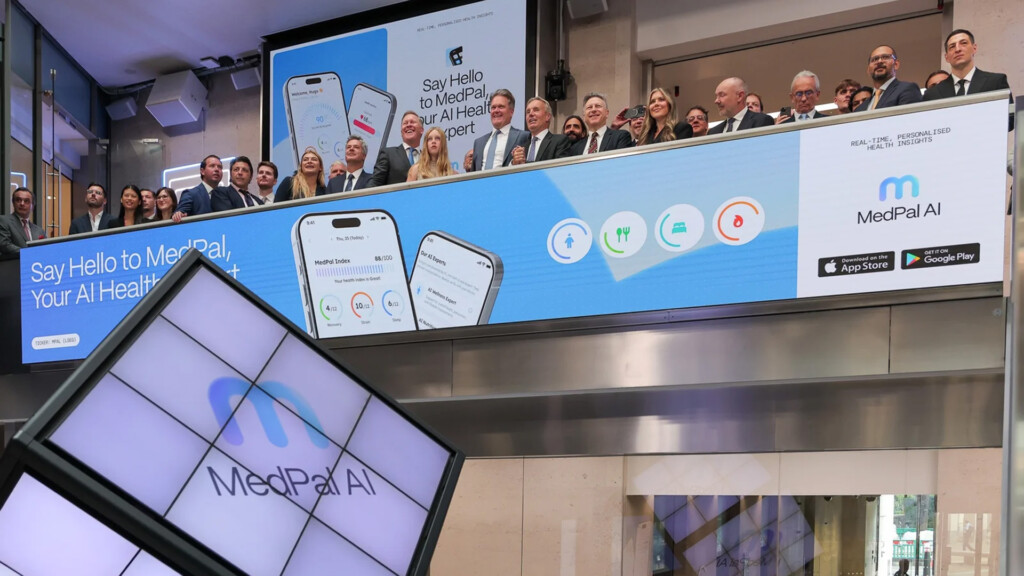
London-based digital health and artificial intelligence developer MedPal AI has raised £5 million equity funding to finance targeted acquisitions and support its weight-loss clinic ahead of a landmark pharmaceutical launch.
Arranged by OAK Securities, it sold 142.9 million shares at 3.5 pence per share. The price was a 12.5% discount to the company’s closing share price on 2 July. Notably, this was a 40% premium over its £3 million capital raise in April.
Alongside the placement, MedPal AI is also issuing 10.9 million shares to settle outstanding contractual obligations with existing service providers and consultants. The transaction structure allows the group to satisfy these liabilities in full without using its cash reserves. The company’s share capital is now made up of 769.8 million shares.
The group will allocate £500,000 of the net proceeds to acquire Solid State Technologies, a developer of electronic medicines administration record (eMAR) software. Solid State Technologies provides the point-of-care digital software layer used within care homes already served by MedPal Pharmacy. By integrating this software with its robotic dispensing hubs and business-to-business supply channels, MedPal AI will establish a fully closed-loop medication management platform.
The remainder of the capital will primarily back the commercial rollout of New Health, the company’s subscription-based private weight-loss clinic. MedPal AI will use up to £3 million to fund inventory acquisition and patient marketing to capture the UK launch of oral Wegovy. Each active subscription patient is projected to generate roughly £2,400 in recurring annual revenue.
“Raising £5 million at a 40% premium to our April placing price is a strong endorsement of the progress MedPal has made,” said MedPal AI chief executive Jason Drummond. “The acquisition of Solid State Technologies completes our closed-loop care-home platform and brings established, profitable, recurring software revenue into the group.”
Spirit Health secures £2 million debt facility from Midlands Engine Investment Fund II
Leicester-based healthcare services and products provider Spirit Health has secured a £2 million debt finance package from the Midlands Engine Investment Fund II (MEIF II). The transaction was structured through Maven, the appointed fund manager for the East and South East Midlands.
The business will deploy the fresh capital to expand its NHS-facing product lines, accelerate its clinical outreach and grow its UK customer base.
Spirit Health pairs specialised medical hardware with localised clinical education and medicine optimisation services. The company’s core portfolio includes a range of diabetes care products – including blood glucose meters, test strips, insulin pen needles and continuous glucose monitoring systems. Rather than acting as a standard hardware distributor, Spirit Health wraps its products in structured implementation support, clinical training and targeted medicines optimisation programmes. This hybrid model allows NHS trusts to scale patient self-management, reduce emergency admissions and lower the overall cost of diabetic care.
“This investment is an important milestone for Spirit Health and gives us the platform to accelerate our growth at a time when the NHS needs practical, scalable solutions more than ever,” said Spirit Healthcare chief executive Chris Barker. “Our focus is on helping healthcare teams deliver high-quality care more efficiently. Maven’s backing allows us to go further and faster, expanding the reach of our products and services across the NHS.”