Add us as a preferred source
The latest funding highlights, including a conversational care assistant, 3D preclinical tumour profiling, enzyme engineering, AI drug design, social care and the world’s largest healthcare and life sciences asset manager.
Sentai secures grant for Liverpool AI social care pilot
Voice-companion technology developer Sentai has been awarded £18,000 to launch a targeted pilot programme within adult social care environments. The funding was secured through the CareTech Developers Small Grants Programme, an initiative anchored by the Civic HealthTech Innovation Zone (CHI-Zone).
The capital injection will bankroll a three-month operational pilot with care providers active in the Liverpool City Region’s Adult Social Care Testbed, which was established by the University of Liverpool in partnership with the National Care Forum. Sentai was selected as one of four organisations for the scheme – alongside MyHelpa, CareBrain and Carpe Care—designed to generate real-world evidence showing how digital innovations can complement existing, overstretched social services.
Sentai’s core technology is a conversational AI voice companion engineered to help older adults live independently at home. Unlike traditional, reactive emergency alarms or intrusive monitoring tools, the software acts as a proactive digital assistant that offers gentle daily check-ins, routine reminders and natural language conversation to mitigate loneliness. For care providers, the platform monitors daily behavioural patterns to give social teams greater visibility between physical visits, allowing them to optimise resources and prioritise care where it is required.
Through the course of the pilot, Sentai will work alongside local care providers while leveraging academic, technical, and study design expertise from the University of Liverpool’s Civic Health Innovation Labs (CHIL) and Virtual Engineering Centre (VEC) to build verifiable data for future commissioning.
“One of the biggest barriers to adopting new technology-enabled care is the lack of real-world evidence,” said Sentai chief executive Paul Statham. “This pilot gives us the opportunity to demonstrate how voice companions can support independence, reduce unnecessary worry for families, and help care teams use their time more effectively.”
Verinnogen secures £500,000 investment to advance cancer drug development
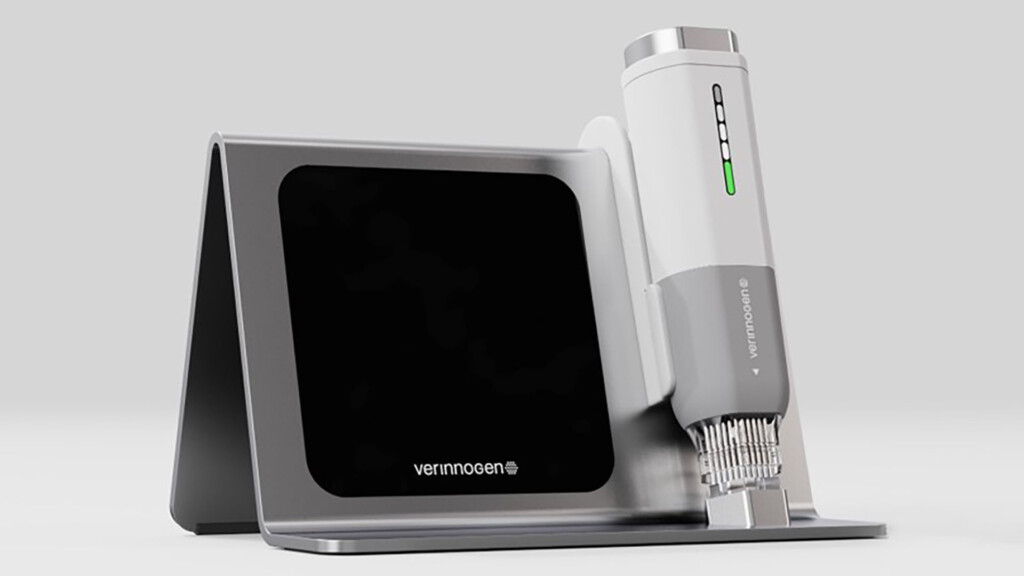
Cambridge-based life sciences company Verinnogen has raised £500,000 to accelerate the development of its platform aimed at transforming the precision of oncology research. The investment is from CPI Enterprises, the venture capital arm of the High Value Manufacturing Catapult.
The capital injection is delivered as part of the Innovate UK Catapult Investment Pilot programme, a government-backed initiative explicitly engineered to support high-growth, innovation-driven companies across the UK. The funding will bankroll the ongoing technical development of Verinnogen’s specialised handheld device while unlocking early commercial opportunities and scaling its manufacturing pipeline.
Verinnogen’s core technology addresses a critical, long-standing bottleneck in pre-clinical cancer research: the inaccurate measurement of subcutaneous tumour size and volume. While traditional oncology drug development has historically relied on error-prone manual callipers that only provide basic linear measurements, Verinnogen’s handheld device uses advanced 3D surface profiling pin-array technology. By generating rapid, highly precise, and reproducible 3D digitised surface images, the platform eliminates the human variability and intra-user bias that often lead to false positives, unreliable data, and costly, delayed repeat studies.
Alongside the capital, the deal involves a technical collaboration between Verinnogen and CPI’s specialised healthtech team. Together, they will work on advancing the next generation of the handheld tool, optimising its spatial resolution and measurement accuracy while ensuring the usability required for widespread adoption by global pharmaceutical firms, biotechnology companies, and contract research organisations (CROs).
“Improving the accuracy and consistency of tumour measurement is critical not only for data quality but also for reducing inefficiencies and unnecessary repeat studies in preclinical research,” said Verinnogen chief executive and co-founder Isaac Johnson. “CPI’s support brings both funding, delivered through a government-backed innovation initiative, and deep technical expertise at an important stage in our development.”
Lifeways Group secures £90 million unitranche facility
London-headquartered social care provider Lifeways Group has inked a £90 million five-year unitranche term loan facility to restructure and refinance its existing corporate debt. The capital was provided by H.I.G. Bayside Capital Europe, an affiliate of global alternative investment firm H.I.G. Capital.
Currently backed by institutional investors Fidera Group and Barings, the new five-year credit facility replaces Lifeways’ legacy term loan structure. Management plans to use the capital to expand its nationwide supported living capacity, invest in front-line service quality, and upgrade its underlying digital and operational infrastructure.
As the UK’s largest specialised provider of high-acuity support services, Lifeways delivers essential care to over 4,000 service users across approximately 1,100 community-based locations. The company focuses exclusively on high-complexity care segments, providing tailored residential and supported living services for individuals living with learning disabilities, severe autism, complex mental health conditions and physical disabilities.
The flexible terms of the unitranche facility are specifically designed to give the group the financial headroom required to scale its high-acuity mental health services and supported living models across the UK.
“Lifeways has undergone a significant operational transformation in recent years, with a renewed focus on quality of care, governance, and efficiency, alongside meaningful investment in our people, digital infrastructure, and service offering,” said Lifeways chief executive Andrea Kinkade. “This new financing provides a stable and flexible capital structure that will enable us to continue delivering high-quality outcomes for the people we support, expand our supported living and mental health services, and execute our long-term growth strategy across the UK.”
Imperagen raises £5 million to scale AI-driven enzyme engineering
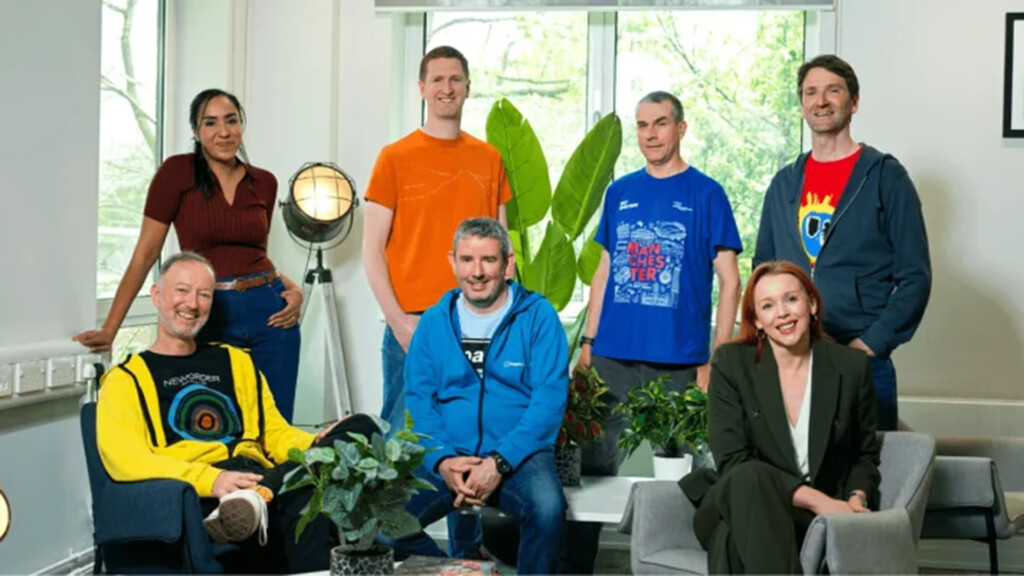
Manchester-based techbio company Imperagen has closed a £5 million seed funding round to accelerate the development of its automated, enzyme engineering platform. The investment round was led by PXN Ventures, with continued backing from existing investors IQ Capital and Northern Gritstone.
The new capital injection brings Imperagen’s total funding to £8.5 million. The company plans to use the capital to scale its core research and development platform, expand its automated physical wet lab footprint, and bolster its commercial go-to-market function over the next 18 months to capture escalating demand across the pharmaceutical, personal care, and industrial biotech sectors. The University of Manchester spin-out has also appointed deep tech veteran Guy Levy-Yurista as chief executive officer to spearhead this next phase of commercial growth.
Enzymes function as biological catalysts that drastically lower energy usage, reduce chemical waste, and minimise manufacturing overheads across global supply chains. However, traditional industrial biocatalysis development has long been bottlenecked by manual, error-prone screening processes or theoretical zero-shot computational models that frequently fail to perform in complex, real-world operational environments. Imperagen’s solution deploys a fully integrated, closed-loop platform that merges quantum physics simulations, predictive AI and physical laboratory robotics.
The recursive platform runs millions of mutation combinations in silico via quantum mechanics to output highly precise structural datasets. These datasets are then used to train hyper-focused, problem-specific AI models tailored to individual molecular challenges rather than relying on generalised algorithms. Finally, automated laboratory robots physically synthesise and test the top-performing digital candidates, instantly feeding the resulting real-world experimental data back into the AI model to continuously refine subsequent predictive cycles. The company has already validated its closed-loop model commercially, delivering a striking 677x productivity improvement for two targeted enzymes on behalf of a Fortune 500 personal care corporation within just five iterations.
“What I see right now is that the companies that will make a radical difference in this emerging AI-driven future are all AI-native, lean on real-world data, have genuine impact, and are fundamentally deep tech,” said Levy-Yurista. “The Phase 2b RISE trial is designed to confirm the earlier signal observed… It was a no-brainer to join the team and lead this next stage in its growth.”

Isomorphic Labs secures $2.1 Billion to scale its AI drug design engine
London-headquartered AI-first drug discovery company Isomorphic Labs has raised $2.1 billion (£1.6 billion) in Series B funding to accelerate its transition from pioneering novel artificial intelligence models to applying them at a global scale.
The financing round was led by Thrive Capital, with significant participation from existing backers Alphabet and GV, alongside new investors including MGX, Temasek, CapitalG and the UK Sovereign AI Fund.
The funds will be deployed to drive the continuous development and scaled deployment of Isomorphic Labs’ AI drug design engine (IsoDDE), directly accelerating the expansion of its internal and partnered therapeutic programmes toward clinical trials. Additionally, the financing will used for global talent acquisition, integrating premier AI, software engineering and clinical development specialists across the company’s operating sites in London, Cambridge (Massachusetts), and Lausanne.
Traditional pharmaceutical drug discovery has long been plagued by attrition rates and long development timelines, largely because identifying viable, stable chemical compounds that interact predictably with complex biological targets involves navigating a near-infinite molecular search space. Isomorphic Labs reimagines this bottleneck as a unified, data-driven engineering discipline. Its core IsoDDE platform uses foundational AI models capable of working across multiple therapeutic areas and drug modalities. By bridging the historical gap between static structural prediction and real-world biochemical behaviour, the platform delivers predictive fidelity that allows researchers to map novel biological systems and design repeatable, high-affinity therapeutic candidates with a level of precision and speed previously deemed impossible.
The company’s computational framework has already been validated commercially through strategic partnerships with global pharmaceutical giants, including Eli Lilly, Novartis and Johnson & Johnson. The new funding allows Isomorphic to advance its own pipeline alongside these multi-billion-dollar joint ventures.
“This funding round is a massive vote of confidence from a diverse group of top-tier international investors in our AI-first approach to drug design and development,” said Isomorphic Labs founder and chief executive Demis Hassabis. “Now that we have shown our approach is fundamentally sound, our focus is on scaling our technology to its full potential. This capital injection allows us to build out our drug design engine at scale, driving us forward in our mission to solve all disease.”
GHO and CBC Group merge to create $21 billion healthcare investment giant
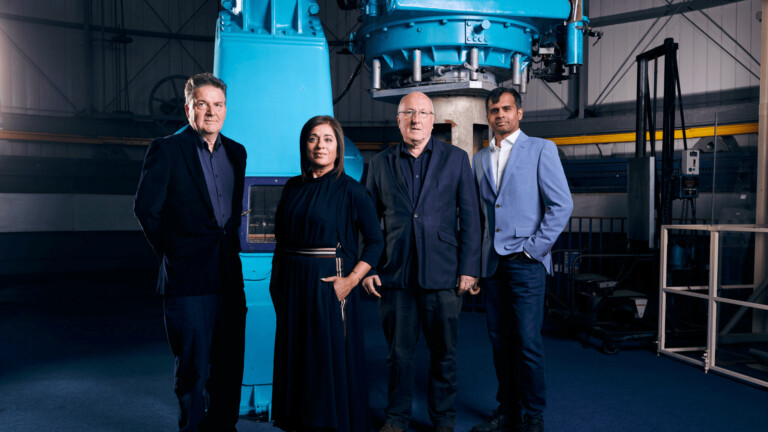
London-based Global Healthcare Opportunities (GHO Capital) and Singapore-headquartered CBC Group have signed a definitive agreement to merge which will create the world’s largest dedicated healthcare and life sciences asset manager. The new firm will have $21 billion (£15.7 billion) in assets under management (AUM).
The transaction, which is expected to close early next year, subject to customary regulatory approvals, unites two of the private equity landscape’s most prominent specialist healthcare investors. The newly consolidated firm will have a global footprint consisting of more than 200 investment and operating professionals across 13 cross-border offices. Crucially, its network will span North America, Europe, and the Asia-Pacific (APAC) region – territories that collectively drive roughly 90% of all global healthcare research and development spend.
By unifying their regional capabilities, the asset managers aim to provide global investors with an entry point into private equity, private credit and real estate assets entirely dedicated to clinical and technological innovation. The combined entity will focus its deployment strategies on scaling high-growth businesses across several core verticals: pharmaceuticals, medical devices, life science tools, diagnostics, healthcare infrastructure and healthcare IT.
GHO’s existing portfolio of European and North American healthcare businesses will gain immediate access to localised commercial insights and regulatory execution capabilities across Asia-Pacific. Conversely, CBC’s domestic Asian portfolio companies will leverage GHO’s transatlantic market execution to scale into Western economies.
The transaction will not alter the mandates, governance or ownership of existing independent funds at either firm, which will continue to be managed day-to-day by their respective investment teams. The combined firm will be led by a joint executive team, with GHO co-founder Mike Mortimer and CBC founder Fu Wei stepping into roles as co-chief executives, while GHO vice chair and co-founder Mireille Gillings will co-chair the unified board alongside Fu Wei.
“The combination is about connecting leading healthcare companies and innovations with the world’s largest and most established markets and global pools of capital,” said Wei. “Together, we are building the world’s largest dedicated healthcare investment firm to help accelerate patient access to affordable care, support innovation, and improve efficiency in addressing unmet medical needs.”