Add us as a preferred source
Sebastian Demiet, chief operating officer of MTI 24/7, considers the challenges of obesity-related health issues in air ambulance transport.
Air ambulance transportation, regardless of medical conditions, is a challenge in itself. And yet, it becomes an even more complex mission to undertake in case of obesity-related health issues. The list of things to consider starts with selecting a suitable plane and using specific equipment or ground transportation vehicles.
The issue isn’t only related to the patients’ body mass index. The size, medical condition and physical restrictions of the person, together with the technical limitations of the aircraft, play a decisive role.
The first lesson that a person trying to organise a medical air evacuation mission learns quickly is that the aircraft is not the main concern.
But before taking off, the ground transportation of the patient to the airport has to be planned. The same actions need to be taken when coming to the hospital after completing the flight.
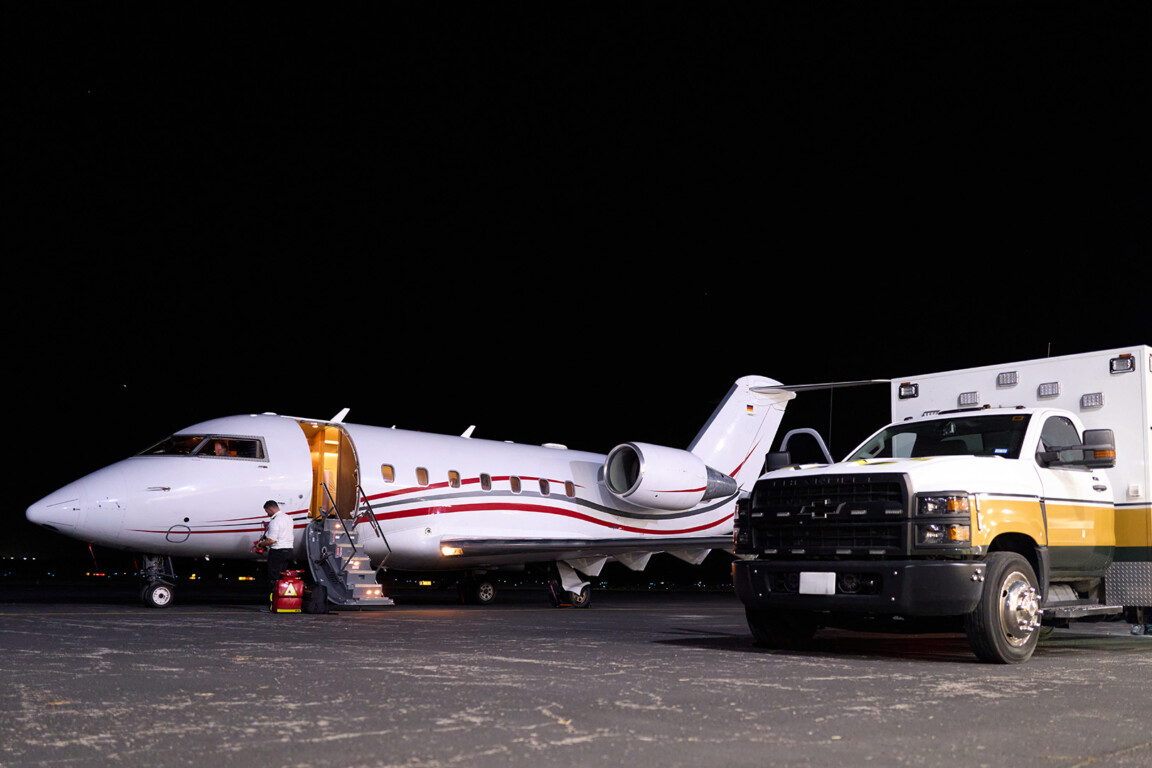
Usually, a common road ambulance won’t be suitable for that purpose. Depending on the patient’s dimensions, specialised bariatric ambulances may be needed. Sometimes, additional transportation tools, like lifts, may be necessary as well.
For patients and families already dealing with considerable emotional stress, discovering at the last minute that the ground ambulance lacks the necessary equipment to load and unload the patient or cannot safely accommodate the patient can cause significant distress.
This is precisely why every stage of the transfer, from ground transportation to aircraft loading, must be carefully assessed and coordinated well in advance.
Weight is only part of the equation
Weight is one of the first pieces of information to be received from the client by a medical air services provider. But it doesn’t provide the full picture.
There are plenty of cases where 120-kilogram patients don’t cause any problems in transport. And there are numerous cases when the person is much smaller but has to receive additional medical attention due to the increased body measurements and size.
Therefore, in order to be fully prepared for the mission, it is necessary to gather precise information regarding the weight of the patient, his/her body dimensions, and relevant body measurements. There is no universal standard here.
The choice of an aircraft is one of the key decisions to make during a mission.
The popular choices for air ambulance companies are Learjet planes because of their range and speed. But their cabins are relatively small and may create serious problems when transporting patients who need large stretchers.
It is important to pay attention to such issues as loading and unloading the patient.
A patient may be accommodated in a plane if lying flat. But transferring the patient to a stretcher may be problematic due to the door sizes, geometry, loading facilities and other factors influencing the process.
Even the cabin size in the bigger planes may not be enough, as door sizes, approved medical installations, and loading facilities must also be considered. The Pilatus PC-12 features a unique rear cargo door for increased movement and space, needed when loading medical equipment. However, as a turboprop aircraft, it has certain range and speed limitations compared with larger jet-powered air ambulances.
Additionally, weight and balance of the aircraft have to be taken into account in advance. Therefore, the sum of the weight of a patient, stretcher, equipment, medical personnel, fuel and luggage has to stay within the approved limitations.
Stretcher and respiratory considerations
One more point that gets little attention in the process is the stretcher.
Any medical device has limitations on its use and must meet certain criteria to be approved. The case with the stretcher is similar to this.
First of all, it has to be designed to carry patients within certain weight limits. Also, a medical device must be certified with regard to the use of the stretcher in the aircraft. A wider stretcher isn’t necessarily approved to accommodate a heavier patient.
These factors also have to be checked before organising the transfer.
Inability to transfer the patient using the stretcher can lead to the choice of a different aircraft or using a bariatric configuration.
Being obese, the patient may have various complications with the respiratory system. There might be cases when the person has reduced respiratory reserve, obstructive sleep apnoea, or even obesity hypoventilation syndrome. At the same time, other individuals might have no problems with their respiratory system.
It can be difficult to define the medical condition of the patient’s lungs just based on the person’s weight. But this fact shouldn’t be forgotten while organising the mission, as the breathing problems can affect the whole transfer process.
The position of the patient on the stretcher during air travel can create difficulties for the respiratory system. Lying flat can be especially troublesome for patients as it can put a strain on the breathing process and make the movement of the lungs harder.
Thus, the ability to lie on a bed in such a way has to be established in advance.
Some patients may need upper body elevation, use of extra oxygen supplies, or other additional support. For severe cases, mechanical or non-invasive ventilation can be required.

Staffing and mission coordination are key
Transporting patients with limited mobility or higher body weight may require additional personnel, particularly during loading and unloading.
The mission coordination shouldn’t be connected solely with having more people to transfer the patient physically. There is much risk associated with manual transfer and inappropriate methods of patient transportation. The medical professionals have to use mechanical assistance and coordinated handling to provide safe medical care.
It has to be established beforehand what medical personnel will participate in the mission, how many staff members will be required for patient loading and handling, and the list of the equipment that would be required in the course of the journey.
Another consideration is that the cabin size must be large enough for a medical team to work and reach the patient easily.
Probably, one of the hardest points in organising this kind of mission is to make sure that all the participants in the process understand what requirements are expected to be fulfilled.
The referring hospital, road ambulance company, medical professionals, airport handling company and receiving facility may be situated in totally different locations or even abroad. If there is something unclear in the information provided to some participants, the whole process may get jeopardised.
Preserving dignity throughout the journey
There is another dimension to bariatric air ambulance transport that should never be overlooked: the patient’s dignity.
Discussions about body measurements, lifting requirements, and equipment limitations are necessary, but they should always be conducted respectfully and discreetly.
Families should understand why certain information is required and how it contributes to safety.
We also need to be realistic about what available aircraft and equipment can accommodate without making patients feel responsible for those limitations.
From my perspective, good operational planning and compassionate care are inseparable.
The better prepared we are, the fewer unexpected situations the patient will face.
Our responsibility is not simply to find an aircraft that can carry a patient. It is to organise the entire journey around their medical needs, physical requirements, and dignity.
That is the standard every air ambulance mission should aim to meet.