Add us as a preferred source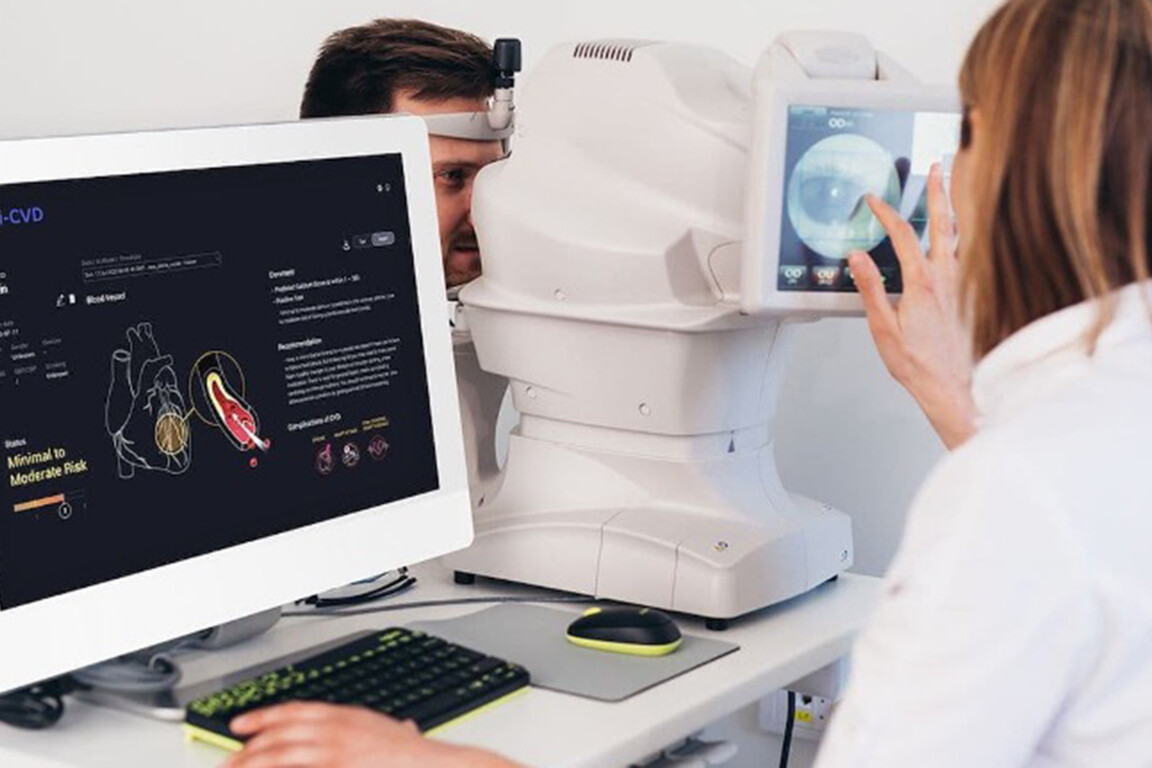
Dr. Hannah O’Keeffe, head of medical affairs at HeartEye, writes that examining the retina is the opportunity we have been missing.
Cardiovascular disease remains one of the leading causes of premature death in the UK, and yet for the majority of people it affects, there are no preceding symptoms. No warning. No signal that prompts them or their clinicians to act. The disease progresses silently over years, narrowing blood vessels and restricting flow while patients feel completely well. And our current screening tools, however well designed, are structurally unable to detect it until it has already been developing for some time.
This is not a criticism of clinical practice. It is a fundamental limitation of the tools available. Established risk-scoring models such as QRISK depend entirely on data that has already been recorded: blood pressure readings, cholesterol levels, documented lifestyle and medical history. They can only assess what has already been measured and flagged, and are heavily dependent on patient age. For the significant proportion of the population with no recorded risk factors and no recent clinical review, they offer little. According to the British Heart Foundation, millions of people in the UK are currently living with undiagnosed cardiovascular risk factors. They are not low risk. They are simply undetected.
What the retina reveals
The back of the eye offers something no other routine clinical assessment can: a direct, non-invasive view of the body’s vasculature. The microvasculature visible at the retina is physiologically linked to the cardiovascular system as a whole, and changes in vessel structure, calibre and patterning develop as cardiovascular risk accumulates, often long before any clinical threshold is crossed or any symptom emerges.
HeartEye’s Dr.Noon reti-CVD technology applies this principle at scale. Using retinal imaging and artificial intelligence, it analyses the back of the eye during a routine sight test and generates a cardiovascular risk score. The patient may present with no recorded risk factors and no clinical concern. The AI analysis identifies a meaningful and actionable level of risk that no existing pathway would have surfaced. This is not earlier identification of known risk. It is the detection of risk that would otherwise remain entirely invisible.

One of our more clinically significant aspects is the way results are framed and communicated. Alongside an overall risk classification, patients receive a score that benchmarks their cardiovascular health against others of the same age. This contextualisation has genuine practical value.
Population-level risk statistics are well documented to be difficult for patients to interpret and act upon. Peer comparison offers a more accessible and personally relevant frame of reference. A patient who learns that their cardiovascular profile sits above average for their age group has a specific, comprehensible reason to seek further advice, independent of whether any absolute clinical threshold has been met. Equally, a patient whose result compares favourably receives meaningful reassurance and a tangible incentive to maintain the habits that are contributing to that outcome. There is substantial evidence from behavioural science that contextualised, personally relevant information is considerably more effective at prompting behaviour change than statistical risk percentages alone. In the context of cardiovascular prevention, where patient engagement is central to outcomes, this is not a minor consideration.
Reaching patients at the right moment
UK optometry practices conduct more than 13 million sight tests annually, engaging a broad cross-section of the population, including many individuals who have limited contact with other parts of the health system. Because the retinal analysis is done with imaging that is already being performed, it integrates into this existing clinical encounter without disruption, adding population-level cardiovascular screening to a consultation that was already taking place.
This creates access to patients within a genuine pre-symptomatic window, where the full range of preventive options remains available. Lifestyle modification, pharmacological management and structured monitoring are all substantially more effective when initiated before significant vascular change has occurred. Once symptoms develop or an acute event has taken place, that opportunity has passed. Results are stratified by risk group and supported by structured follow-up pathways, with elevated risk patients guided to clear onward referral routes to GPs and pharmacists. The objective is not to produce screening data but to produce clinical action, begun while there is still a meaningful opportunity to influence long-term outcomes.
The NHS Long Term Plan sets an explicit ambition to shift the health system toward prevention and earlier diagnosis. The government has committed to reducing premature cardiovascular mortality by 25% within a decade. Meeting that ambition requires reaching people before their risk becomes detectable through conventional means, in settings they already access, before they have any clinical reason to present.
Retinal cardiovascular assessment offers a practical, evidence-grounded route to achieving this. The technology exists, it requires nothing beyond what optometry already provides, and the patient population is already walking through the door. The clinical rationale for earlier intervention is firmly established. The priority now is to make fuller use of the opportunity that is already there.