Add us as a preferred source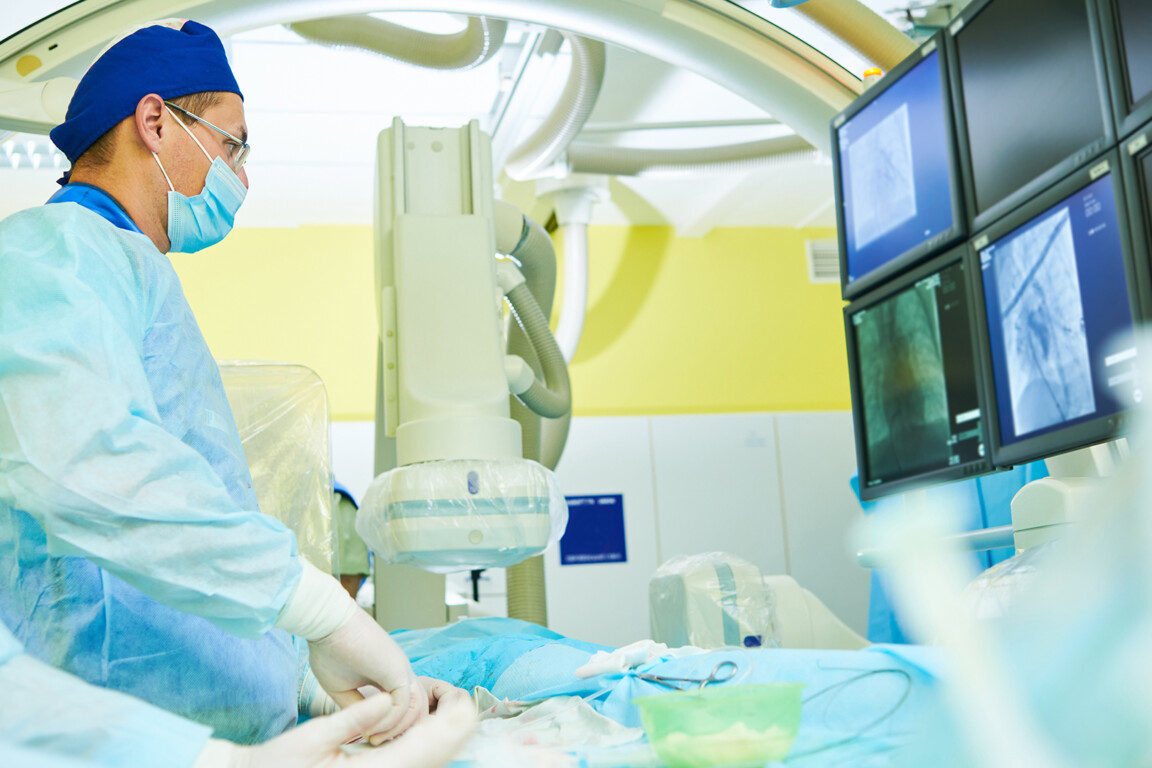
Daniel Brearley, clinical product and applications specialist at Canon Medical Systems UK, explains why interventional radiology must move the system, not the patient.
Interventional radiology (IR) plays an increasingly important role in modern healthcare. From vascular interventions and oncology procedures to emergency embolisation and stroke treatment, these techniques are transforming patient pathways and improving recovery times. As demand for minimally invasive procedures continues to grow, pressure is also increasing on the environments in which they are performed.
This raises an important question: are interventional spaces adapting sufficiently to the needs of clinical teams to reduce patient risk, or are they still too often being asked to adapt to the limitations of the environment?
In practice, many interventional workflows still rely on moving the patient to obtain the imaging required, introducing additional variables into procedures that depend on precision.
In modern IR practice, maintaining a stable patient position is not simply a matter of comfort. It plays an important role in supporting procedural precision, patient safety and workflow control. For this reason, patient stability should be considered an essential part of the clinical workflow, particularly in environments where repositioning may still be needed to accommodate procedural or system-related constraints.
Why patient movement can increase risk
Interventional radiology relies on precise, image-guided navigation to reach a defined target within the body. Even small shifts in patient position can alter the relationship between the imaging and the anatomy, potentially affecting accuracy and increasing the risk of patient safety at critical moments.
For example, during vascular procedures, clinicians often rely on digital roadmaps of the patient’s blood vessels. If the patient is repositioned, this alignment can be lost, increasing the risk of navigational error and requiring additional imaging to regain orientation. This not only prolongs the procedure but may increase radiation exposure and procedural complexity.
Reducing the need for repeat imaging is more than a matter of efficiency. Clinical guidance across interventional and radiological practice consistently emphasises minimising radiation exposure wherever possible, particularly in procedures where cumulative dose can become significant.
Patient movement can also compromise the placement of devices such as guidewires, catheters, and stents. These instruments are often positioned with a high degree of precision. Repositioning the patient introduces the risk of displacement, which may require correction and increase the likelihood of complications.
There are also direct safety considerations. Moving a patient with fragile anatomy or active internal bleeding can increase the risk of trauma. In sedated patients, repositioning can introduce additional risks such as skin shear or nerve compression, particularly during longer procedures.
Infection control is another critical factor. Interventional procedures are carried out within carefully controlled environments, and repositioning the patient can disrupt this control, increasing the risk of contamination or exposure.
Taken together, these factors reinforce a clear principle: maintaining patient stability is essential for safe and effective interventional radiology. For this reason, moving the imaging system rather than the patient is increasingly recognised as the gold standard in modern IR practice.
This reflects a broader shift in interventional system design towards enabling full anatomical coverage and positioning flexibility without requiring patient repositioning.
Precision, safety and efficiency in practice
Designing procedures around a stable patient position allows clinicians to work with greater control and confidence.
Advances in interventional imaging are making this increasingly achievable. Modern systems are increasingly designed to adapt to the clinical need, enabling full anatomical coverage without requiring patient repositioning.
Modern C-arm systems can rotate around the patient to provide multiple imaging angles without requiring repositioning. This helps clinicians maintain continuous visual alignment with the target anatomy while adapting their perspective as needed throughout the procedure.
However, rotational imaging is only one part of the solution. The broader shift is towards integrated system design, where imaging, table positioning, and workflow are aligned to support continuous, uninterrupted procedures.
This approach preserves image guidance, supporting greater procedural precision while improving workflow efficiency. It removes the need for procedural interruption, reduces delays and allows clinicians to maintain continuous focus on the intervention.
In many cases, this also supports more effective radiation management. By precisely positioning the imaging system around the area of interest, clinicians may be able to obtain the required views more efficiently, helping to reduce overall screening time.
Maintaining a stable patient position may also support patient comfort by reducing unnecessary repositioning during the procedure. This can contribute to a more controlled procedural environment, particularly in longer or more complex cases.

Designing environments around the patient
While technology plays a central role, the physical design of the interventional suite also influences how effectively this approach can be implemented.
Available space and room layout can either support or hinder patient stability. In interventional radiology, this is particularly important: sufficient space for bed access, staff movement, and equipment positioning can reduce the need for transfers between beds, trolleys, and procedure tables. Thoughtful patient flow can further minimise unnecessary movement, helping maintain procedural continuity and a controlled, efficient environment at critical stages of care.
Increasingly, interventional environments are being designed to support a single, continuous patient pathway, where the patient remains on one platform throughout imaging and treatment. In some cases, this is enabled through integrated imaging approaches that combine modalities within a single environment, reducing the need for patient transfer between spaces. This reduces handling, preserves sterility and supports greater procedural control. In practice, this can enable imaging and intervention within a single setting, removing the need to transfer the patient between rooms, supporting patient care and workflow efficiency.
However, these design considerations should support the core principle, not replace it: maintaining a stable patient position throughout the procedure.
A necessary shift in interventional practice
As interventional radiology continues to evolve, the importance of procedural environment design is becoming more apparent. The key shift is in how procedures are approached: prioritising patient stability by adapting the system to the patient, rather than the other way around.
This approach supports greater procedural precision, help reduce clinical risk, and enables more efficient workflows. It also allows clinicians to maintain greater control throughout the procedure, while supporting more consistent and reliable care delivery.
Ultimately, the most effective interventional spaces are those where equipment adapts to the patient and the procedure, supporting safer, more controlled, and more consistent care. In other words, the system should move around the patient, not the patient around the system.