Add us as a preferred source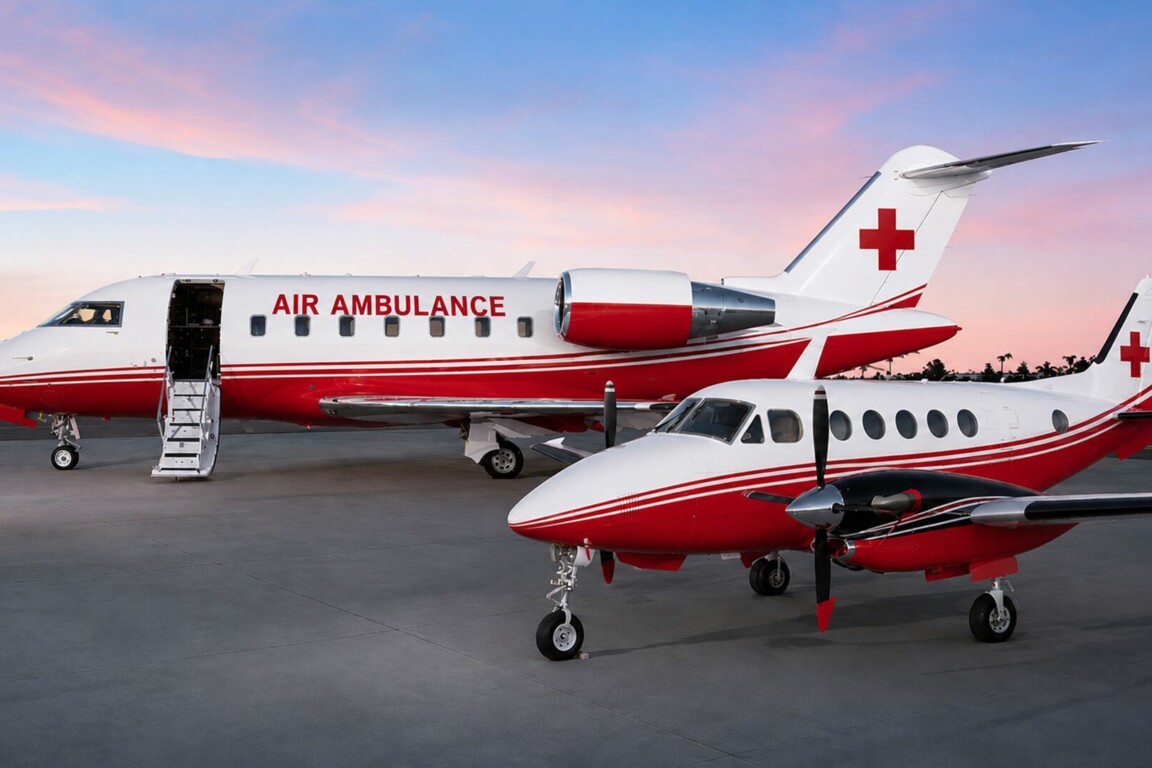
Elliot Bottomley, managing director at Equinox Charter, explains that the success of air evacuation is not defined solely by the flight itself, rather it is the ability to maintain continuity of care.
When people think about medical air ambulances, the aircraft is often the first thing that comes to mind. The image is understandable: a specially equipped aircraft transporting a patient from one location to another, often across borders and under urgent circumstances.
In reality, the aircraft is only one component of a much larger operation. Every medical evacuation involves coordination between hospitals, ambulance providers, medical teams, aircraft operators, insurers, patients, and families. The success of the mission depends not only on the flight itself, but on how effectively all these moving parts work together.
Having supported medical air ambulance operations across a wide range of scenarios, one thing becomes clear very quickly: what patients and families see is only a small part of what is happening behind the scenes. The real challenge lies in coordinating a seamless transfer while maintaining continuity of care from departure to arrival.
A competitive market where experience matters
The medevac market is highly competitive. While there are established specialist providers with deep experience in air ambulance operations, the wider air charter market is largely unregulated.
Experience becomes the real differentiator.
When decisions need to be made quickly, the options that surface are often similar, whether the inquiry is broker-led or direct to one of the many air ambulance operators. In many cases, those options that are usually of consideration are the same aircraft from a relatively small pool of suitable operators that meet availability, position and cost requirements. The origin and destination alone can significantly narrow the field, and aircraft positioning plays a major role in both availability and price.
Medical necessity shapes everything. Factors such as range requirements, whether a sea-level flight is needed, the level of medical escort required and whether accompanying passengers are requested, all influence which aircraft are viable.
The specific medical condition of the patient will also determine what equipment must be carried on board, including whether a full ICU-configured stretcher setup is required, portable ventilators, infusion pumps, oxygen supply, or other life-critical equipment.
The physical dimensions of the aircraft cabin are equally important, as a stretcher installation requires sufficient length, width, and headroom to accommodate both the patient and the attending medical team working alongside them.
Access to the aircraft is also a key consideration, as patient loading via steps or a narrow airstair may not be suitable depending on the patient’s mobility or condition, and some aircraft lend themselves far better than others to ground-level or assisted boarding. All of these factors are assessed together to ensure the most appropriate and safest aircraft is selected for the mission.
Unlike conventional charter, medevac flights are almost always one-way missions. This introduces repositioning costs, making them inherently more expensive. Because of this, decision-making is rarely about luxury or preference. Once an aircraft meets the required medical and safety criteria, the primary commercial driver is often straightforward: cost and availability.
For brokers and coordinators, sourcing is therefore critical. The value lies in identifying the most suitable and competitive option in a highly fluid market, often among only two or three realistic providers, while managing constant changes driven by aircraft positioning and operational readiness, all against the backdrop of a patient’s evolving condition.
Who is driving demand for medical evacuation services?
Many enquiries come directly through established ground ambulance partners, which creates a strong bed-to-bed coordination model. In these cases, the medevac process is not simply about arranging a flight. It is about integrating hospitals, ground transport, medical teams, operators, and coordination specialists into one continuous chain of care.
The advantage of this structure is that it enables seamless communication among all parties from the outset. Clinical requirements, transport logistics, and operational planning can all be aligned early in the process, helping to reduce delays and avoid misunderstandings.
Public systems such as the NHS can also play a role, particularly in patient transfers or repatriations. However, timelines and approval processes can vary depending on clinical urgency and internal authorisation pathways.
Insurers often represent another important stakeholder. In many cases, they are involved in assessing coverage, approving costs, and facilitating patient transport arrangements. Whether the request originates from an insurer, a healthcare provider, or a ground ambulance partner, coordination and clear information remain essential to avoid delays in what is often a highly time-sensitive environment.
The first hours: determining whether a mission is viable
From an operational perspective, almost any medevac mission is viable provided there is sufficient time to coordinate the necessary elements.
Business aviation can reach and operate from very remote locations, often at short notice, as long as operational parameters can be met safely. Most requests are time-critical. They typically involve either a patient who is deteriorating but stable enough to fly with appropriate medical support or a hospital discharge requiring rapid repatriation.
In both cases, speed of response is essential.
The immediate priority is to adopt a can-do mindset while rapidly assessing aircraft availability, medical suitability, and routing feasibility. Sourcing begins immediately, often in parallel with discussions around cost, medical requirements, and logistics.
The challenge is not simply finding an aircraft. It is securing the right aircraft quickly enough while managing shifting availability and ensuring it can support the patient’s medical needs.
Cost is also a significant factor. Medevac flights are inherently expensive, often more so than standard charter due to their urgency, one-way nature, and repositioning requirements. In many cases, families or guarantors may need time to arrange funding, whether through insurance, loans, or other means such as crowdfunding.
Managing expectations early is therefore critical. Clear communication about both cost and process helps ensure decisions can be made quickly without adding stress for families already facing difficult circumstances.

Why coordination starts long before the aircraft arrives
Coordination with ground ambulance providers often begins at the very first point of contact, as many enquiries originate directly from these partners. This allows flight planning and ground logistics to run in parallel from the outset, rather than as separate processes.
Early-stage information can sometimes be limited, particularly in urgent cases. As the mission progresses from initial pricing to confirmed booking, more detailed medical information is gathered and shared. This typically includes patient condition, mobility requirements, medical notes, and any special requirements for in-flight care.
Where necessary, medical approval from the aircraft’s onboard doctor or medical team is obtained to ensure the patient is fit to fly under the proposed conditions. In some situations, translation or clarification of medical information may also be required to ensure accuracy and alignment between all parties.
In the eyes of our ground ambulance provider, 112 Ambulance Repatriation, coordination with the air provider begins long before the patient leaves the hospital. The flight doctor or lead paramedic works closely with the aviation team to ensure the patient’s clinical needs, aircraft capabilities, medical equipment requirements, and flight schedule are fully aligned.
Departure and arrival timings, airfield access arrangements, and receiving hospital requirements must also be confirmed before the transfer begins.
By establishing a clear operational and clinical plan before the patient is moved, it is possible to create a seamless transition from the hospital bed to the aircraft and onward to the receiving facility without interruption in care.
While the flight itself attracts most attention, the highest-risk moments during a medical repatriation are often the transfer points between the hospital, ambulance and aircraft.
These are the stages where the patient is physically moved, monitoring equipment may be changed, and responsibility for care passes between different teams. They are also the moments where communication becomes most important.
To minimise risk, every handover should follow a structured clinical process supported by comprehensive medical documentation and direct communication between all parties involved.
This systematic approach allows continuity of care to be maintained throughout the entire bed-to-bed journey. It reduces risk, supports patient safety, and helps ensure that treatment remains uninterrupted from departure to arrival.
Medical evacuation is not a flight. It is a bed-to-bed operation
One of the most common misunderstandings about medical evacuation is the belief that it revolves around the aircraft.
In reality, a medevac flight is only one component of a much larger medical and logistical operation.
Each stage is interdependent. A delay or issue in one area can affect the entire mission.
The aircraft is simply one part of a broader chain of care that must function seamlessly under significant time pressure.
Behind every successful medical evacuation sits an extensive network of healthcare professionals, ambulance providers, flight crews, medical escorts, coordinators, hospitals, insurers, and support teams working together towards a common objective.
What matters most is the coordination taking place behind the scenes, ensuring that every stage of the patient’s journey is planned, communicated, and executed safely.
Medical air ambulances play a vital role in modern healthcare, particularly when specialist treatment, repatriation, or time-critical transport is required. Their success, however, is not defined solely by the flight itself. It is defined by the ability to maintain continuity of care from the moment a patient leaves one bed until they arrive safely at the next.