Add us as a preferred source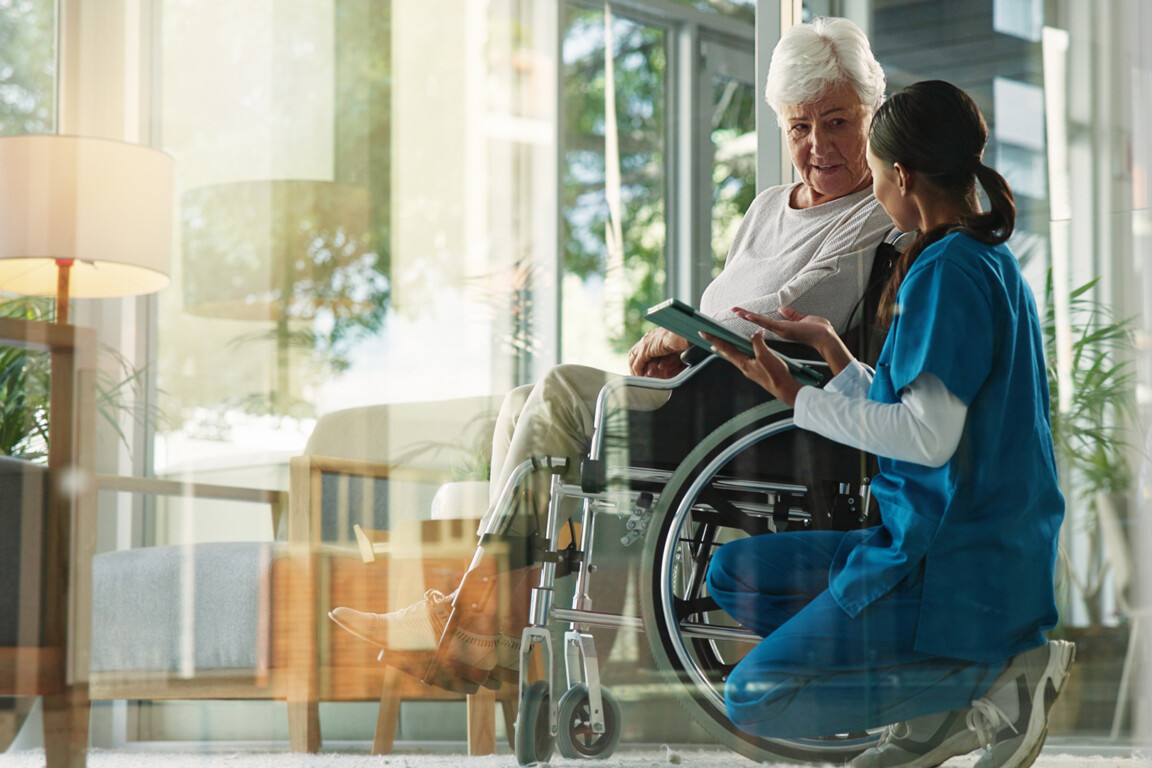
Nargiza Noimann-Zander, founder of X-Technology, examines the legal and ethical issues of ambient monitoring technology.
Ambient monitoring technology is being installed in care homes and assisted living settings across the UK at a pace that has outrun the clinical thinking behind it. I do not say that to oppose the technology. Continuous monitoring can support safety, reduce falls risk and give families and care teams meaningful reassurance. I say it because watching over someone and understanding what that watching does to them are two entirely different things, and the second question is not being asked.
The assumption behind most deployments is straightforward. If we can see what is happening, we can respond faster. That is true. What is less examined is what happens to the person being seen, continuously, across every hour of every day, inside the space they are supposed to call home.
For a resident with intact cognition, continuous monitoring raises questions about consent, privacy and dignity that care providers are only beginning to grapple with seriously. For a resident with dementia or significant cognitive decline, the situation is considerably more urgent.
Dementia care settings
A person with moderate to severe dementia cannot reliably interpret that sensors are present or understand what they are recording. The cognitive processing that would allow them to identify a device on the wall or make sense of a camera in the corner is impaired. What remains intact, often long after that cognitive capacity has declined, is the nervous system’s sensitivity to changes in its environment. Vulnerable populations can register that something in a space is different, that attention is being directed at them, or that the atmosphere of a room has shifted, without being able to name the source.
That is the gap I am describing. Not a failure of perception but a mismatch between what the nervous system detects and what the mind can explain.
A review in the journal JMIR Aging examining stakeholder values in dementia care settings found that residents reported feelings of intrusion and vulnerability when monitoring systems did not account for their wishes, and that being visibly monitored increased feelings of stigmatisation. The response is physiological. It produces anxiety that the person may have no language to report and no mechanism to resolve.
Continuous monitoring also changes the psychological character of a space. A home, even a residential care home, carries a particular meaning for the nervous system. It is where the body learns to regulate and where vigilance can lower. Ambient sensors alter that meaning at a level most providers have not considered. The body responds to being watched. Over time, in a person whose cognitive capacity to rationalise that response is compromised, it can produce a chronic low-level stress state that nobody flags because it does not appear on any dashboard.
The consent and capacity questions compound this further. An ethics paper in Sensors examining sensor-based surveillance in dementia care identifies the frequent lack of decision-making capacity in people with dementia as one of the central ethical challenges, noting that safety benefits must be critically balanced against the risk of violating basic ethical principles. A resident who lacked capacity when monitoring was introduced, who may fluctuate in capacity week to week, and whose family agreed to the technology on their behalf, is still the person living inside it every day. Proxy consent covers the legal question. It does not cover the clinical one, which is whether this person’s nervous system is tolerating the environment they are in.

Constant observation
A review published in JMIR Aging last year on remote monitoring for patients with Alzheimer’s disease makes this tension explicit, noting that constant observation can infringe on patients’ sense of independence and that balancing safety with dignity is a delicate task requiring a nuanced approach. Providers deploying ambient monitoring systems need to be asking questions: most currently are not. What is the psychological baseline of each resident before monitoring begins? Is there a protocol for identifying distress attributable to the monitoring environment rather than disease progression? What is the process for modifying monitoring when a resident shows signs of anxiety that cannot be explained by other factors?
These are patient safety questions. The absence of answers to them is a clinical governance gap that private care providers, in particular, should treat seriously. When a family challenges a care home over a resident’s unexplained deterioration in wellbeing and the home cannot demonstrate that it assessed the psychological impact of its monitoring environment, that is not a comfortable position.
Providers do not need to remove the technology. They need to govern it with the same seriousness they apply to medication, physical restraint and any other intervention that changes the lived experience of a person in their care. That means baseline psychological assessment, defined monitoring protocols, named clinical responsibility and a clear process for reviewing the impact of the monitoring environment on each resident.
Watching over someone is an act of care. Not knowing what the watching does to them is something else entirely.