Add us as a preferred source
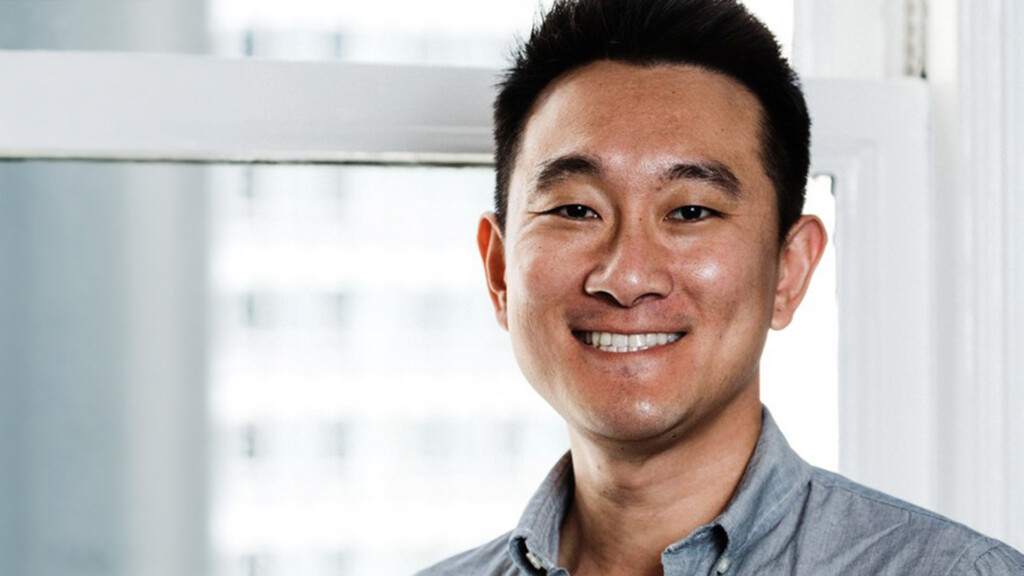
William Ban, co-founder and chief operating officer of HiMedi, explains what the NHS could learn from a checkup centre in Seoul.
The first time I walked into a Seoul health checkup centre, I expected something like an annual physical. What I experienced instead completely changed how I think about healthcare. In a single morning, I got bloodwork, cardiac testing, advanced imaging, a colonoscopy, and dozens of investigations, all sequenced room to room like a well-run production line. By the afternoon, a physician was walking me through my results, line by line. The colonoscopy had found a single polyp, up to 5mm. They performed a polypectomy on the spot, and my written checkup report later confirmed the biopsy finding: a benign hyperplastic polyp.
Found, removed and documented, all in one visit. I have gone back for a full-body checkup every year for the past five years, because the real product isn’t the day itself. It’s the trend line: the same numbers, tracked annually, telling me where my health is heading while there is still time to steer.
That single morning ultimately changed the direction of my career and led me to become the co-founder of Himedi. It should also interest anyone watching the NHS try to deliver the 10 Year Health Plan’s third and hardest shift, from sickness to prevention. Because South Korea is what that shift looks like when a country actually builds it: not rhetoric, but infrastructure, capacity and execution.
Healthcare spending
Start with the scoreboard. Korea spends about 8.5% of GDP on health against the UK’s roughly 11%, yet Korean life expectancy stands at 83.5 years against the UK’s 78.8 for men and 82.8 for women. The starkest single number: five-year survival for stomach cancer is around 20% in England and Wales and 78.4% in Korea.
That is not a treatment gap. British oncology is excellent, and Korea’s gastric advantage partly reflects higher incidence, justifying endoscopic screening. The mechanism is what matters: Korea has largely decided that finding disease early is the system’s responsibility, not simply the patient’s. And note well, it did so within a universal, single-payer system. The National Health Insurance Service invites every insured adult to a general screening every two years from age 40, and 75.9% of the eligible population attends. A national programme layers on six cancers. My checkup that first morning wasn’t a luxury outlier; it was the consumer-grade version of something the whole country does by default.
The UK invented much of modern screening, and its best programmes still deliver; England is within sight of eliminating cervical cancer in young women. But participation is drifting, with cervical coverage down to 68.8% and fewer than half of invitees attending an NHS Health Check. And capacity, prevention’s unglamorous precondition, is starved: the UK operates 19 CT, MRI and PET scanners per million people against an OECD average of 51 and Korea’s 87, and the six-week diagnostic standard has not been met since 2013, with roughly one patient in four now waiting longer.
I see the consequence from an unusual vantage point. The company I co-founded exists to connect international patients with vetted Korean hospitals and screening centres, and what began as an overwhelmingly US clientele now includes a growing number of British patients. They are not fleeing the NHS; most speak of it with real affection.
They are buying the thing it does not sell: a comprehensive look under the bonnet, this month rather than next year, at a published price. The domestic market tells the same story. Private hospital admissions hit a record 953,000 last year, and UK providers now sell health assessments at £800 to £1,100. Patients paying out of pocket for diagnostics are not defecting from the NHS model. They are voting for a product it does not yet stock.
Prevention is a designable system
I will not pretend Korea is a template to photocopy. Its thyroid screening surge became the textbook case of overdiagnosis, its fee structures do not transplant, and its clinical workforce is under genuine strain. The lesson is narrower and more useful: prevention is a designable system with four working parts the UK could borrow without abandoning a single NHS principle. Make screening a broad default rather than a patchwork of programmes. Collapse the diagnostic journey into one visit under one roof, a direction community diagnostic centres already gesture towards. Treat scanner density as prevention policy, not capital indulgence. And manage participation as a vital sign of the system itself, chased the way we chase waiting lists.
Korea’s preventable mortality runs at 99 per 100,000 against an OECD average of 158, at two-thirds of Britain’s spending share. That is not genius or luck. It is what happens when a universal system decides that meeting citizens while they are still well is its core business, and builds the rooms, the schedules and the scanners to do it. I walked through the result one morning in Seoul, and it changed my life. The 10 Year Health Plan has named the destination. The NHS has set the destination. Korea offers one possible roadmap for getting there.