Add us as a preferred source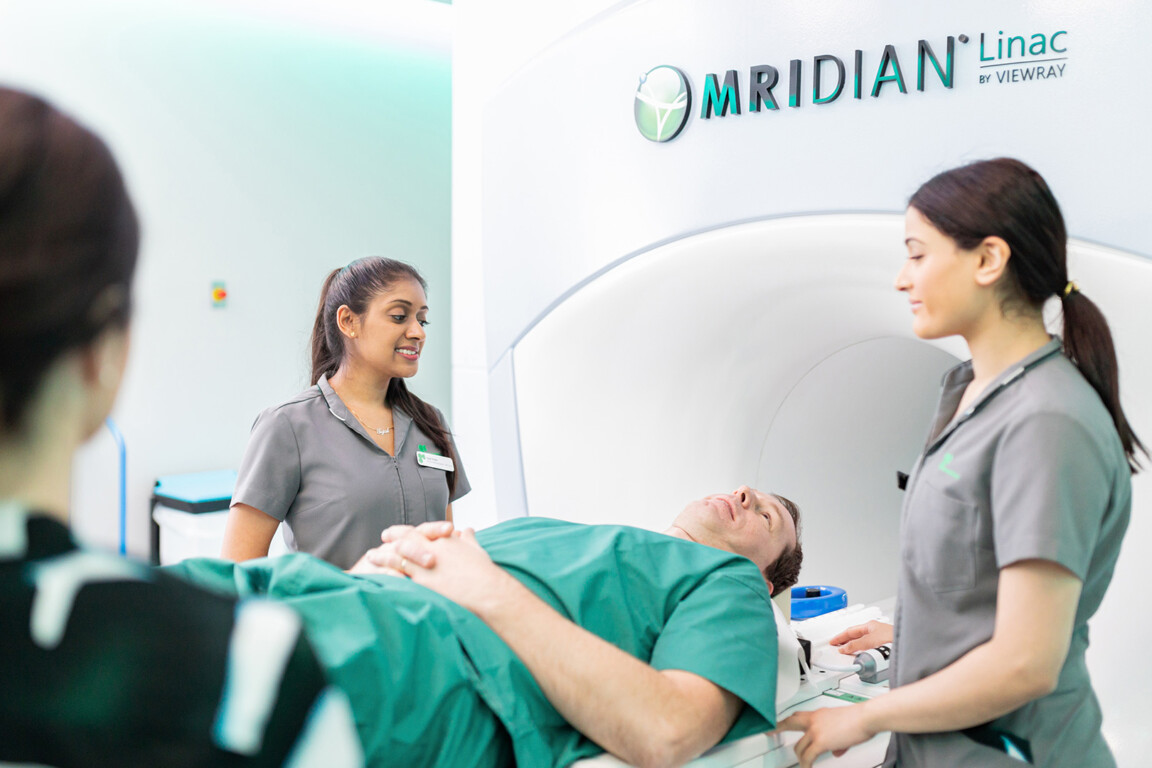
Yae-eun Suh, consultant clinical oncologist at GenesisCareUK, discusses MRI-guided adaptive radiotherapy: expanding salvage options for locally recurrent prostate cancer.
Local recurrence following definitive prostate radiotherapy is a challenging clinical scenario. Some patients will experience biochemical relapse after radiotherapy and a proportion will have isolated intraprostatic recurrence on imaging, raising the possibility of local salvage treatment.
Reirradiation has historically been approached with caution, however, due to concerns that further irradiation risks exceeding the cumulative safety tolerance of the rectum, bladder and urethra. As a result, many patients are managed with long-term androgen deprivation therapy, despite its recognised effects on metabolic health, bone density, sexual function and quality of life.
The central challenge in prostate reirradiation is not simply whether a recurrent lesion can be targeted, but whether treatment can be delivered with sufficient precision, and at an effective dose to maintain tumour control while minimising cumulative toxicity. This is particularly relevant for recurrence close to the anterior rectal wall, bladder neck or urethra, where small differences in target position, rectal filling or bladder volume may substantially alter the delivered dose.
Why conventional image guidance may be limiting
In the primary treatment setting, uncertainties in treatment delivery are managed using image guidance, preparation protocols and treatment margins. Conventional cone beam CT guidance provides valuable bony and/or fiducial-based localisation, but the soft tissue contrast is limited, making it difficult to define prostate boundaries and adjacent organs-at-risk with the precision that would be required for high-dose salvage treatment to recurrent disease.
MRI-guided adaptive radiotherapy provides a solution to these limitations. By integrating MRI with radiotherapy delivery, MR-linac platforms provide superior soft tissue visualisation compared to cone beam CT-guided treatment. This allows direct assessment of the prostate, recurrent disease target and surrounding organs immediately before treatment delivery.
Another key advantage is online adaptive replanning. Rather than relying solely on the anatomy captured on the radiotherapy planning CT scan, a new MRI is acquired before each radiotherapy fraction, and the treatment plan is adapted to the patient’s anatomy immediately pre-treatment. Target coverage and organ-at-risk constraints can be reassessed fraction by fraction, allowing the clinical team to account for changes in bladder filling, rectal position and prostate displacement.
Continuous cine-MRI further supports treatment precision by enabling intrafraction motion monitoring. Automatic beam gating can pause treatment if the target moves beyond predefined thresholds, ensuring that radiation is delivered only when the target remains within the planned treatment boundary.
All these factors optimise the accuracy and confidence of treatment delivery, which is vital in the reirradiation setting.
Clinical evidence for MRI-guided prostate reirradiation
Emerging clinical data supports the feasibility of this approach. GenesisCare UK recently reported a retrospective analysis of 19 patients treated with stereotactic MRI-guided adaptive reirradiation for locally recurrent prostate cancer. Across 95 delivered fractions, all fractions underwent online adaptation, and all met pre-determined organ-at-risk dose constraints. With a median follow-up of 21 months, acute grade 2 genitourinary toxicity occurred in 21% of patients, with no acute grade 3 or higher genitourinary toxicity and no acute grade 2 or higher gastrointestinal toxicity. Late grade 3 genitourinary toxicity occurred in three patients. Local control was 100% at both one and two years, while two-year progression-free survival was 89.4%.
Although retrospective and based on a selected cohort, these outcomes suggest that MRI-guided adaptive reirradiation can achieve early disease control while maintaining acceptable toxicity in a group of patients who have historically had more limited therapy options.
MRI-guided adaptive radiotherapy extends beyond enhanced image guidance.
In selected patients with locally recurrent prostate cancer, it may enable precise local salvage treatment while delaying or potentially avoiding the need for long-term systemic therapy. The future of prostate reirradiation is likely to depend on careful patient selection, precise localisation of recurrence and robust adaptive workflows. PSMA PET and multiparametric MRI are improving identification of isolated local recurrence, while MRI-guided adaptive radiotherapy provides a platform for salvage treatment with daily anatomical verification.
Prospective studies and longer follow-up are needed to define selection criteria, target volume, durability of control and late toxicity.