Add us as a preferred source
Purvi Thomson, head of optometry at OCL Vision, writes that while hospitals will continue to provide specialised care, community optometrists can deliver accessible front-line services.
When discussing the growing crisis in eye health, the conversation often starts in hospital corridors. Long waiting lists. Increasing demand. Overstretched clinics. Yet, focusing solely on hospitals risks overlooking that one of our greatest opportunities to expand eye care capacity is already sitting in communities across the country.
The challenge facing eye health services is undeniable. Ophthalmology is the NHS’s largest outpatient speciality, accounting for almost nine million appointments in England each year. Around 600,000 people are currently waiting to begin ophthalmology treatment in England, and this number is only set to grow with an ageing population where the prevalence of glaucoma, cataracts and other age-related eye conditions is expected to rise.
Hospitals will remain essential for surgery, specialist intervention and the management of complex diseases. But if we’re serious about creating a sustainable eye care system, we must recognise a simple reality – the NHS already has a highly trained eye care workforce outside of hospitals equipped with advanced diagnostics operating in communities nationwide.
The real question is: why are we not making greater use of it?
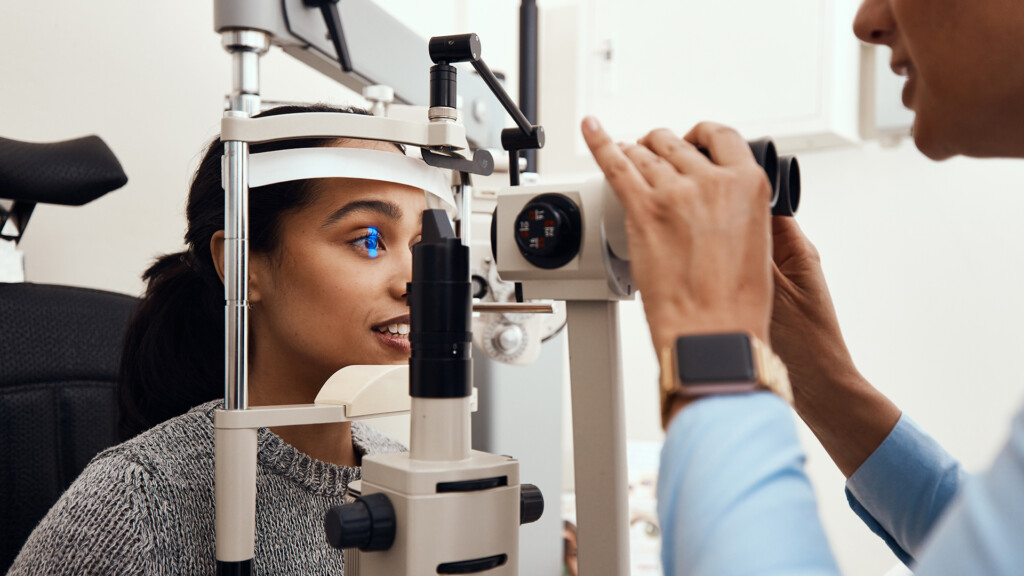
Many people still think of their local optician primarily as somewhere to have their eyes tested or to update a glasses prescription. The reality is very different. Today’s community optometrists are highly skilled healthcare professionals who play a central role in detecting, monitoring and managing eye diseases. Many optometrists have further specialist qualifications such as advanced glaucoma or retina care, and many practices are equipped with sophisticated technologies, such as optical coherence tomography (OCT), digital retinal photography and visual field testing, providing hospital-grade capabilities. However, this clinical capacity is not being fully utilised.
A proven route to more efficient, accessible eye care
Evidence increasingly shows what can happen when community optometry is integrated more effectively into the wider eye care pathway.
Peer-reviewed research, for example, found that minor eye conditions services (MECS) reduced GP referrals to hospital ophthalmology by 30.2% in one London borough and 75.2% in another, demonstrating the potential for community optometry to absorb significant demand safely and cost-effectively. An analysis also suggested that up to 78% of A&E attendances for eye problems, amounting to hundreds of thousands of visits each year, could be safely managed through community optometry services.
At a time when emergency departments are operating under extraordinary strain, enabling patients to access appropriate care through local optometry practices represents an important opportunity to improve both efficiency and patient outcomes.
Patients benefit too. Receiving care closer to home is often quicker and more convenient than attending a hospital appointment. In fact, cataracts are generally first picked up in routine eye exams in community practices. Earlier assessment is also particularly important for conditions such as glaucoma, where irreversible sight loss can occur before symptoms emerge.
Despite this evidence, across England, access to enhanced eye care services remains highly variable. This postcode lottery means some patients benefit from established community pathways while others have no access to equivalent services. In some cases, successful services have even been decommissioned despite positive outcomes for patients and commissioners alike.
Unlocking community capacity therefore requires more than good intentions. It requires stronger integration between primary and secondary care, more consistent commissioning and better digital connectivity across the system.

Technology will be a crucial enabler of the transformation
Eye care is particularly well placed to benefit from innovation because it is built around imaging and data.
Artificial intelligence is likely to accelerate these gains further. Research conducted by Moorfields Eye Hospital and DeepMind demonstrated that AI systems can analyse OCT scans and identify retinal disease with accuracy comparable to experienced specialists.
We are also seeing innovation transform treatment itself. For example, in cataract surgery – the most frequently performed operation in the UK – a new surgical lens has been created using AI technology: the Galaxy Spiral Lens, which provides glasses-free vision at all distances without the bothersome side effects of many other lenses. Groundbreaking innovations such as these have the potential to improve pre- and post op times, whilst helping patients to achieve stronger visual outcomes.
The aim of all this emerging technology is not to replace clinicians, but to help them support more patients safely and efficiently closer to home.
Ultimately, the future of eye care should not be framed as a choice between hospitals and the community. The strongest systems will be those that bring both together.
Hospitals will continue to provide highly specialised care. Community optometrists can deliver accessible front-line services, monitor chronic conditions, refine referrals and identify problems earlier. And technology can connect these settings more effectively while helping clinicians work smarter.
No single intervention will resolve the pressures facing NHS eye care. But the solution is also not starting from scratch. Much of the workforce, expertise and technology needed already exists. The opportunity is to unlock it. Community optometry should be at the heart of the strategy, not on the sidelines.