
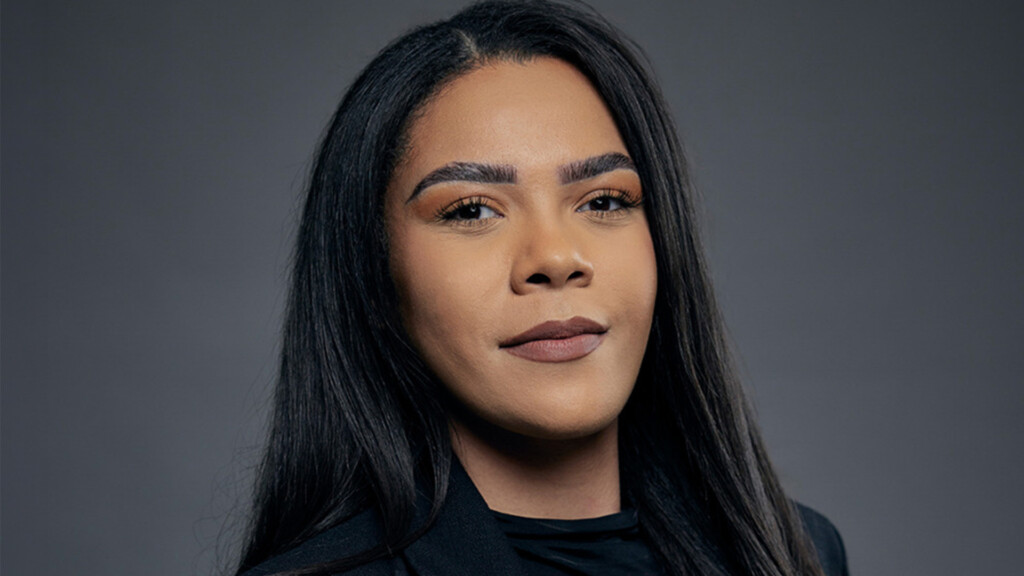
Isobel Egemole, investment director specialising in healthtech at London VC, IW Capital, explains how smart femtech founders can close the gap.
For a sector serving 51% of the global population, femtech attracts a remarkably small share of the capital chasing healthcare returns. The market is growing at 160% the rate of broader healthcare, and forecasts put it at $206 billion (£153 billion) by 2033. And yet, in 2024, femtech raised just 8.5% of total digital health funding. That is less a gap than a clear opportunity hiding in plain sight.
There is no shortage of astute observers calling this out. Writing recently in Healthcare Today, Lara Zibners makes the compelling case that investor blind spots are actively redirecting capital away from regulated women’s health innovation and towards the unregulated promises of the wellness industry.
She’s right, and the data backs her up. But if you are a femtech founder raising right now, waiting for the VC ecosystem to reform itself is not a strategy. The smarter play is to understand exactly why the capital hasn’t followed the opportunity and to pitch in a way that removes every excuse not to invest. Here is how.
Stop pitching a sub-sector. Start pitching a mass market
The single biggest framing mistake in femtech pitches is accepting the label of niche. Women are 51% of the global population, and conditions that uniquely or disproportionately affect them drive more than 60% of revenue for the world’s 20 largest pharmaceutical companies, according to McKinsey. That is not a niche, but it has been miscategorised as one.
As Marissa Fayer, chief executive of DeepLook Medical, puts it: a substantial proportion of investment in women’s health has historically been classified under broader categories like oncology, which has systematically obscured the true scale of the market.
The first job of a pitch is to correct that misconception and make it clear that operations are not in a women’s health sub-sector but in an undervalued segment of the largest industry on earth.
Anchor everything to commercial outcomes
Experience tells us that unfamiliarity drives perceived risk. Most VC decision-makers are still men – with women representing just 17% of partners at large firms – and it is demonstrably easier for investors to back solutions to problems they have personally experienced. Harvard Business School research found that startups focused on women’s health attract 25% fewer applicants with significantly less experience than comparable companies.
The antidote is not to make the problem more relatable; it is to make the commercial case impossible to ignore. Total addressable market, revenue trajectory, unit economics and path to exit are the universal languages of investment. If an investor does not personally understand the clinical problem, they can still understand a market growing faster than almost any other segment in healthcare.

De-risk the unfamiliar with proof
Data from Galen Growth suggests femtech companies face a higher diligence burden than comparable digital health businesses, which is not fair. It is also the current reality, which means founders raising now need to walk in over-prepared. Clear indication of early revenue, retained clients, clinical validation, NHS or private partnerships can do this job. It converts an investor’s unfamiliarity from a reason to hesitate into a risk they can see has already been managed and a management team that is commercially focused.
Looking around at the market, Hertility has built credibility through clinical rigour. Peppy has anchored its story in employer partnerships and demonstrable health outcomes. These are not accidental choices; they are deliberate signals to a capital market that needed reassurance before it could move.
Translate the problem for the room you’re actually in
There is a version of every femtech pitch that only lands for people who have lived the problem. Then there is the version that lands for a mixed room of investors who may never have. The best founders build the second one without losing the authenticity of the first.
This means concrete epidemiology over personal narrative and exercises like connecting the health problem to workforce productivity, insurance costs, improved outcomes or system burden – outcomes that any investor can price. It means showing that the customer who buys your product is not a niche demographic but a mainstream one with documented, measurable pain.
Build a narrative that goes beyond gender
Flo Health became Europe’s first femtech unicorn – founded, notably, by men – by building a story about team depth as well as its scalable technology and a clear path to exit. While female founders should not obscure their identity, the full investment thesis cannot rest on the gender lens alone. Investors want to know about the team, what the IP moat looks like, who the likely acquirers are and the team’s experience that gives them the edge to succeed.
Progyny’s journey to a NASDAQ listing, valued at over $1 billion, is a masterclass in building a femtech story around employer demand and scalable infrastructure, not just clinical mission.
The bigger picture
There are genuine signs of momentum. Policy is shifting: the UK Government’s Women’s Health Strategy, now being renewed and embedded into the 10 Year Health Plan, alongside a £50 million commitment to maternity research and the rollout of women’s health hubs across England, are beginning to address the upstream research gap that has long prevented femtech companies from reaching commercialisation in the first place.
Major pharma, like Eli Lilly, Merck and Johnson & Johnson, has woken up to the opportunity and is beginning to recycle capital back into the ecosystem. As more companies reach meaningful scale, that capital will compound.
But the funding cycle that will eventually correct this market has to start somewhere. Right now, that somewhere is a founder in a pitch room, making the case clearly enough that a cautious investor has no good reason to say no.
The opportunity gap is real and the market is enormous. The founders building in it are exceptional. The job now is to make sure the pitch tells the story of all three.