Add us as a preferred source
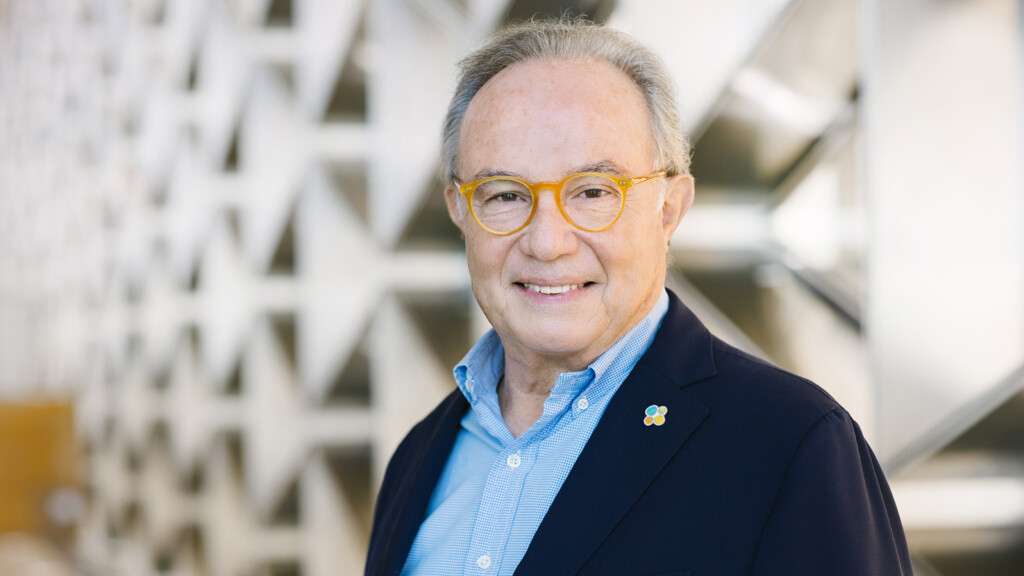
Pierre Magistretti, distinguished professor of biosciences and vice-president for research at King Abdullah University of Science and Technology (KAUST), looks at dementia research.
For decades, dementia research has trained its focus almost exclusively on the neuron, the brain’s primary information processor, and its progressive deterioration. It is an entirely logical starting point. The cognitive hallmarks of Alzheimer’s disease, from the erosion of memory to the collapse of language and reasoning, map visibly onto neuronal death.
Yet despite this near-singular focus, drug trial after drug trial continues to fail. Something fundamental is missing from our models, and it is not a failure of scientific ingenuity. The issue is that for most of the modern history of neurology, we have been so focused on what goes wrong inside the neuron that we have largely overlooked the vast cellular infrastructure that keeps it alive.
The missing piece is not inside the neuron itself. It is in the energy system that sustains it.
How the brain powers itself
The brain is the most metabolically demanding organ in the human body, consuming roughly 20% of the body’s total energy supply despite accounting for only 2% of its mass. To recall a memory, process sensory information, or execute a decision, neurons must fire electrical impulses and release neurotransmitters across synapses in rapid, precisely coordinated bursts. This requires a continuous, finely calibrated fuel supply. When that supply falters, even fractionally, synaptic transmission degrades. When it fails entirely, neurons die.
Think of it as an electrical power grid. Each synapse is a node on the network. For the grid to function, every node must receive a reliable current. If the power supply drops, the signal weakens. If the power line is severed, the node goes dark. This is dementia at the cellular level.
For most of the last century, neuroscience focused almost entirely on the neurons themselves, the grid’s lightbulbs. The brain’s other major cellular population, the glial cells, were largely dismissed as structural scaffolding. We now know this was a profound scientific oversight.
My research, conducted over several decades and most recently published in The Journal of Physiology, has helped establish that astrocytes – the dominant subtype of glial cells, present in the brain in comparable numbers to neurons – are not passive bystanders. They are the brain’s master energy operators, and their metabolic relationship with neurons is not a supporting role. It is the foundation on which all cognitive functions rest.
Astrocytes extract glucose from cerebral blood vessels, convert it into lactate, and shuttle it directly into active neurons during periods of heightened cognitive demand. For years, lactate was understood purely as metabolic fuel, the energy substrate that keeps neurons firing. Our most recent findings reveal something far more significant.
Lactate is not merely fuel. It is a signalling molecule.
When lactate enters a neuron and is metabolised, it shifts the cell’s internal redox state – specifically, it increases the NADH/NAD⁺ ratio. This biochemical shift triggers a cascade that directly enhances the activity of NMDA receptors, the membrane proteins central to synaptic transmission, learning and memory. Critically, this promotes the interaction between NMDA receptors and CaMKII, the enzyme responsible for translating synaptic activity into the lasting structural changes that form the physical basis of memory. As well as powering the grid, astrocyte-derived lactate determines how robustly its connections are forged.
When the grid goes dark
Dementia disrupts this partnership at its foundation. When astrocytes are damaged or diseased, as occurs in Alzheimer’s and other neurodegenerative conditions, they lose their capacity to produce and transport lactate efficiently. The metabolic dialogue is severed. Without this energetic and molecular support, neurons starve and die. The synaptic connections that encode a person’s memories, language and sense of self are progressively and irreversibly extinguished.
This reframing has direct implications for therapeutic strategy. If clinical treatments continue to focus exclusively on protecting neurons from downstream damage, we are essentially trying to replace a broken lightbulb while the power line that feeds it remains severed. The grid will not recover. This is precisely why so many promising drug trials have ultimately failed to change the disease trajectory for patients. We have been targeting the wrong part of the system.
The path forward demands a fundamental reorientation, one already underway in research, but one that must now translate urgently into clinical and investment strategy. Preserving the functional integrity of the neuron-astrocyte unit, rather than treating each cell type in isolation, must become a central objective of dementia therapeutics. We must develop targeted interventions that support astrocyte metabolism, maintain lactate transfer, and protect the brain’s energy infrastructure before irreversible neuronal loss occurs.
This is the most logical next step in the fight against dementia.