Add us as a preferred source

Inspectors have found improvements at the Welsh Ambulance Service, but further progress is needed to reduce delays in handing patients over to hospitals.
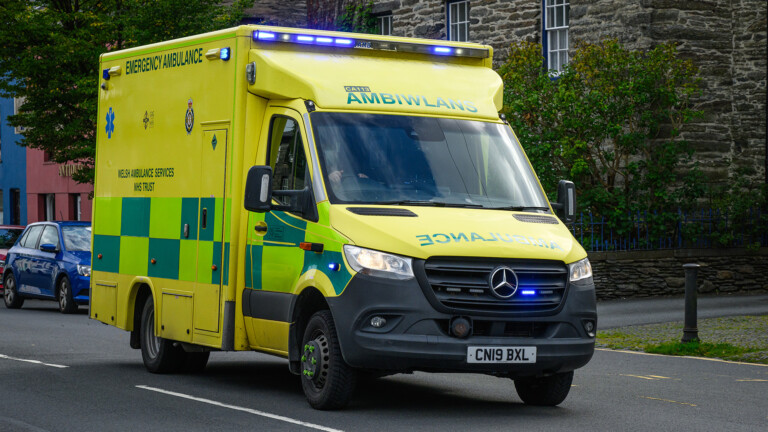
Delayed ambulance handovers remain a risk to urgent and emergency care in Wales, inspectors have found. Healthcare Inspectorate Wales (HIW) said handovers remain the most significant challenge facing the Welsh Ambulance Services NHS Trust (WAST), although it noted improvements elsewhere.
The trust has strengthened its approach to managing delays, but inspectors said there was not enough evidence to demonstrate that changes had reduced the risk of harm to patients or delivered lasting improvements.
The findings follow an assessment of progress since two previous HIW reviews, published in 2020 and 2021, which raised concerns about patient safety, delayed handovers, workforce pressures and the experience of patients waiting for ambulances.
However, the latest report also highlights significant progress across the organisation. This includes stronger leadership and staff support, better clinical decision-making, improved training and development, and greater investment in digital systems and data quality.
HIW also found that the trust had strengthened its arrangements for managing periods of high demand and operational pressure.
The report did note progress in ambulance handover performance, with the number of hours lost to delays in November 2025 falling to its lowest level in four years.
The trust has also developed alternative care pathways to help patients receive appropriate treatment without necessarily being taken to an emergency department.
Stronger evidence needed
In 2025, 35.5% of patients seen by advanced paramedic practitioners were taken to emergency departments, compared with 67% of those seen by standard paramedics. A further 57% of incidents handled by clinical navigators were directed to remote clinical assessment pathways.
Despite these developments, HIW said further evidence was needed to establish whether the initiatives were having a sustained impact on patient safety, ambulance availability and waiting times.
It also highlighted the need for better evidence that staff are consistently following procedures, and that feedback and incident reporting are leading to organisational learning.
The report recognised that delayed handovers are a whole-system problem which the ambulance trust cannot resolve alone. Health boards and other partners must also take action to improve patient flow and hospital capacity.
HIW chief executive Alun Jones said it was encouraging to see the trust had responded positively to many of the concerns raised in previous reviews. However, while progress has been made in handovers, he said “stronger evidence” is needed to show these changes are improving patient safety and delivering lasting benefits.
The inspection makes eight recommendations covering areas including patient safety, communication, staff development, organisational learning and data quality.
Following the report, the trust must provide a formal response setting out how it will address the recommendations and demonstrate the impact of its actions, while HIW will continue to monitor progress.