
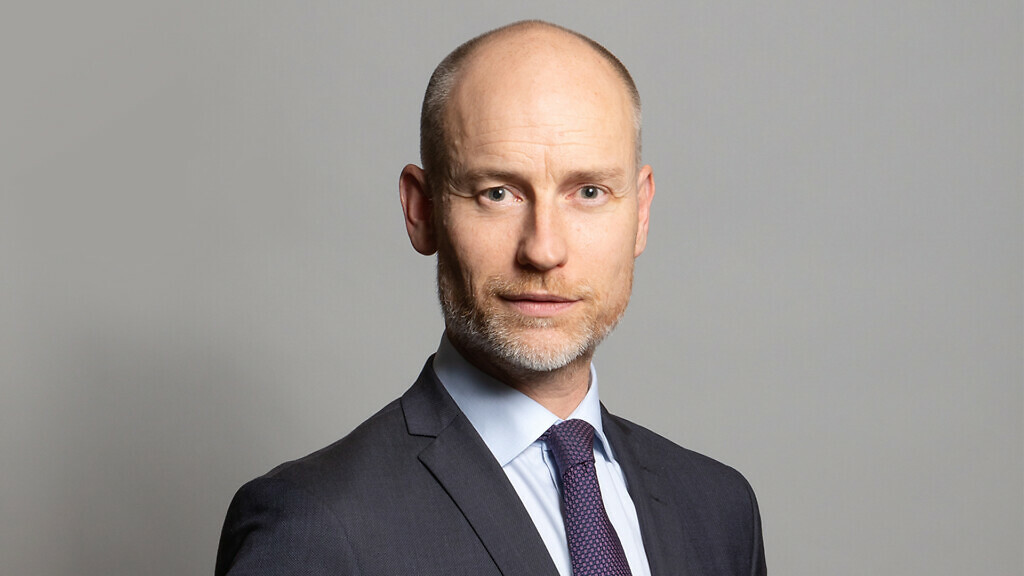
Minister of state for care Stephen Kinnock has outlined a much-needed palliative care service framework as the sector questions where the funding will come from.
The government has reiterated its support for palliative care and end-of-life care.
In a written statement to parliament, minister of state for care Stephen Kinnock outlined a palliative care and end-of-life care modern service framework for England, with a planned publication date of Spring next year.
The framework would put in place “a clear and effective mechanism to deliver a fundamental improvement to the care provided,” he said. It would enable adoption of “evidence-based interventions” that are proven to make a difference to patients and their families, he added. These would include earlier identification of need, care delivered closer to home by integrated generalist and specialist teams and strengthened out-of-hours community health support, including dedicated telephone advice.
He confirmed his support for the framework, speaking at a conference a couple of days later.
While he emphasised that the government is neutral on the ongoing passage of the Terminally Ill Adults Bill, it would “continue to work towards building a society where every person who needs it receives high-quality, compassionate palliative and end-of-life care”.
Positive step
The position of the government was widely welcomed by the industry, with hospice chief executives calling it a “positive step”.
“For too long, palliative and end of life care was not a government priority,” said Hospice UK chief executive Toby Porter. “We welcome the government’s firm and clear commitment today to making certain everyone gets the care they need, where they need it, when they die.”
Similarly, Nick Stevens, joint chief executive and finance director of St Raphael’s, which provides end-of-life care to the Merton and Sutton suburbs of London, called it a “positive step forward”.
“[The government] highlights the need to prioritise end-of-life care and to make meaningful improvements so that everyone can access high-quality, specialist support, no matter where they live,” he continued.
“There are challenges with practices across integrated care boards and we welcome any government plans which address these,” said Lavinia Jarrett, chief executive of Demelza, which provides care to children and young people with serious or life-limiting conditions.
The problem that all of them highlight is funding. As Healthcare Today has pointed out, there are now 380 beds out of use in hospices across England, a figures that has risen by more than 25% since last year, when it was revealed that 300 beds were out of use in English hospices.
“The framework will… only solve the challenges in accessing palliative care that ministers have identified if it is implemented at local and regional level,” said Nick Carroll, chief executive of Bristol-based Together for Short Lives.
“To achieve this, it will need to be supported by action to boost the workforce and use it more effectively, fill the £310 million gap in NHS funding for children’s palliative care and hold NHS bodies to account in putting the framework in place,” he warned.
Complexities and variabilities
The publication at the end of November of the report by the independent expert panel into the current state of palliative care in England confirms how urgently the framework is needed.
The panel found that efforts to commission services are affected by complexities and variabilities, leading to differences in quality around the country. This variability also arises from a lack of a nationwide framework for how Integrated Care Boards (ICBs) should commission palliative care services.
ICBs were often found to not be equipped well enough to understand the palliative and end-of-life care needs of their local populations, in some cases due to a lack of access to data.
Because palliative care is often not prioritised in local areas, it faces insufficient funding from ICBs, which themselves face persistent funding pressures.
Spending on primary and community health care accounts for 11% of health expenditure for people in their last year of life, while hospitals receive 81% of the spending. Moreover, 22% of public expenditure per person at the end of life is on social care, compared to more than 50% of total expenditure on healthcare. The NHS workforce was found to be ill-equipped to meet the needs of people at the end of life because of insufficient provision of education and training.
And as has become the norm, the panel received evidence of systemic inequality throughout the country, both in terms of the quality of services available in different parts of the country, but also inequalities experienced by underserved or marginalised communities.
“We welcome this report, which brings forward yet more evidence of the scale of the crisis in palliative and end of life care and the impact it has on dying people and their loved ones,” said Katie Reade, head of policy and public affairs at Hospice UK. “It lays bare the inconsistency and inequity in how care is commissioned and delivered – as well as the lack of funding.”