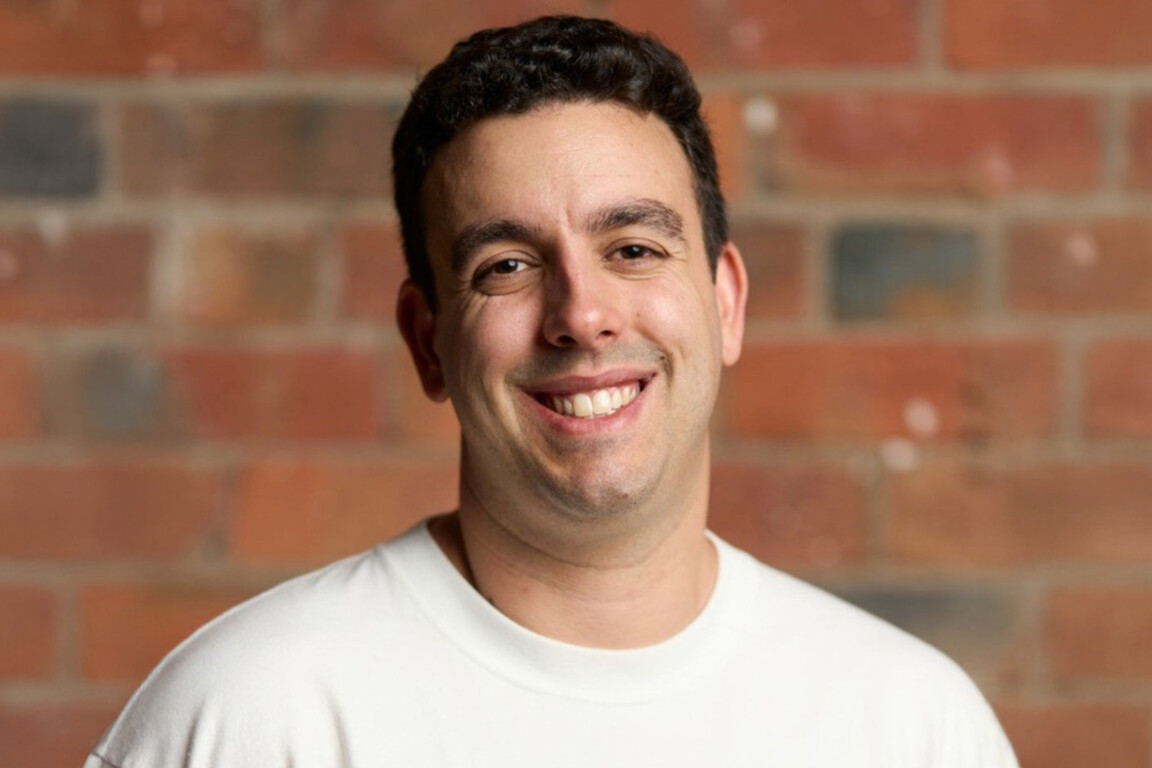
Former surgeon Thomas Kelly, co-founder and chief executive of Heidi, explains why the real value of clinical AI is still undersold.
For Thomas Kelly, co-founder and chief executive of healthcare AI platform Heidi, the administrative burden of modern medicine isn’t just a productivity killer, it’s a clinical risk. Having spent years in the trenches as a vascular surgeon, Kelly has seen the invisible shift that occurs when a doctor’s focus is split between the patient in front of them and the mountain of documentation that follows. For him, the goal of technology shouldn’t be to add more features to an already cluttered screen; it should be to liberate the clinician entirely.
Kelly talks to Healthcare Today about clinical workflows, the regulatory double standard facing the industry, and why the future of clinical AI might actually be a wearable device on a surgeon’s chest.
Everyone agrees that documentation is broken. What specifically is failing in current clinical workflows that AI scribes are best placed to fix?
The clinical note traditionally serves two distinct, and often competing, purposes. For the clinician, it is primarily a memory aid. However, the note also serves an economic and organisational function, acting as the source of structured data for coding, compliance, and billing. These administrative tasks are rarely what clinicians are passionate about, yet they consume a disproportionate amount of their time.
This is where the magic of AI scribes like Heidi comes into play. By automating the documentation process, we address both needs simultaneously.
Ultimately, this creates a win-win across the healthcare experience. Patients receive clearer, more comprehensive notes via the NHS app; doctors are freed to focus on the human element of medicine; and the organisation receives a high-quality, structured dataset of everything occurring within its walls.
Do you worry that AI scribes have become commoditised? How can people choose between you?
In the current landscape, building an AI demo is relatively easy, but the brass tacks of clinical practice – consistency, accuracy and reliability – are far harder to master. As a former clinician, I understand how difficult it is to navigate such a noisy environment. The real test for an AI scribe isn’t just a successful recording; it is the ability to handle the edge cases: a loss of internet, a noisy patient environment, multiple speakers, or complex, speciality-specific templates.
At Heidi, we process over two million visits every single week. This scale isn’t just a statistic; it is our primary engine for refinement. By seeing millions of sessions, we have polished every corner of the platform to ensure that human error or technical glitches don’t result in lost data. When a clinician has a mediocre experience with a subpar tool, they often lose faith in AI as a whole, assuming all vendors are the same.
“The true power of large language models lies in their ability to detect intent.”
How much of the problem is actually about AI and how much is about integration with systems like NHS workflows and legacy IT?
Our entry into large healthcare organisations often follows a distinct bottom-up pattern. Clinicians frequently discover Heidi independently and bring it to their Trusts. Because Heidi operates as its own dedicated application and surface, we are not strictly dependent on the legacy architecture or ageing infrastructure that often slows down innovation in the healthcare sector.
One of the biggest hurdles we face is workflow anchoring. Many clinicians and administrators are still mentally tied to old-fashioned, dictation-oriented workflows. However, the true power of large language models (LLMs) lies in their ability to detect intent. You no longer need to tell the system exactly where to go; you simply state the three things you want to achieve next, and the AI handles the summarisation and execution.
By operating as a separate, modern surface, we allow organisations to see immediate proof of value in a piloted environment. We aren’t waiting for the legacy systems to change; we are providing a modern layer that works alongside them.
Where does responsibility sit if an AI-generated note is wrong clinically or legally?
A fundamental principle of our platform is that the clinician remains the ultimate author of the record. Much like a doctor signing off on a note written by an intern or transcribed from a dictation, the act of signing a Heidi-generated note renders it their own work.
However, we actively monitor our notes for quality, checking for hallucinations and ensuring that clinicians don’t fall into automation bias, where they stop editing or critically reviewing the output. If a consultation was conducted in a noisy or acoustically challenging environment, our system is designed to flag this to the user, explicitly advising them that the note may require a higher level of scrutiny.
There is a clear divide in liability: the clinical responsibility for the note’s accuracy and the subsequent care plan remains with the doctor. However, if there is a technical failure – such as a coding error, a system glitch, or an integration issue with national software – that responsibility sits firmly with us. We maintain comprehensive platform insurance, alongside robust cybersecurity and technical safeguards, to ensure our users are protected against system-level failures, even as they retain their professional clinical oversight.

Are regulators keeping pace with this technology?
As a provider of medical devices, we maintain constant engagement with regulatory bodies across multiple jurisdictions, from the MHRA in the UK to the FDA in the US. Generally, these regulators have been prudent, adjusting their documentation as they observe how tools are used in the real world. However, a significant concern is emerging: a surge of new scribing tools – particularly those built directly into existing Electronic Health Records (EHRs) – that are not being held to the same rigorous standards as dedicated platforms like Heidi.
At Heidi, we are pursuing Class IIa and IIb certifications, which require incredible technical and safety rigour. In contrast, it appears that some large, legacy EHR providers are trialling scribing features within NHS Trusts without having any medical device certification.
This raises a critical question about enforcement. Traditionally, medical records have avoided medical device status because they were viewed as simple repositories. But when AI begins to fill fields automatically and suggest conditions, that protection should no longer apply.
It feels like there are currently different rules for different players. If a dedicated AI tool performs an action, it is strictly regulated; if a legacy record system performs the same action via a built-in feature, it often bypasses that scrutiny.
As AI capabilities become more powerful and autonomous, these safety standards must be applied evenly across the industry to protect both clinicians and patients.
“I believe the future of clinical AI isn’t in the cloud, but on the person.”
Where do clinicians push back or abandon the tool?
A common source of pushback against AI arises when clinicians or organisations adopt a microscopic view of the technology, assuming its utility ends at documenting a single outpatient encounter. In highly templatised specialities – such as the vascular surgery rounds I used to perform – the daily notes are often brief updates on mobilisation or wound healing. In those moments, a tool designed to summarise an hour-long conversation might feel like overkill for a doctor who needs to see 100 patients in three hours.
The real value of AI is currently being obscured by a positioning problem: the industry has anchored the term “scribing” to the GP or outpatient setting. However, the true potential lies in the complex, high-stakes environments where documentation is currently a massive burden.
For instance, that same vascular surgeon could have Heidi running remotely under their scrubs during a three-hour operating case. The AI could then synthesise the entire procedure into precise operative notes, a tailored explanation for the patient, and a detailed clinical record – artefacts a surgeon would never have the time to produce manually before moving to the next case.
When we frame AI only as a tool for filling notes, we miss the opportunity to capture the narrative of complex care that currently goes unrecorded.
What does a consultation look like in five years if tools like this succeed?
My ultimate vision for healthcare is one where every clinician has an AI partner that exists as a tangible extension of their practice. Consider the life of a vascular surgery registrar: currently, a single patient visit triggers a mountain of follow-up work – coding, scheduling, and administrative tasks – that doesn’t actually require a medical degree, yet consumes the doctor’s time. Meanwhile, the patient leaves with instructions they may not fully remember and risks they may not fully manage.
In the future, Heidi becomes the bridge that closes this gap. The AI doesn’t just stay in the consultation room; it goes with the patient as a supervised extension of the doctor, assisting with triage, scheduling and follow-through. Under the clinician’s supervision, the AI automates the parts of the job we want to delegate – revenue cycle management, guideline-oriented ordering, and even preliminary prescribing.
This transformation liberates the clinician to focus on what matters: the physical examination, the history, and the clinical repartee. The doctor can use the AI as a real-time research assistant – asking it to cross-reference NICE guidelines or pull recent evidence-based papers mid-consultation.
Perhaps the most tech-forward part of this vision is the move toward localised hardware. To solve the persistent concerns around security and compliance, I believe the future of clinical AI isn’t in the cloud, but on the person. I imagine Heidi as a wearable device – a pin on the clinician’s chest – that handles all processing and actions locally within the four walls of the organisation.
Patients and doctors alike will find confidence in knowing that the brain of the operation is physically present, providing a secure, high-stakes partner that feels less like a distant algorithm and more like a permanent member of the surgical team.