
The latest breakthroughs in technology and healthcare, including an ambulatory surgery investment, NVIDIA-powered intelligence, AI-accelerated MRI diagnostics, digital physiotherapy, care sector recruitment, home support and outreach for underserved populations.
New ambulatory surgery centre to open in Harley Street Health District
Specialist healthcare investment platform 10M Healthcare and the Howard de Walden Estate plan to turn No. 1 Harley Street into an ambulatory surgery centre.
Representing a £100 million investment, the facility is scheduled to open in the fourth quarter of the year and will serve as a centre for specialities including orthopaedics, neurology, cardiology and women’s health.
The new centre is designed specifically for same-day surgical treatments, allowing private patients to undergo minor procedures and return home without an overnight stay. The facility will house five surgical theatres, GP consultation rooms, screening services and dedicated wellbeing suites. This approach aims to streamline the patient journey from initial diagnosis through to recovery, all within a single site in London’s premier health innovation district.
“Securing this building is a significant milestone,” said Ken Anderson, chief executive of 10M Healthcare. “What sets this development apart is the creation of a fully integrated ambulatory surgery centre… delivering a state-of-the-art medical facility for short-term day patients.”
“What sets this development apart is the creation of a fully integrated ASC in the heart of the Harley Street Health District. The extensive refurbishment and fit‑out is well underway, and we look forward to opening later this year in London’s leading health innovation district,” he continued.
Proximie advances the intelligent operating room with NVIDIA
Global health technology platform Proximie is to collaborate with chip manufacturer NVIDIA to power the next generation of AI-driven intelligent operating rooms.
The partnership is a cornerstone of Project Rheo, an NVIDIA initiative designed to accelerate healthcare robotics and physical AI. By integrating Proximie’s surgical data with NVIDIA’s Cosmos world foundation models, the two companies want to build a future where agentic AI can understand, predict and assist in live surgical procedures.
The collaboration focuses on creating an ambient AI infrastructure that continuously captures intraoperative video, instrument usage and procedural context. Using NVIDIA’s Cosmos-H, a foundation model specifically for generating synthetic surgical data, this real-world intelligence is being used to develop vision-language models capable of recognising surgical milestones in real-time. The technology paves the way for physical robotic humanoid assistants that can support surgical teams by preparing instruments and retrieving equipment, essentially allowing one AI layer to see while another acts.
“Some of the richest data in healthcare is generated in the operating room, yet it has historically remained underused,” said Nadine Hachach-Haram, founder and chief executive of Proximie. “By combining Proximie’s ambient intelligence with NVIDIA AI, we are building ORs capable of anticipating needs and supporting clinical teams,” she added.
Proximie claims that its platform can improve operating room productivity by up to 24%, potentially unlocking an additional 300 procedures per year, per operating room, through more efficient scheduling and workflow visibility.
Spire Healthcare halves MRI scan times
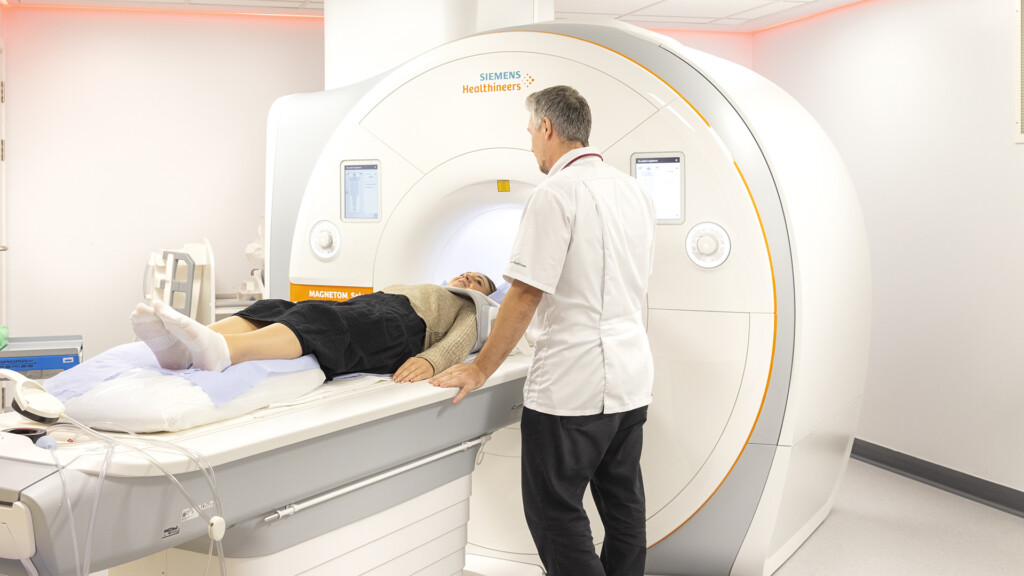
Spire Healthcare, Britain’s second-largest provider of private healthcare, has rolled out AI-enabled MRI technology across 21 of its hospital sites.
By using AI deep learning models from partners like Siemens’ Deep Resolve, Philips’ Smart Speed and GE, the scanners are now able to remove digital noise from images. This results in sharper, more accurate diagnostic data while speeding up the physical scanning process.
The impact on patient throughput is substantial: scan times for certain orthopaedic studies, such as knee MRIs, have been reduced from 30 minutes to just 15 minutes. Overall scan rates have risen from 1.9 to 2.3 per hour, which has helped bring the average patient wait time for an MRI down to just 3.5 days. While the AI handles the complex pattern recognition and image enhancement, radiographers remain in full control of patient safety, positioning and real-time scan adaptations.
“Investing in AI-enabled MRI scanners is a game-changer,” said Chris Gunn, Spire’s director of diagnostics. “This technology also allows staff to focus even more on the human connection; to recognise any anxiety and help patients through the experience,” he added. The investment ensures that consultants receive higher-quality images faster, supporting earlier intervention and more confident clinical decision-making.
NHS Shetland extends digital physiotherapy platform
NHS Shetland and the Shetland Health and Care Partnership have announced a two-year extension of their partnership with digital health provider EQL, following the rollout of the Phio physiotherapy platform.
The pilot, which launched in March last year, demonstrated that three-quarters of patients using the digital tool required no further musculoskeletal treatment, significantly reducing the demand for onward referrals and face-to-face appointments.
The platform provides immediate digital assessments and personalised recovery guidance for joint, muscle and back pain, which is vital for Shetland’s geographically dispersed population. During the pilot, 512 individuals accessed the service – nearly four times the initial expectation – with users ranging in age from 18 to 85. Notably, half of all interactions occurred outside traditional clinic hours, allowing patients to manage their care around work and family commitments.
“In a rural and remote setting, having more than one way to access support matters,” said Anthony McDavitt, director of pharmacy at the Shetland Health and Social Care Partnership. Gillian Ironside, professional lead for physiotherapy services, added that the level of engagement in Shetland has far exceeded uptake seen in many other parts of the UK.

New Care Hiring Health Check helps providers improve recruitment efficiency
Recruitment marketing specialist crooton has launched the Care Hiring Health Check, a free diagnostic resource designed to help health and social care providers identify inefficiencies in their recruitment pipelines.
The launch comes as vacancy rates across the sector remain high, placing a strain on existing staff and potentially impacting the quality of care.
The guide serves as a practical self-assessment framework, helping organisations move away from reactive hiring toward more sustainable, long-term workforce strategies. It focuses on critical bottlenecks, such as candidate disengagement and lengthy time-to-hire, providing actionable advice on how to improve application quality and candidate experience. By making small, evidence-based changes to their recruitment marketing and engagement, providers can better protect their budgets and build more stable teams.
“The health and social care sector continues to face significant workforce challenges, and many recruitment processes have evolved under pressure and become reactive,” said crooton chief executive Stephen Anderson. “We hope this will help care providers to take a step back, sense-check their approach and identify small changes that can make a big difference,” he added.
Ilarna partnership releases 100 hospital bed days per month across five NHS Trusts
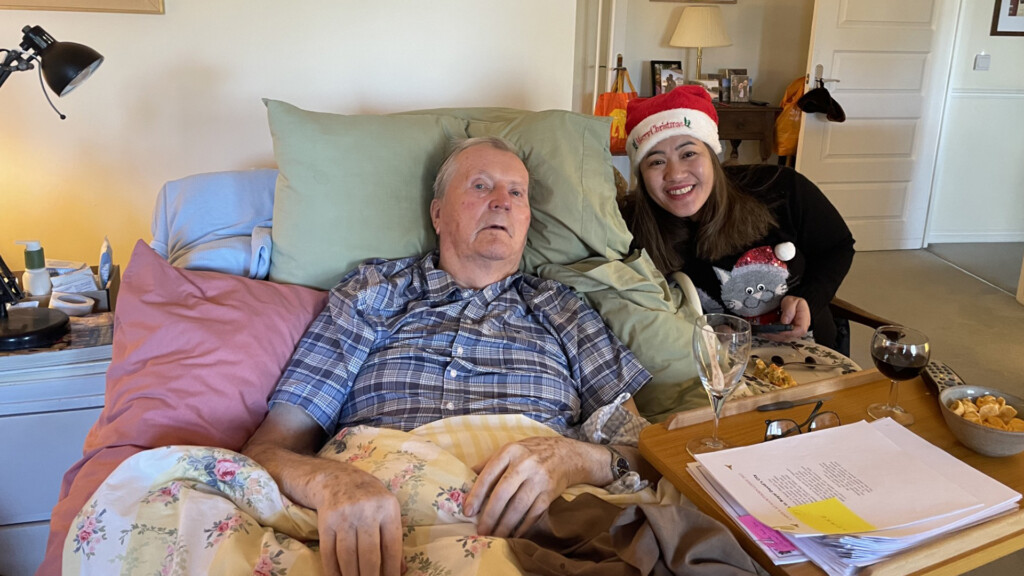
Home support platform, ilarna, is helping five NHS Trusts – Buckinghamshire, Cambridgeshire, North West Anglia, Northampton and Shropshire – tackle what it calls the national hospital discharge crisis. By placing experienced clinical discharge coordinators directly on-site to work alongside ward teams, the service helps patients who are medically fit to leave hospital find appropriate home support, often within 24 to 48 hours.
The impact on hospital capacity is significant: each trust is releasing an average of 100 bed days per month, resulting in a monthly saving of approximately £50,000 per trust. Beyond the financial benefits, the ilarna platform allows families to browse and select their own personal assistants, ensuring they know exactly who is entering their home. Unlike traditional care models, these assistants spend a minimum of one hour per visit, providing personalised, relationship-based care that reduces the risk of readmission.
“Every day we see people who are medically fit to leave hospital but unable to do so because the right support isn’t available,” said ilarna chief executive Alex Moran. “By helping people quickly connect with trusted support at home, we enable patients to recover where they want to be,” he added.
The model also addresses social care workforce challenges by allowing self-employed personal assistants to set their own rates – earning an average of £18 per hour – making the sector a more sustainable and attractive career path.
The Health Squad in Durham uses digital insights to tackle health inequality
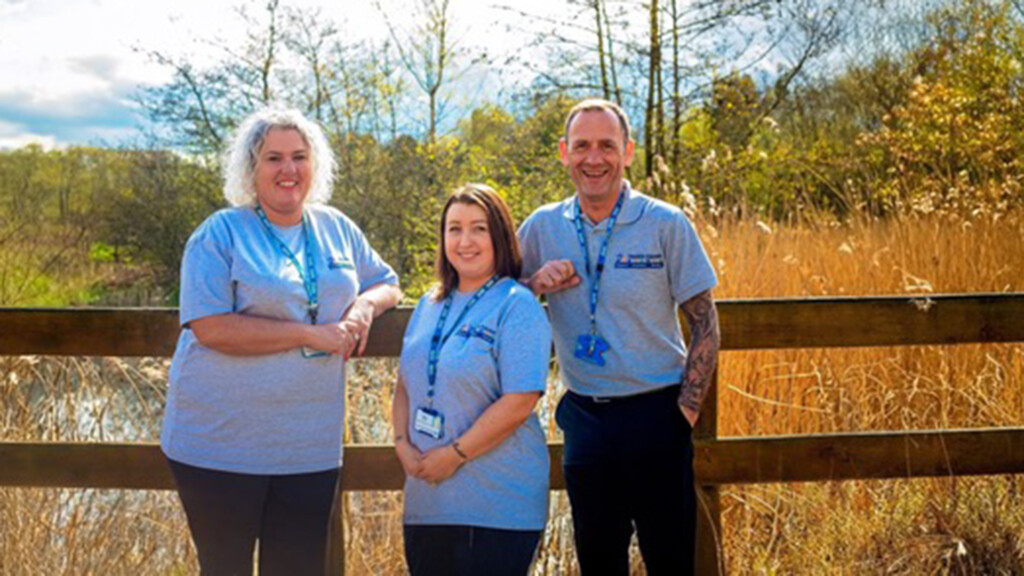
A mobile health initiative in County Durham, the Health Squad, is reaching the region’s most vulnerable populations using flexible software from Health Diagnostics.
By deploying mobile outreach teams directly into communities, the project – a partnership between the local NHS Foundation Trust and the Pioneering Care Partnership – engages residents who often face barriers to traditional GP care, including those experiencing homelessness, substance misuse or living in high-deprivation areas.
The initiative uses a tailored version of the Health Options CS platform, which allows practitioners to generate personalised health plans and track progress in real-time. Data from a six-month pilot from April to Sept last year showed a significant impact: of the 500 clients engaged, 91% received a full health assessment. Most notably, 61% of those who received a follow-up reported they had achieved their personal health goals, such as smoking cessation or weight management.
The software also uncovered a hidden crisis in mental health, with nearly two-thirds of the population scoring for “severe anxiety” – a rate dramatically higher than the UK average.
“The system has been able to provide individual health plans and include vulnerable cohorts who will not attend a GP practice,” said Fiona Mawson, public health practitioner at Durham County Council.
By using dashboards to filter health outcomes by age, ethnicity, and deprivation, the team can ensure resources are precisely directed toward reducing inequalities.