Add us as a preferred source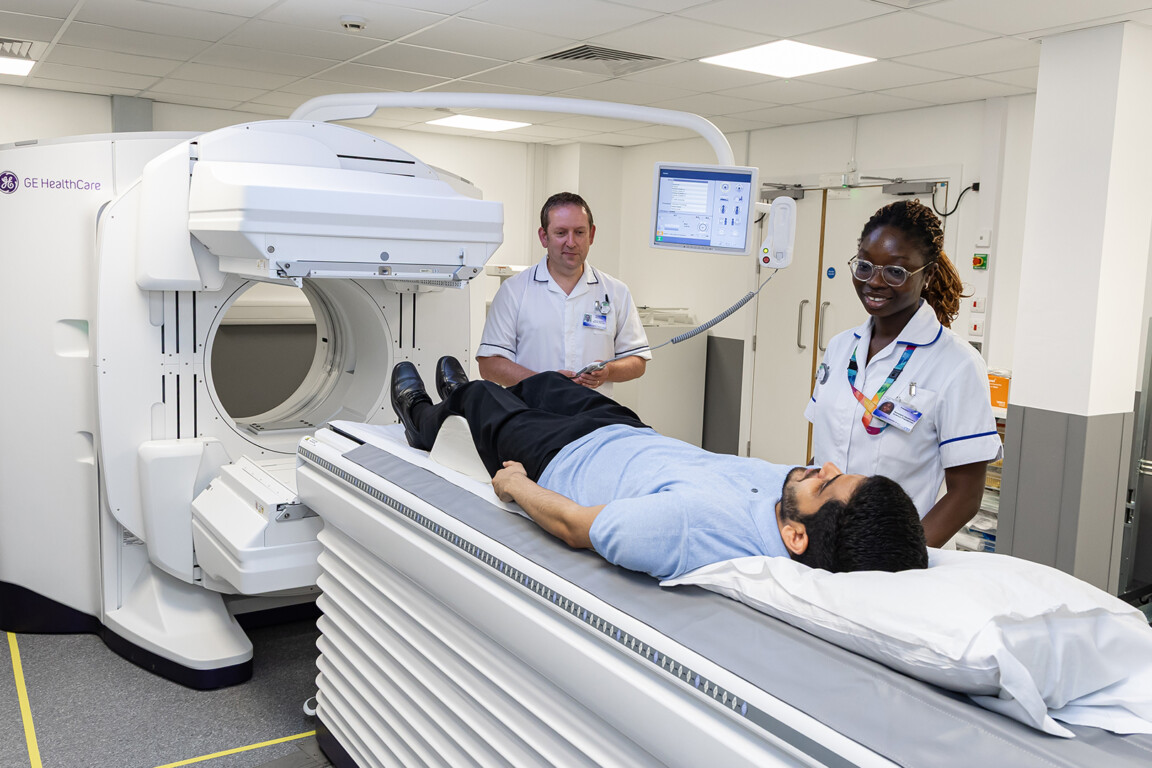
The latest clinical innovations, including the development of a rehabilitation hospital, AI-powered documentation software, operating theatre safety, breast MRI diagnostic tool, and automated non-contact glaucoma treatments.
Active Care Group partners with WheelPower
Active Care Group has finalised an agreement with wheelchair sport charity WheelPower to develop the new Active Neuro Stoke Mandeville Private Rehabilitation Hospital.
Scheduled to open next summer, the 52-bed specialist facility will be constructed on an existing site at Stoke Mandeville Stadium, which is owned by the charity and situated adjacent to the National Spinal Injuries Centre. The new hospital is expected to treat around 250 patients every year.
Clinical features include a ventilated high-dependency unit for complex respiratory needs, a specialist hydrotherapy pool and an AI learning, education and conference hub to advance rehabilitation research. For physical recovery, the hospital will feature technology suites equipped with robotic gait and arm training, virtual-reality balance networks, augmented-reality therapy and neuromuscular stimulation. The infrastructure includes two technology-enabled, AI-integrated trial and step-down flats designed for practising daily activities.
The collaboration is part of WheelPower’s five-year plan to bring dedicated rehabilitation services directly back to its main site, aligning with the foundational vision of the charity’s founder, Ludwig Guttmann, by linking clinical rehabilitation with established routes into adaptive sport.
“The new Active Neuro Stoke Mandeville Private Rehabilitation Hospital is a landmark investment in the future of specialist spinal and neurological rehabilitation,” said Keith Browner, chief executive officer of Active Care Group. “It will offer a gold standard in rehabilitation care, bringing together world-class specialists and facilities with advanced rehabilitation technologies and techniques that are rarely available together in one rehabilitation setting.”

Jane launches secure AI Scribe
Practice management platform Jane has launched AI Scribe, an integrated, AI-powered documentation tool for the private health and wellness market in the UK. The software is designed to cut clinical administrative workloads, with data indicating it can reduce individual documentation time by up to 30%.
Unlike third-party digital add-ons, the tool is embedded within Jane’s central practice management architecture, which covers online booking, scheduling, patient communications, invoicing, and payment processing. This allows clinic owners to handle clinical workflows and AI-assisted transcription within a single interface under a single subscription.
The feature is available as a £15 monthly add-on per practitioner, with a tier of five free notes refreshed monthly to allow clinics to evaluate the system prior to a full subscription commitment.
To meet healthcare data privacy requirements, the platform features a UK GDPR-compliant design. All UK client data is hosted exclusively within regional data centres located in the UK, using 128-bit encryption in transit and 256-bit encryption at rest. Additionally, Jane is registered as a Class I medical device listed with the Medicines and Healthcare products Regulatory Agency (MHRA).
The product rollout primarily targets allied health fields where the company maintains established traction – specifically acupuncturists, chiropractors, physiotherapists and osteopaths.
“Documentation is one of the biggest drains on practitioner time, and for many clinic owners it also means lost revenue,” said Tom White, UK product lead at Jane. “AI Scribe is our answer to that, giving that time back– letting practitioners be more present with patients, reduce end-of-day admin, and focus on growing their practice.”

Nuffield Health rolls out national theatre accreditation framework
Independent healthcare provider Nuffield Health has partnered with the Association for Perioperative Practice (AfPP) to pursue formal AfPP accreditation across its entire hospital network.
Announced at Nuffield Health’s York Hospital, the initiative serves as a step toward establishing standardised consistency, quality and clinical safety within operating theatres nationwide. Following initial successful accreditations at two of its facilities, the provider will now embed the safety framework across its remaining 33 hospitals, targeting a comprehensive national rollout by the end of next year.
The AfPP accreditation model functions as a collaborative, structured review that benchmarks hospital theatre services against the AfPP Standards & Recommendations for Safe Perioperative Practice (2022). The evaluation also integrates established national and international frameworks, including the World Health Organization (WHO) Surgical Safety Checklist and the National Safety Standards for Invasive Procedures (NatSSIPs). By leveraging these parameters, the peer-review process supports frontline theatre teams to reflect on current practices, systematically validate existing clinical protocols and identify targeted opportunities for operational improvement.
The national standardisation strategy is designed to provide patients with clear quality assurance. The safety partnership follows Nuffield Health’s recent achievement of Aseptic Non Touch Technique (ANTT) Gold status across 92 individual sites.
“This is an important milestone that reflects our ambition to deliver the best health and care services patients can get anywhere,” said Alison McCourt, chief quality officer of Nuffield Health. “By working with AfPP as a trusted partner, we will implement these standards consistently across all 35 of our hospitals. This standardised approach will give patients confidence and assurance that they will receive the highest quality of care.”
Quibim launches Europe’s first regulatory-cleared AI breast MRI diagnostic tool
Valencia-based medical imaging company Quibim has launched QP-Breast, an AI-driven decision-support tool designed to detect suspected lesions on breast MRI scans in Europe and the UK.
The software is the first AI product in Europe and the UK to receive regulatory clearance specifically to identify breast cancer via magnetic resonance imaging. The technology is designed to integrate into existing hospital picture archiving and communication systems (PACS) without disrupting established clinical reporting workflows.
The tool is an automated diagnostic aid for radiologists, generating structured reports that detail lesion size, volume, anatomical location and an estimated likelihood of malignancy. It is developed for use across all clinically indicated breast MRI examinations, encompassing both routine screening and targeted diagnostic protocols. Biopsy results were used as the clinical ground truth to train and validate the underlying algorithms.
QP-Breast has achieved regulatory compliance under both European and UK frameworks, with a CE mark under the EU Medical Device Regulation (MDR 2017/745) as a Class IIb medical device, alongside a UKCA mark as a Class IIa device.
“Radiology teams are facing growing demand, but resources aren’t keeping pace,” said Ángel Alberich-Bayarri, Chief Executive Officer of Quibim. “QP-Breast is designed to assist clinicians during the interpretation of breast MRI studies by providing accurate detection of lesions suspicious for breast cancer. By automating time-consuming parts of MRI analysis and delivering clear, structured outputs, we’re enabling radiologists to focus on what matters most.”
The Functional Gut Clinic expands national footprint
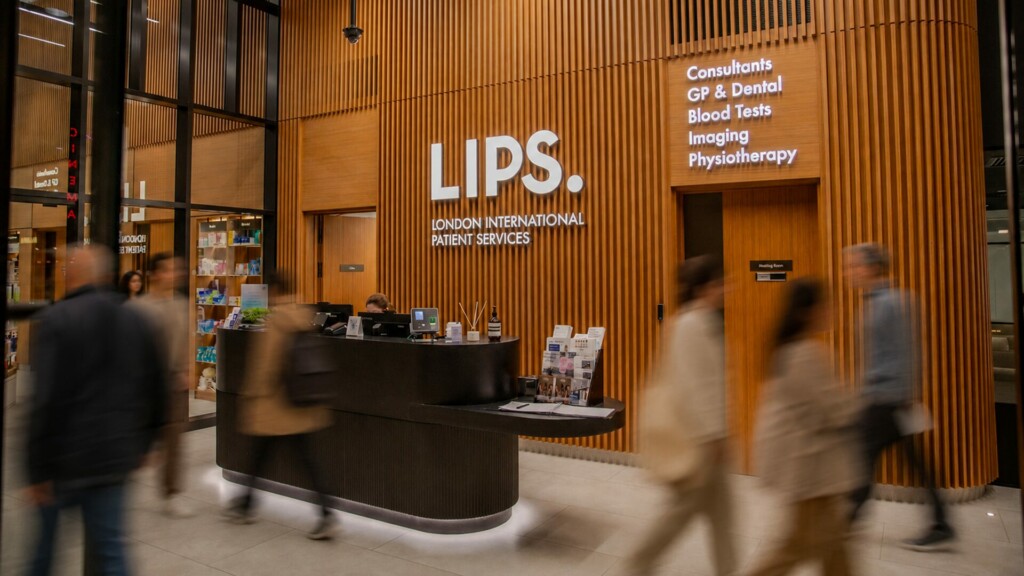
The Functional Gut Clinic has partnered with LIPS Healthcare to open a new gastrointestinal (GI) physiology diagnostic hub inside Battersea Power Station.
The launch establishes gut testing and integrated gastroenterology pathways for a primary catchment area across London and Surrey. The expansion is the tenth location for the provider, supplementing its flagship clinics in Manchester, Cambridge, and central London alongside six existing UK satellite centres.
The new diagnostic hub is integrated into LIPS Healthcare’s existing consultant-led private medical ecosystem. The specialised GI physiology service will focus on treating patients with benign but debilitating symptoms – such as acid reflux, bloating, chronic diarrhoea, and complex motility disorders – who frequently face prolonged wait times.
The hub will offer evidence-based gastrointestinal physiology tests and therapies led by GI physiologist Skye Waddell. The diagnostic portfolio includes comprehensive motility testing across the gastrointestinal tract, acid and non-acid reflux monitoring and targeted breath testing for Small Intestinal Bacterial Overgrowth (SIBO), H. pylori and carbohydrate malabsorption. The facility will house a Microbiome Clinic providing stool analysis and gut permeability assessments, alongside specialised biofeedback therapies including pelvic floor retraining and gut-focused hypnotherapy.
“LIPS Healthcare and Functional Gut both have an international reputation in healthcare, known for bringing innovations in diagnostic and therapeutic advances to their patients,” said Bu Hayee, consultant gastroenterologist at LIPS Healthcare Battersea. “Rapid access to reflux testing, a full suite of breath tests to pinpoint what’s driving IBS and state-of-the-art microbiome analysis are all of high value to me as a clinician.”
Primary Eyecare Services joins Greater Manchester Alternative Provider Collaborative
Manchester-based Primary Eyecare Services has joined the Greater Manchester Alternative Provider Collaborative (GM APC) to strengthen integrated, neighbourhood-based eye care across the region.
The GM APC acts as a strategic partnership uniting charities and social businesses that deliver NHS and public health services across the Greater Manchester Integrated Care System. Joining the collaborative as a not-for-profit provider, Primary Eyecare Services brings specialised experience in large-scale clinical pathway transformation, preventative health interventions and community-based delivery models.
Through its participation in the collaborative, the organisation will support Greater Manchester’s broader population health strategies and the regional Livewell programme. Operational objectives under the partnership include building out neighbourhood-based delivery networks, facilitating earlier clinical interventions via community access points, and establishing integrated care pathways designed to reduce unnecessary hospital secondary care attendances. The collaborative framework will also allow across-sector partner organisations to address localised health inequalities.
Primary Eyecare Services currently operates across 800 neighbourhoods nationwide, partnering with independent and multiple optical practices, Integrated Care Boards and Local Optical Committees (LOCs) to manage clinical demand.
“Joining the Greater Manchester Alternative Provider Collaborative is a significant opportunity to deepen partnership working and support the region’s shift towards neighbourhood health and to deliver the ambitions of the Livewell programme,” said Rebecca Gale, partnerships & strategy director of Primary Eyecare Services. “Community optometry is already delivering prevention and early intervention at scale, and through the collaborative, we can work with partners to better integrate that capability into system pathways.”
bit.bio launches cell culture media kits
Cambridge-based human cell programming company bit.bio has launched two new cell culture media kits designed to lower cost barriers and streamline laboratory workflows for human cell-based research.
Developed to support the company’s human induced pluripotent stem cell-derived (iPSC) ioGlutamatergic Neurons and ioMicroglia, the kits aim to eliminate the time-consuming preparation traditionally required to source and optimise individual cell culture components from scratch. According to the company, using these pre-formulated kits reduces baseline media preparation costs approximately 18-fold while requiring only a minimum amount of supplementary reagents.
The specialised product lines cater to distinct areas of biomedical research: the ioGlutamatergic Neurons Media Kit facilitates the rapid generation of functional, mature excitatory neurons for neuroscience and target discovery applications, while the ioMicroglia Media Kit is designed to sustain functional human microglia used to investigate neurodegenerative conditions and neuroinflammation pathways, such as those associated with Alzheimer’s and Parkinson’s disease. Both cell lines are manufactured using the company’s opti-ox deterministic cell programming technology, an architecture engineered to yield consistent, reproducible biological data across separate experiments and independent laboratory networks.
“Researchers increasingly recognise the scientific advantages of human cells, but practical barriers have slowed wider adoption,” said Emma Pepperell, chief executive officer of bit.bio. “Our mission is to democratise access to human cells. Our new media kits make it significantly easier and more affordable for laboratories to get started with consistent, human-relevant models without the complexity and cost traditionally associated with preparing specialist media from scratch.”

Home Instead expands franchise network across Ireland
US headquartered home care provider Home Instead will expand into Ireland. The push builds on the brand’s established presence in the country and addresses an increasing demographic shift as ageing populations seek structured alternatives to traditional residential care facilities.
Globally, Home Instead operates a network of more than 1,000 franchise territories, which includes over 265 territories across the UK that collectively generated £325 million in revenues last year.
The operational expansion model relies on recruiting a new tier of locally based franchise partners to own and manage community-specific operations. Under this structure, local business owners will oversee day-to-day administration and community engagement, while matching care professionals to older adults based on personalised care plans. To support its regulatory and corporate framework within the region, Home Instead has secured full membership status with the Irish Franchise Association.
The organisation is actively engaging with prospective franchise operators and stakeholders across Ireland to roll out. Each protected geographic franchise area is demographically mapped to encompass a sustainable target population to support long-term business viability and service scaling. Individuals or multi-unit investor groups interested in reviewing local market opportunities, financial projections and corporate onboarding paths can access the firm’s Irish franchise portal.
“We are excited to build on Home Instead’s established reputation in Ireland and support the next phase of growth for the brand,” said Ruth Brown, managing director of Home Instead UK and Ireland. “As demand for care continues to grow internationally, we believe this is an important opportunity to support a new generation of local business owners delivering high-quality care within their communities.”
UHL installs new hybrid gamma camera
University Hospitals of Leicester NHS Trust (UHL) has installed a new hybrid gamma camera at Glenfield Hospital. Delivered in partnership with medical technology provider Ergéa UK. The GE Aurora SPECT/CT system combines nuclear medicine imaging with high-resolution computed tomography (CT). This allows clinical teams to analyse the physiological function of a patient’s organs alongside detailed anatomical mapping.
Before the hardware upgrade, the UHL nuclear medicine service provided diagnostic support to roughly 5,000 patients a year. The new multi-slice SPECT/CT technology is projected to deliver up to 1,000 additional patient appointments each year across Leicestershire and the broader East Midlands.
The scanner rollout and the corresponding imaging suite refurbishment were executed via a Managed Equipment Service (MES) framework managed by Ergéa UK. Under this multi-year procurement model, Ergéa handles ongoing technology lifecycle management and equipment maintenance to maintain long-term clinical uptime. The finalised system deployment was formally unveiled in June.
“Installing this new camera and refurbishing our base at Glenfield Hospital represent important steps in shaping the future of nuclear medicine at UHL,” said Martyn Farmer, interim group head of nuclear medicine of UHL and University Hospitals of Northamptonshire NHS Group. “These developments will strengthen the service we provide to patients, increase our capacity, and support our teams in continuing to deliver high-quality specialist imaging now and in the years ahead.”
The Retina Clinic London introduces automated non-contact glaucoma laser platform
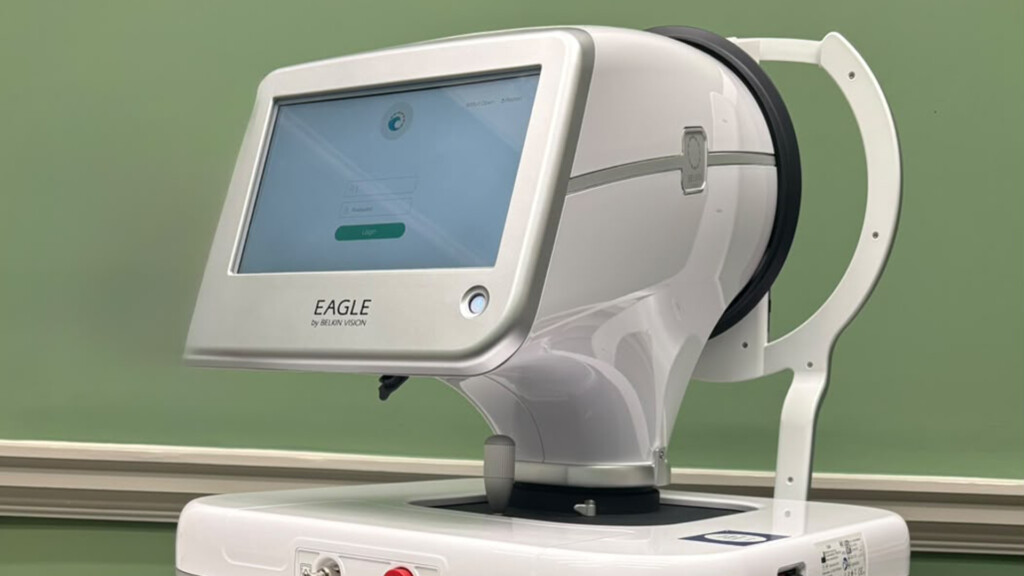
The Retina Clinic London has introduced Direct Selective Laser Trabeculoplasty (DSLT) using the Alcon Voyager platform, becoming the first private clinic in central London to offer the technology.
The non-contact system expands the provider’s glaucoma service, providing a non-invasive therapeutic option designed to lower intraocular pressure and reduce patient dependence on daily medicated eye drops. The platform targets the trabecular meshwork – the eye’s natural fluid drainage network – to stimulate fluid outflow.
Unlike traditional Selective Laser Trabeculoplasty (SLT) procedures that require direct contact with the ocular surface via a specialised contact lens, the automated system operates entirely without eye contact. Using integrated computer-guided tracking networks, the device delivers 120 automated laser pulses through the limbus within a few seconds per eye. Clinical data from the multi-centre GLAUrious study demonstrated that 62% of patients treated with the Voyager DSLT platform remained entirely medication-free 12 months post-procedure, while 81% required the same or fewer daily glaucoma medications compared to their baseline pre-treatment regimens.
Following an initial comprehensive diagnostic assessment and multimodal ophthalmic imaging, eligible patients undergo the automated procedure under direct specialist supervision. Post-operative follow-up evaluations are systematically scheduled between 10 and 12 weeks after the laser application to monitor long-term intraocular pressure reductions and overall treatment response.
“By delivering laser treatment without touching the eye, the technology combines patient comfort with highly precise, automated treatment delivery. For suitable patients, DSLT offers an opportunity to reduce dependence on daily glaucoma medication while helping to preserve vision,” said Paulo Eduardo Stanga, founder and chief medical officer of The Retina Clinic London.