Add us as a preferred source
The latest innovations in healthcare, including an expansion of home healthcare across the UK, agentic AI in drug development and technology to streamline fluid monitoring in paediatric emergency care.
Care Safe expands franchise
Tech-enabled home healthcare provider Care Safe plans to transition into a franchise model to accelerate the UK-wide expansion of its care platform. Launched in August 2023, the company provides direct-to-doorstep healthcare solutions – including primary care, social care, non-emergency patient transport and home support – for private customers, care homes, NHS Trusts and corporate clients.
It says that the franchise model will offer regional exclusivity to partners, supported by centralised brand management, training and marketing from Care Safe. The company currently operates across four locations in London, Telford, Port Talbot and Essex, offering technology-enabled services such as automated vitals collection, geo-fenced patient monitoring, fall prevention systems and remote clinical assessments by qualified healthcare professionals.
The strategic shift follows recent operational milestones, including securing a place on Essex County Council’s “Live at Home” framework as a Tier 2 domiciliary care provider in November last year, and achieving a “Good” rating from the Care Quality Commission for its Telford branch in February.
The expansion aims to address growing demographic pressures and demands for integrated homecare, targeting a UK homecare and supported living market estimated to serve 915,000 adults annually.
“Two things became very apparent. Firstly, the UK is facing the same challenge as almost every country around the world, and secondly, a health tech startup with a proven commercial pipeline is a rare success,” said Samit Kumar Biswas, chief executive and founder of Care Safe. “This has given me the optimism to decide now is the right strategic time to scale the business further. I am convinced that the business we have built is one with an extremely strong proposition for the future and am excited to be able to share this with a number of equally determined business partners as franchisees.”
Tata Consultancy Services launches agentic AI platform
Tata Consultancy Services (TCS) has launched TCS ADD AgentHub, a role-based, enterprise-ready artificial intelligence platform designed to enable agentic AI deployment across life sciences R&D at scale. Built on the TCS ADD architecture, the platform embeds AI agents into clinical development and pharmacovigilance workflows to assist with tasks including case report intake, literature analysis, protocol digitisation, study data tabulation, and medical monitoring.
The platform addresses governance, trust and scalability challenges in regulated environments by embedding AI agents with defined roles, built-in auditability and structured oversight. TCS ADD AgentHub operates under a “Human + AI” model, where autonomous agents automate repetitive, data-heavy tasks while human professionals retain full governance and decision-making authority.
According to TCS, solutions powered by the platform have demonstrated up to 40% efficiency gains in clinical data management, up to 30% reduction in clinical study build effort via metadata-driven automation, up to 30% cost savings in end-to-end safety case processing, and up to a 50% reduction in quality control effort.
“TCS’ strategy is to move towards autonomous enterprise functions where an AI agentic workforce operates alongside humans, driving innovation in drug development and improving patient safety,” said Debashis Ghosh, president of life sciences and healthcare at TCS.

Re:Cognition Health opens Ireland’s first Alzheimer’s clinic
Cognitive healthcare provider Re:Cognition Health has launched its first Irish clinic in Tallaght Cross East, Dublin, the country’s first dedicated independent memory centre to offer disease-modifying therapies for early-stage Alzheimer’s disease.
The expansion brings access to anti-amyloid monoclonal antibody treatments, including Leqembi (lecanemab) and Kisunla (donanemab), to eligible Irish patients.
The Dublin facility addresses demand from patients and families who previously travelled to Re:Cognition Health’s UK clinics for specialist diagnostic evaluations, amyloid-beta biomarker assessments and ongoing infusion monitoring.
The firm now has plans to introduce further specialised cognitive services as demand increases. It operates a transatlantic network of specialist research and clinical treatment centres across the UK and the US.
“The arrival of disease-modifying therapies has fundamentally changed what is possible in Alzheimer’s care,” said Sean Kennelly, clinical director for Ireland at Re:Cognition Health. “Until now, many Irish families have faced the emotional, financial and logistical burden of travelling overseas to access these therapies. Bringing this expertise and treatment capability to Dublin means patients can receive world-class care much closer to home.”
Alder Hey and Tecknuovo streamline fluid monitoring
Alder Hey Children’s NHS Foundation Trust and London-based tech consultancy Tecknuovo to develop SipSmart, a digital tool designed to support “Trial of Fluids” monitoring within the hospital’s Emergency Department.
Supported by funding from the Alder Hey Children’s Kidney Fund and developed pro bono by Tecknuovo, the tool replaces traditional paper tracking charts used during paediatric fluid assessments.
Trial of Fluids is a standard clinical protocol used to evaluate whether children experiencing vomiting, diarrhoea or reduced oral intake can retain sufficient hydration. SipSmart allows parents and carers to scan a QR code on their mobile devices to log fluid intake, vomiting episodes, nappy changes and toilet visits during their stay. Clinical staff can then review the aggregated digital record at the bedside to guide treatment decisions.
The emergency department at Alder Hey treats up to 190 children a day during peak winter periods. SipSmart aims to reduce administrative friction for families caring for unwell children while providing clinicians with clearer, real-time hydration data.
“Good technology should make life easier for the people using it,” said Katie Carruthers, managing director of Tecknuovo. “SipSmart gives clinicians better information while making it simpler for families to support their child’s care at a very anxious time. As the NHS continues to move to more digital solutions, we need to keep adopting practical tools that solve real problems for patients, staff and families.”

Paddington Life Sciences chosen to lead London-wide Life Sciences Talent Hub
Paddington Life Sciences, hosted by Imperial College Healthcare NHS Trust, has been picked to lead a new London-wide Life Sciences Talent Hub designed to strengthen workforce skills, address employer needs, and expand career access across the capital.
The initiative forms part of a £3.2 million investment to develop sector-specific talent hubs across growth industries. Supported by £1 million in direct mayoral funding, the Life Sciences Talent Hub will connect employers, educators, healthcare institutions and innovation clusters to coordinate skills training and open employment opportunities.
The hub will be delivered by Paddington Life Sciences with London life sciences clusters and coalitions, including the Knowledge Quarter, SC1 London, White City, Barts Life Sciences and the Inclusive Health and Life Sciences Coalition. The hub wants to build inclusive career pathways into medicine, biotechnology and healthcare innovation while helping local businesses recruit skilled workers.
“Maintaining London’s position as a global life sciences leader depends on developing the diverse, skilled workforce that the sector needs both now and in the future,” said Jose Acuyo, head of strategy, partnerships and innovation at Imperial College Healthcare NHS Trust. “Our role is to ensure employers can engage more effectively with London’s skills and talent system while helping to build a future workforce that will support innovation, inclusive growth and better health outcomes across the capital.”
bit.bio launches ioScreen CRISPR platform
Cambridge-based human cell programming company bit.bio has launched its ioScreen platform, a new CRISPR screening service designed to accelerate human cell-based drug discovery.
The ioScreen platform provides pharmaceutical, biotechnology and academic researchers with industrial-scale CRISPR screening in human induced pluripotent stem cell (iPSC)-derived models, eliminating the need to build specialised in-house screening infrastructure. By combining bit.bio’s opti-ox technology and CRISPR-Ready ioCells with billions of consistent, mature human iPSC-derived cells, the service allows scientists to modulate gene activity in physiologically relevant models rather than relying on immortalised cell lines.
The platform supports applications across early-stage drug discovery, including target identification and validation, pathway analysis, mechanistic studies, and disease modelling. Customers can access screening capabilities using bit.bio’s portfolio models or by integrating their own proprietary cell lines into the platform.
“We’ve built deep expertise in applying human iPSC-derived cell models to functional genomics, helping researchers better understand disease biology in systems that more closely reflect human physiology. The ioScreen platform is an important step in bringing those capabilities to a much broader community of drug discovery teams, who can supplement their own expertise with ours,” said Sejla Salic-Hainzl who has also been appointed as the firm’s first chief technology officer.
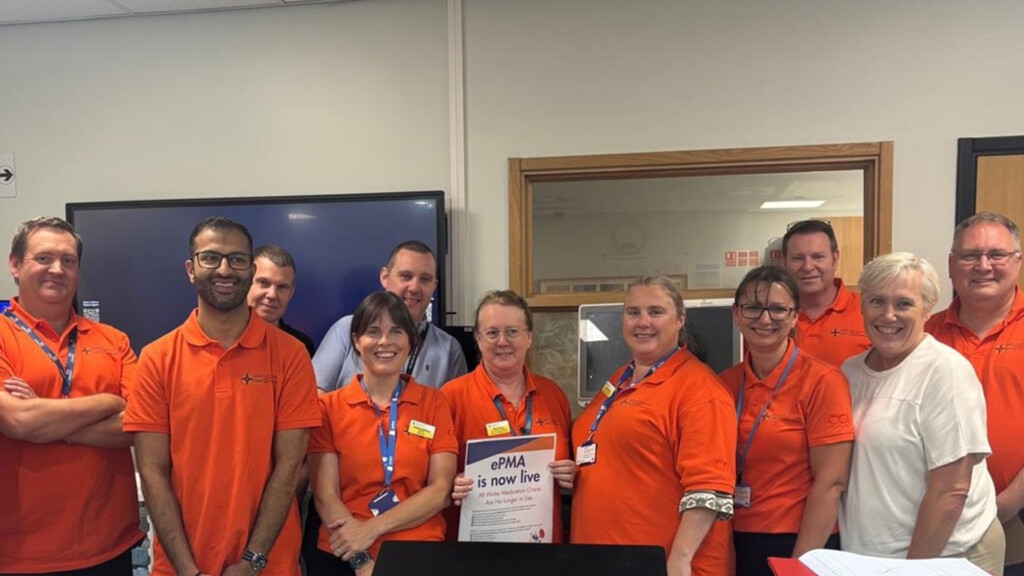
Hywel Dda University Health Board launches electronic prescribing system
Hywel Dda University Health Board (UHB) has implemented an electronic prescribing and medicines administration (ePMA) system at its first site, deploying the platform on Ward 9, a stroke rehabilitation ward at Prince Philip Hospital in Llanelli.
Provided by digital health supplier Better, the platform replaces paper-based medication charts with digital records to improve prescribing accuracy, patient safety and operational efficiency.
The deployment marks the start of a phased rollout across Hywel Dda UHB, making it the fourth health board in Wales to adopt Better’s ePMA solution. Part of the national ePMA programme led by Digital Health and Care Wales (DHCW), the system provides real-time access to accurate medication records, simplifies supply requests for nursing staff, and reduces administrative burdens for clinicians.
“The implementation of ePMA is a major step forward in improving medicines safety,” said Helena Dunne, lead pharmacist for digital medicines management systems at Hywel Dda UHB. “Medication is a key intervention for many patients and using digital technology to support the management of medication will ensure this is safely and efficiently delivered.”