Add us as a preferred source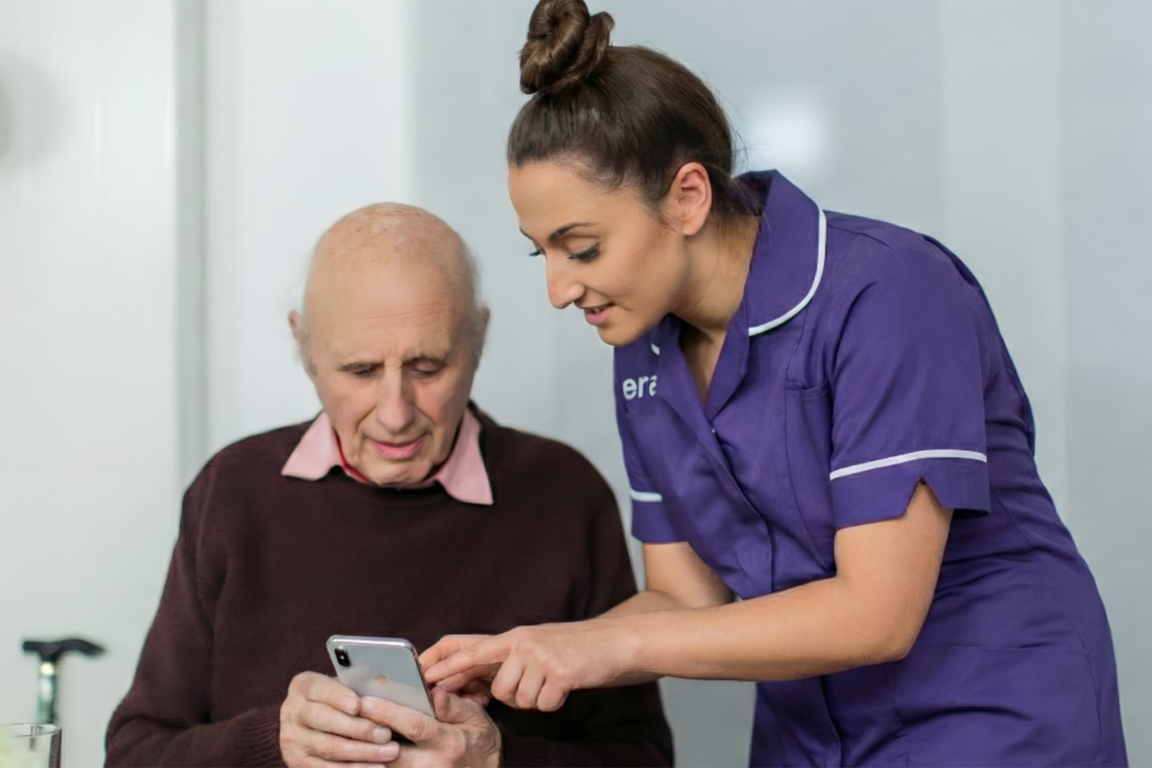
The latest innovations in healthcare, including a collaboration to expand dementia clinical trials, clinical AI in hospices, scaling solutions within the NHS, digital prescribing in north Wales, a grant for hospital infection detection, a new care home in Brownhills and the launch of a real-time care home rating system.
New collaboration to broaden access to Alzheimer’s research
Re:Cognition Health and Cera have signed a partnership to expand access to clinical trials for Alzheimer’s and neurodegenerative diseases. By linking specialist brain health clinics with home healthcare visits, the initiative creates new pathways for individuals to be identified and supported earlier in their health journey. The collaboration leverages Cera’s 2.5 million monthly home care visits to offer advanced assessment and research opportunities to those who may benefit most.
Currently, older adults aged 75 and over carry a disproportionate burden of chronic disease but remain under-represented in clinical research. Data from the NIHR shows that only approximately 15% of clinical trial participants are from this age group, which slows the development of new treatments. This collaboration aims to ensure that recruitment reflects the real-world population affected by dementia, reaching individuals who may not yet have accessed specialist memory services.
Cera’s home healthcare model uses technology-enabled data capture to provide a unique window into cognitive health within a familiar environment. Ben Maruthappu, chief executive and founder of Cera, said: “By enabling responsible, consented identification and screening within the home, we can bridge the gap between the community and the clinic. We are offering the older generation a seat at the table of global drug discovery.”
This data-driven approach allows for the early identification of individuals, maximising the potential benefits of novel therapies while accelerating the development of the next generation of treatments. With patient consent, Cera will refer potential participants to Re:Cognition Health clinics for suitable trials, ensuring participation is determined by clinical suitability rather than geography or mobility. Through these efforts, the partnership seeks to create more inclusive and accessible routes into vital medical research.

National hospice charity adopts clinical AI to protect patient time
Sue Ryder has signed a five-year partnership with Heidi, an AI-powered medical scribe company, to introduce clinical AI across its community services and hospices. The initiative, supported by UK government capital investment, will provide over 630 clinicians with access to Heidi’s AI scribe to automate clinical notes, letters, and forms. This deployment aims to significantly reduce the administrative burden on palliative and end-of-life care teams, freeing up more time for face-to-face support with patients and their families.
The technology is already used at scale across the NHS, with more than 50% of GPs using the tool to document consultations. For the hospice sector, where complex needs often result in longer consultations and heavy documentation, the use of ambient AI is designed to improve workplace wellbeing and ensure more consistent record-keeping. As part of the agreement, Heidi will also contribute £10,000 annually to Sue Ryder through fundraising activities to help raise awareness of the role safe AI can play in expanding clinical capacity.
Sue Ryder chief operating officer Melanie Craig said: “Palliative and end-of-life care clinicians are under huge pressure, balancing complex care with rising demand and limited resources. We cannot afford for their time to be swallowed up by admin. Partnering with Heidi will help us give precious time back to the bedside, while modernising how we work across our community services and within our inpatient settings”. The rollout will begin over the coming months, with teams working to embed the technology into everyday practice across seven healthcare services.

Accelerator programme opens applications following £4.5 million investment
Propel Healthtech West Yorkshire has invited innovators to apply for the next cohort of its flagship accelerator programme, which supports businesses in developing and scaling solutions within the NHS. The initiative recently secured £4.5 million in funding through the West Yorkshire Mayor’s Investment Zone, part of a wider £160 million regional investment aimed at accelerating growth across the health technology sector. This funding is expected to support hundreds of businesses over the next four years, contributing to regional economic growth and the development of life-changing innovations for patients.
The six-month programme is free for successful applicants and offers a comprehensive package of support, including regulatory guidance, masterclasses, and one-to-one mentoring. It is open to both early-stage innovators and scale-up organisations that have an existing presence in West Yorkshire or are willing to establish one. The programme particularly encourages applications from underrepresented founders, including female entrepreneurs and those from minority ethnic communities, to build a more inclusive innovation ecosystem.
“The first priority of our Local Growth Plan is to boost our region’s fastest growing business sectors, because we know that’s how we’re going to drive investment, create jobs and put more money in people’s pockets,” said Tracy Brabin, mayor of West Yorkshire. “This will help with access to finance, skills and workspace to bolster collaboration with hospitals and universities.”
Applications for the new cohort close on 10 April 2026, with the official launch event scheduled for later that month.
Mental health patients first to benefit from digital prescribing in north Wales
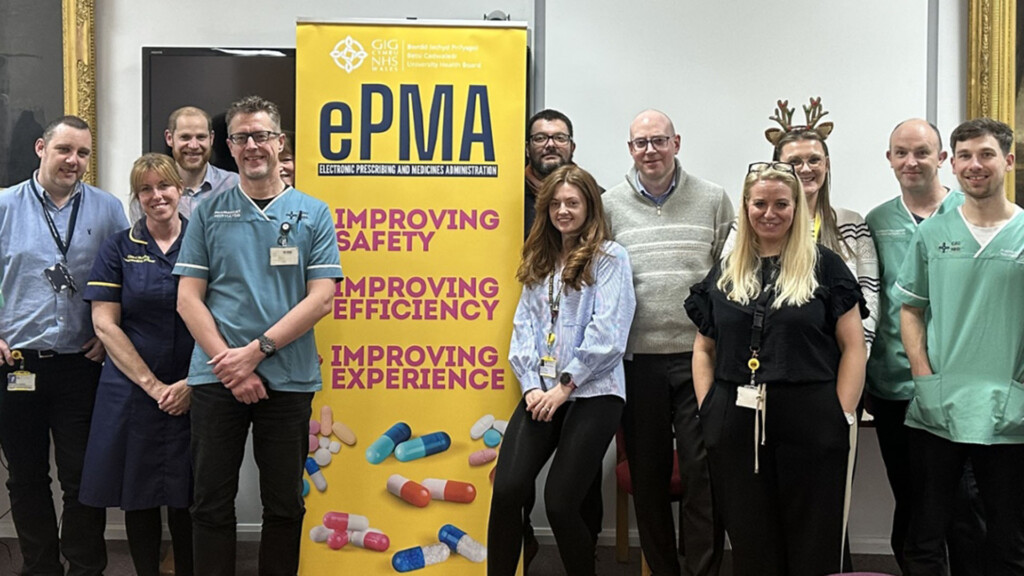
Mental health patients at Wrexham Maelor Hospital have become the first in north Wales to benefit from new electronic prescribing and medicines administration (ePMA) technology. The system, which replaces traditional paper charts, is designed to streamline prescribing and reduce the risk of medication errors for both patients and healthcare staff.
In a significant first for Wales, hospital discharge medicines are also being recorded in the Shared Medicines Record (SMR), paving the way for a single, secure record of medicines and allergies for every patient in the country.
The launch in Wrexham marks the start of a phased roll-out across Betsi Cadwaladr University Health Board (BCUHB), with a full regional implementation expected soon. By digitising these workflows, the health board aims to drive safer care, reduce clinical variation, and improve patient outcomes. This move aligns with broader national efforts to transform patient care, as BCUHB joins other major health boards in Cardiff and Swansea in adopting the specialist software provided by technology partner Better.
“The ePMA go-live in some of our mental health inpatient areas is a landmark in BCUHB’s digital transformation journey,” said BCU chief nursing information officer Jane Brady.
“Clinical teams have embraced the change, and digital prescribing is already driving safer care, reducing variation, and improving patient outcomes,” she continued.
The integration with the SMR ensures that healthcare professionals can access essential information without requiring patients to repeat details at every stage of their care, ultimately supporting better clinical decisions during patient transfers.
SMART grant to Exeter HealthTech Research Centre and Sanome
A collaboration between the NIHR HealthTech Research Centre (HRC) in Sustainable Innovation and UK healthtech company Sanome has secured an Innovate UK SMART grant of more than £300,000. The funding will be used to co-design MEMORI, an AI-powered clinical decision support platform tailored for the earlier detection of hospital-acquired infections. Preliminary studies have already demonstrated that the platform outperforms the NHS standard National Early Warning Score (NEWS2) system in detecting patient deterioration.
The 18-month collaboration will focus on developing multimodal data inputs, including laboratory results, prescriptions, and clinical notes, to provide clinicians with accurate, real-time insights into a patient’s condition. By alerting clinical teams up to seven days before visible signs of infection appear, MEMORI aims to create a wider window for intervention, which could potentially save more lives. The project also seeks to improve the explainability of its machine-learning models, ensuring greater transparency and reassurance for frontline healthcare teams.
Hospital-acquired infections, such as pneumonia and MRSA, account for more than 7.1 million excess bed days and cost the NHS an estimated £2.7 billion a year. Research suggests that 35-55% of these infections are preventable through earlier detection. “Our mission is to prevent deterioration before it becomes life-threatening,” said Samone chief executive and founder Benedikt von Thüngen. “MEMORI shows how real-world NHS data, when safely and securely unlocked, can be transformed into actionable bedside insights that change outcomes using the power of multimodal AI”.

Ribbon cut at brand new Brownhills care home
A new care home has officially opened in Brownhills, with more than 200 members of the local community attending a special launch event to celebrate the occasion. Millfield Rose, part of the Macc Care Group, is set to provide residential, nursing, dementia and respite care for up to 90 residents. The unveiling marks the group’s 17th care home across the Midlands and featured a ribbon-cutting ceremony performed by Louise Harrison, the mayor of Walsall.
The new facility replaces a former pub site that had fallen into disrepair, transforming the area into a modern environment designed to support care and wellbeing. Residents at the home benefit from a range of amenities, including a cinema, salon, wellness spaces and curated menus. The group also provides access to various therapies such as aromatherapy and occupational therapy to ensure a personalised approach to care within a homely setting.
“As mayor of Walsall, I’m proud to see investments like this that place care, dignity and community at their heart. A care home is much more than a building; it’s a place of comfort, friendship and belonging,” said Harrison. Bhav Amlani, Director of Macc Care, added that maintaining strong community connections remains central to the group’s values as it continues to grow its presence across the region.
Real-time rating system for care homes
OpenScore and the Care Consultant Accreditation Framework (C-CAF) have announced a collaboration that allows care providers to convert internal mock inspections into a visible, external quality score. This partnership addresses a significant challenge for care home managers facing a backlog in official regulator inspections, where Care Quality Commission reports can often be several years out of date.
Through a new automated integration, mock inspections conducted by C-CAF-accredited consultants will now flow into the OpenScore system, requiring no additional administrative effort from the provider.
The initiative is designed to move the sector away from a reliance on static history and towards what the partners call the ‘truth of today’. For homes that have improved since their last official inspection, the system provides a way to demonstrate current standards to self-funding families and commissioners immediately. The C-CAF process uses technology to plug reports into a two-stage peer review panel, ensuring that the resulting scores are a transparent and methodology-checked reflection of a home’s actual quality.
“The regulator cannot be everywhere at once, but that shouldn’t mean good care goes unrecognised,” said Debbie Harris, founder of OpenScore and Autumna. “For too long, managers who have worked tirelessly to improve their services have been shackled to outdated ratings. By integrating C-CAF’s validated data, we are moving the sector away from a reliance on static history and towards the ‘truth of today’,” she added.
The OpenScore interactive map now tracks over 65 real-time indicators, including safety checks and resident feedback, to provide a comprehensive picture of care quality.