Add us as a preferred source
The latest innovations in healthcare, including a value-based cardiac care pilot, robotic aquablation therapy and healthtech expansion.
Cleveland Clinic London and Bupa launch value-based cardiac care pilot
Cleveland Clinic London and Bupa UK Insurance have launched a healthcare programme focused on cardiac care. The initiative expands on the organisations’ initial collaboration in arthroplasty launched two years ago, which, it says, delivered a 63% average improvement in patient-reported outcome scores with no significant clinical complications.
The new cardiac pilot applies outcome-based reimbursement models to electrophysiology, interventional cardiology and cardiac surgery. Under the agreement, Cleveland Clinic’s reimbursement is linked to measurable health improvements rather than traditional fee-for-service structures, aiming to improve care coordination and long-term patient outcomes. The arrangement also retains a no-shortfall guarantee for consultant fees, which protects Bupa members from unexpected out-of-pocket charges.
“Our aim is to deliver high-quality and transparent care to every patient,” said Bernard Prendergast, chair of Cardiology at Cleveland Clinic London. “We’re pleased to extend our value-based care collaboration into cardiac care, where positive outcomes can extend longevity and improve quality of life.”
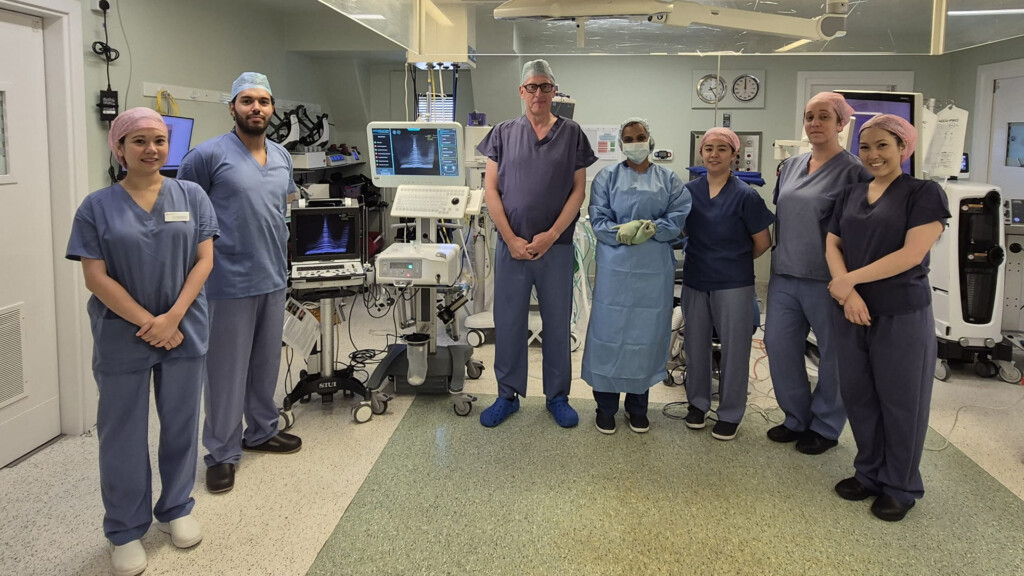
King Edward VII’s Hospital introduces Aquablation therapy
King Edward VII’s Hospital has launched Aquablation therapy, expanding its minimally invasive urological treatment options for benign prostatic hyperplasia (BPH). The hospital also recently completed its first Rezūm water vapour therapy procedure.
The Aquablation procedure uses the AquaBeam Robotic System, which combines real-time ultrasound imaging with a heat-free, robotically controlled waterjet to remove obstructive prostate tissue. The automated delivery allows clinicians to target tissue with high precision while minimising thermal damage to surrounding anatomical structures. Compared to traditional surgical options like transurethral resection of the prostate (TURP), the technique reduces the risk of long-term complications such as irreversible incontinence or sexual dysfunction.
“This innovative treatment reduces the risk of irreversible complications such as incontinence and sexual dysfunction, giving patients greater reassurance when considering their options,” said Richard Hindley, consultant urologist at King Edward VII’s Hospital. “It has clear benefits over the traditional TURP procedure.”

Audika enters UK market
International hearing care brand Audika has launched in the UK with more than 300 clinics across England, Scotland, and Wales. The new entity combines the former operations of Hidden Hearing and Amplifon UK under a single brand within the Demant Group, which operates over 4,500 hearing clinics across 30 countries.
The rebranding and operational transition is being rolled out in phases, with sites in Scotland, Yorkshire and Surrey already operating as Audika, and all remaining clinics scheduled to complete integration by October. The network offers clinical diagnostic assessments, hearing aid fittings, and home-visit audiology services delivered by audiologists and backed by a “60 Day Better Hearing Promise” for new patients. Existing customer warranties, appointments and aftercare agreements will transfer directly to Audika.
The UK launch comes as data from the Royal National Institute for Deaf People indicates that UK adults wait an average of 10 years before seeking treatment for hearing loss. Out of an estimated 10 million people in the UK who could benefit from hearing aids, only 3 million currently use them. Audika plans to invest in clinical training, diagnostic technology, and service expansion to improve early access and address the treatment gap.
“Hearing care isn’t part of what we do, it’s everything we do,” said Claire Pearson, managing director at Audika. “By bringing together expert clinicians, leading technology and an extensive network of local hearing centres under one brand, we are creating a stronger platform to invest in clinicians, innovation and local hearing care services.”
Androlabs partners with Majorelle to launch Testavan in France
Global men’s health pharmaceutical firm Androlabs has partnered with French specialist pharmaceutical company Laboratoires Majorelle to distribute Testavan in France. Testavan is a transdermal testosterone replacement therapy for the treatment of adult male hypogonadism.
The agreement expands Testavan’s availability across all European markets. Majorelle, which already commercialises Androlabs’ erectile dysfunction treatment Vitaros (alprostadil cream) in France, will use its existing commercial infrastructure and urology network to handle promotion and distribution to French healthcare professionals.
The partnership addresses ongoing diagnostic and treatment gaps in male health across France, where men’s average life expectancy remains 5.6 years lower than that of women. Testavan is supplied with a dedicated applicator to avoid manual contact during transdermal application.
“France was the last major European market where Testavan did not have a commercial presence,” said Nicolas Vennin, co-founder of Androlabs. “Our partnership with Majorelle marks an important milestone in our ambition to expand access to men’s health treatments across the continent.”

West Yorkshire healthtech leaders relaunch regional cluster group
Regional leaders across industry, academia, the NHS and public sector bodies have relaunched the West Yorkshire Healthtech Cluster Group to accelerate healthcare innovation. Originally established in 2019, the revitalised partnership brings together over 35 member organisations – including ABHI, Johnson & Johnson MedTech, Innovate UK, MHRA and the region’s NHS trusts and universities – to represent a regional sector comprising more than 300 healthtech companies, 16,000 employees and £3 billion in annual revenues.
Co-chaired by Richard Paxman, chief executive of Paxman, and Edward Bellamy, chief executive of Radar Healthcare, the cluster aims to strengthen links between commercial developers and clinical end-users, support scale-up activity and promote West Yorkshire’s capabilities in digital health, AI, diagnostics and medtech both nationally and internationally.
Previous collaborative efforts by cluster members helped secure West Yorkshire’s £160 million Healthtech Investment Zone – a 10-year scheme supporting spin-outs and infrastructure – and delivered the HealthTech Launchpad programme offering up to £1 million in business scaling grants alongside Health Innovation Yorkshire & Humber.
“West Yorkshire is already home to one of the UK’s most dynamic healthtech ecosystems,” said Paxman. “By working collaboratively, we can raise the profile of the sector, attract investment, accelerate innovation and create new opportunities for businesses across the region.”