Add us as a preferred source
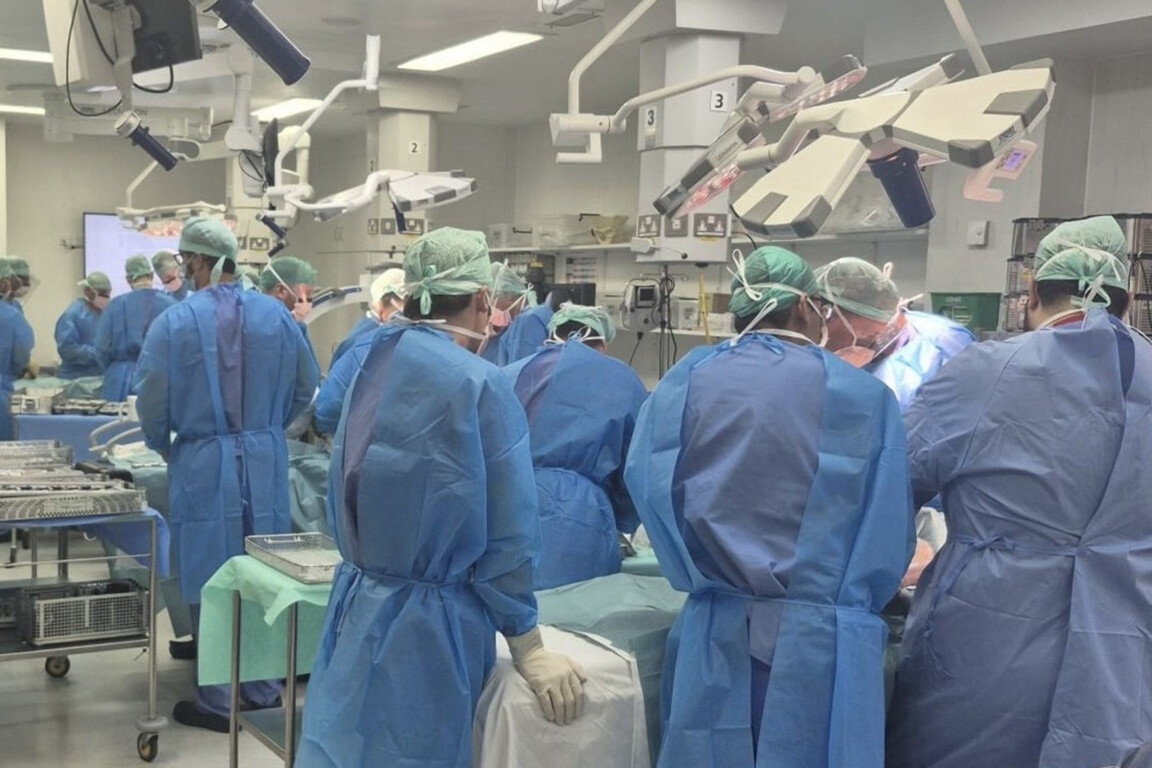
The latest healthcare innovations, including a national surgical robotics adoption hub, online diagnostic booking and landmark research rethinking long-term addiction recovery metrics.
Newcastle Surgical Training Centre launched national surgical robotics adoption hub
The Newcastle Surgical Training Centre, part of The Newcastle upon Tyne Hospitals NHS Foundation Trust, has been awarded £7.4 million to establish a national surgical robotics adoption hub to guide NHS trusts in integrating robotic surgery into clinical care.
Funded through Innovate UK’s Robotics Adoption Programme (part of the UKRI IS8 Advanced Manufacturing Programme), the hub will provide evidence-based guidance, technical readiness assessments, staff training and clinical evaluation for healthcare providers. The initiative aims to support NHS England’s long-term projection for robotic-assisted procedures, which are expected to scale from over 41,000 annually to approximately 500,000 a year by 2035.
The national hub will assist trusts in identifying high-impact surgical specialities, ensuring robotic platforms deliver measurable patient benefits – such as reduced recovery times, less post-operative pain and lower blood loss – while maintaining safety and cost-effectiveness across the NHS estate.
“Surgical robotics has the potential to transform surgical care for patients across the NHS, and it is important that decisions about its use are based on evidence and clinical need,” said David Deehan, consultant orthopaedic surgeon and co-founder and clinical director of the Newcastle Surgical Training Centre. “Our surgical robotics adoption hub will help NHS organisations understand where they can make the biggest difference and support them to introduce this new technology safely and effectively.”

Practice Plus Group partners with Scan.com
Independent healthcare provider Practice Plus Group Hospitals has partnered with digital health platform Scan.com to launch an online booking service for private diagnostic imaging.
The integration allows patients to arrange MRI, CT, and ultrasound scans directly via Practice Plus Group’s website across its 12 UK hospitals. The platform offers upfront fixed pricing and self-referral functionality, eliminating the requirement for a prior GP referral.
To safeguard clinical governance, the digital pathway incorporates a mandatory telephone consultation with a clinician following booking to complete safety screening before the appointment. Consultant radiologist reporting and diagnostic image access are included, with patient results delivered digitally. The move is part of Practice Plus Group’s digital transformation strategy following its acquisition by Narayana Health.
“Online booking gives patients another way to access diagnostic care, with clear information about the service, availability and price upfront,” said Barry Nee, chief information officer at Practice Plus Group Hospitals. “Importantly, the digital journey sits alongside the clinical support and safeguards patients would expect from a healthcare provider… Our partnership with Scan.com is an early step in developing our online booking capability.”

Active Care Group opens female psychiatric intensive care unit in London
Complex care provider Active Care Group has invested more than £2 million to launch Hampton Ward, a new nine-bed female psychiatric intensive care unit (PICU) at Holybourne Hospital in Roehampton, South West London.
The service addresses regional capacity shortages in specialist female intensive care, aiming to reduce out-of-area mental health placements. Developed in consultation with women with lived experience, the ward features nine private en-suite bedrooms equipped with sensory-regulation technology.
The facility provides 24/7 specialist psychiatric and nursing oversight alongside a seven-day therapeutic programme incorporating dialectical behaviour therapy (DBT)-informed approaches, art psychotherapy, music therapy, and movement therapy, aligned with NICE guidance and Royal College of Psychiatrists standards.
“Having to leave the local area can make that experience even harder, separating people from their families, support networks and the professionals already involved in their care,” said Keith Browner, chief executive officer of Active Care Group. “Hampton Ward creates an important new option for women requiring psychiatric intensive care, while strengthening the wider pathway of care available at Holybourne Hospital.”
The Royal Marsden opens NHS facility for national composite biomarker testing
The Royal Marsden NHS Foundation Trust has opened the Royal Marsden Centre for Cancer Genomics in Sutton, establishing the first NHS facility designed to deliver nationwide composite biomarker testing.
Supported by funding from The Royal Marsden Cancer Charity (£864,000 for equipment) and an infrastructure grant from the National Institute for Health and Care Research (NIHR), the facility combines genomics, tissue imaging and machine learning models. Unlike traditional single-marker assays, composite testing aggregates biological signals – including genetic variants, immune profiles and radiological features – to predict treatment response and match patients to clinical trials across the UK.
The centre will serve as a national biomarker trial hub, enabling remote sample processing so patients across England can access precision oncology trials without travelling to tertiary centres. Located within the London Cancer District campus, the facility aligns with national life sciences goals to integrate genomics across half of healthcare interactions by 2035.
“Composite biomarker testing looks set to deliver on the promise of integrated diagnostics, compiling as many different types of data as is necessary to characterise the patient and their tumour and make an effective, truly personalised clinical decision,” said Michael Hubank, scientific director of clinical genomics at The Royal Marsden. “The Royal Marsden Centre for Cancer Genomics will create the capacity for us to develop and deliver these new, highly sophisticated tests, while extending the reach of our genomic expertise far beyond the bounds of our own hospitals.”

Alexion and Aide Health offer AI consultation recorder for rare disease patients
Digital health company Aide Health has partnered with Alexion, AstraZeneca Rare Disease, to provide people living with rare conditions two years of free access to Mirror, an AI-powered note-taking and consultation summary app.
Classified as a Class I Medical Device with the MHRA, the app records clinical appointments and generates plain-language summaries of medical discussions and treatment plans. The technology is designed to address recall loss – where up to 80% of clinical information is forgotten post-consultation – and ease the administrative burden for patients navigating multi-specialist care pathways.
Users control when recordings take place and can share structured summaries with family members and carers. The partnership aligns with the UK Rare Diseases Framework and England Rare Diseases Action Plan, which prioritise improved care coordination and digital patient empowerment tools.
“People managing a rare disease can face a succession of appointments involving different specialists, unfamiliar terminology and complex decisions,” said Deborah Richards, general manager UK and Ireland of Alexion. “Our partnership with Aide Health will give them and their families a practical way to capture important information, revisit it in their own time and feel better prepared for conversations about their care.”
Randox to provide national pandemic surge testing capacity
Diagnostics provider Randox has signed a three-year contract with the UK Health Security Agency (UKHSA) to supply rapid-scale surge laboratory testing during future public health emergencies.
Under the agreement, Randox will maintain a baseline state of operational readiness across its multi-site UK laboratory network – including primary facilities in Northern Ireland, Warrington and London. If activated by UKHSA in response to an emerging pathogen or national health threat, the infrastructure can scale to process up to 120,000 diagnostic tests every 24 hours to support disease surveillance, contact tracing and outbreak management.
The standby arrangement ensures core diagnostic infrastructure remains maintained during low-demand periods while preserving immediate scalability to augment NHS and public health laboratory networks during major health crises.
“This agreement builds on our experience supporting the UK’s national testing programme during the COVID-19 pandemic and reflects our continued commitment to protecting public health through world-leading diagnostics,” said Peter FitzGerald, founder and managing director of Randox.
Person Centred Software launches CarerOS
Care software provider Person Centred Software (PCS) has launched CarerOS, an integrated operating platform designed to connect siloed social care systems across care planning, electronic medication administration records (eMAR), staffing and resident wellbeing.
Care homes increasingly face operational risks caused by non-interoperable software. CarerOS provides care teams and home managers with a centralised dashboard and single-login real-time activity feed. By linking previously isolated data streams – such as syncing medication adjustments directly with falls risk reviews or matching staff allocation to changes in resident dependency levels – the platform aims to eliminate care blind spots and reduce administrative burden.
Initially rolling out as an integrated upgrade for existing PCS Care users, the platform consolidates daily tasks into an actionable, single-click interface, with additional modules covering workforce planning, training, and family updates set to join the architecture next year.
“I’ve spent nights on shift in care homes, and I’ve seen what it actually looks like when a manager can’t see the whole picture – this is not carelessness, just systems that were never built to talk to each other well,” said Kehan Zhou, group chief executive of Person Centred Software. “CarerOS is about bringing the different parts of care together so that care teams can understand what’s important and why it’s important in order to ensure that actions are taken early.”
Delamere and MMU evaluate addiction recovery
Addiction treatment provider Delamere has completed the initial data collection phase of a Knowledge Transfer Partnership (KTP) study with Manchester Metropolitan University (MMU), challenging standard sector metrics for evaluating addiction recovery.
Funded by Innovate UK, the two-year research project explores how lasting recovery can be better understood and measured beyond traditional metrics such as treatment completion rates and short-term abstinence. Co-created alongside clinical teams and experienced individuals, early findings indicate that a person’s understanding of recovery evolves over time – transitioning from an initial focus on stopping substance use to broader measures of wellbeing, self-worth, social connection, and personal purpose.
Led by KTP impact lead Emma Davidson alongside MMU academic leads Gemma Yarwood and Robert Ralphs, the study is now undergoing analysis ahead of published findings early next year. The research evaluates outcomes across Delamere’s residential treatment model in Cheshire and its long-term aftercare pathways (Root and Bloom), while providing an evidence framework for the provider’s upcoming £30 million facility opening in Nottingham at the end of next year.
“Completing treatment matters. Abstinence matters. But neither tells you the whole story,” said Martin Preston, founder and chief executive of Delamere. “Recovery can also mean rebuilding relationships, improving health, finding confidence, connection and purpose, and building a life people want to protect. We are putting our own treatment model under proper scrutiny because we want better evidence and a better understanding of what lasting recovery really looks like.”