The latest innovations in healthcare, including a £1.74m vision research partnership, a Birmingham private hospital first for hypertension, a new virtual clinic ecosystem, AI-powered health support for 55,000 patients and ergonomic cleaning technology.
Primary Eyecare Services partners with Centre for Vision Service
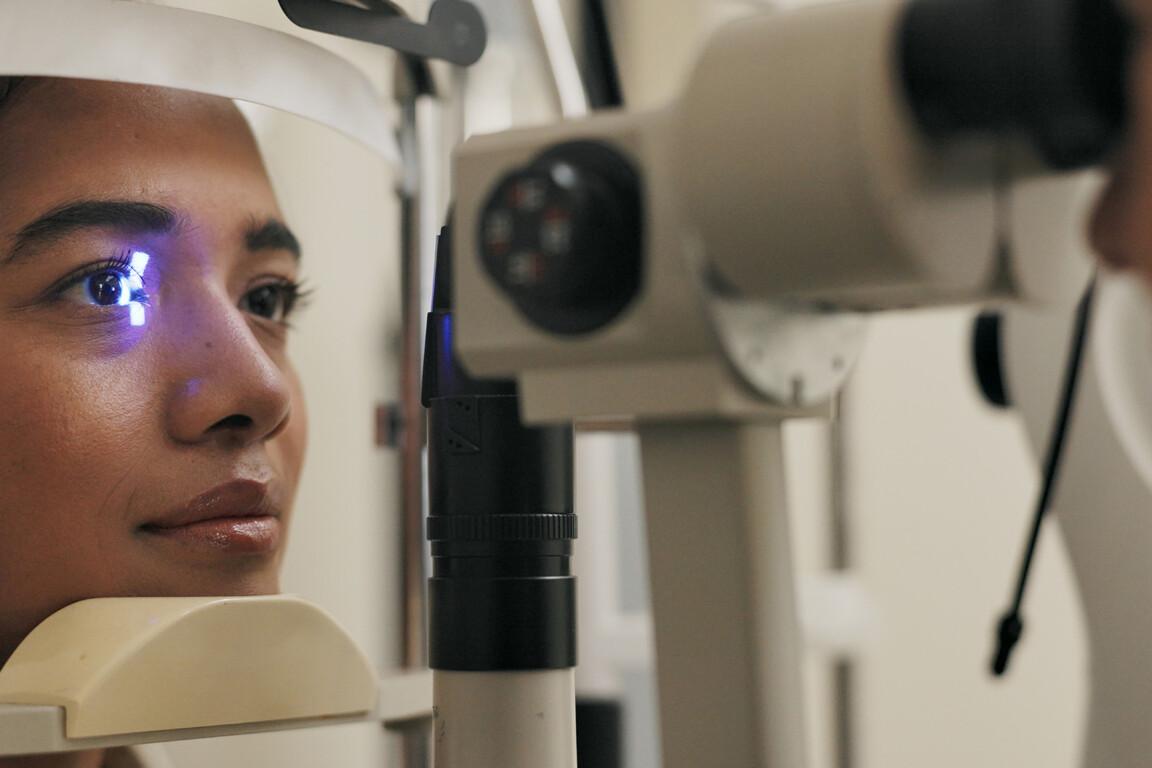
Eyecare services provider Primary Eyecare Services has partnered with the newly launched Centre for Vision Services Research, a five-year initiative funded by £1.74 million from Health and Care Research Wales.
While the Centre is an all-Wales collaboration involving Cardiff, Swansea, Bangor and South Wales universities, the partnership with Primary Eyecare Services – one of its initial England-based collaborators – signals a commitment to cross-border research that it says is scalable across the entire UK healthcare system.
The partnership will leverage Primary Eyecare Services’ extensive operational reach, which covers more than 800 neighbourhoods in England. By providing real-world data and insights from existing service models, the collaboration aims to address five national priority areas: reducing hospital eye service waiting lists, transforming rehabilitation pathways, advancing person-centred outcome measures, optimising care through risk profiling and technology, and improving care for vulnerable populations.
“We are delighted to collaborate to strengthen the evidence base and support innovation in eye care services,” said Amy Hughes, head of research at Primary Eyecare Services. Barbara Ryan, director of the Centre for Vision Services Research, added that the initiative’s success depends on collective action across sectors to shape a stronger, evidence-based future.
The findings generated through this partnership are intended to inform NHS commissioning and long-term pathway transformation, ensuring research translates into tangible improvements for patients.
The Harborne Hospital offers renal denervation
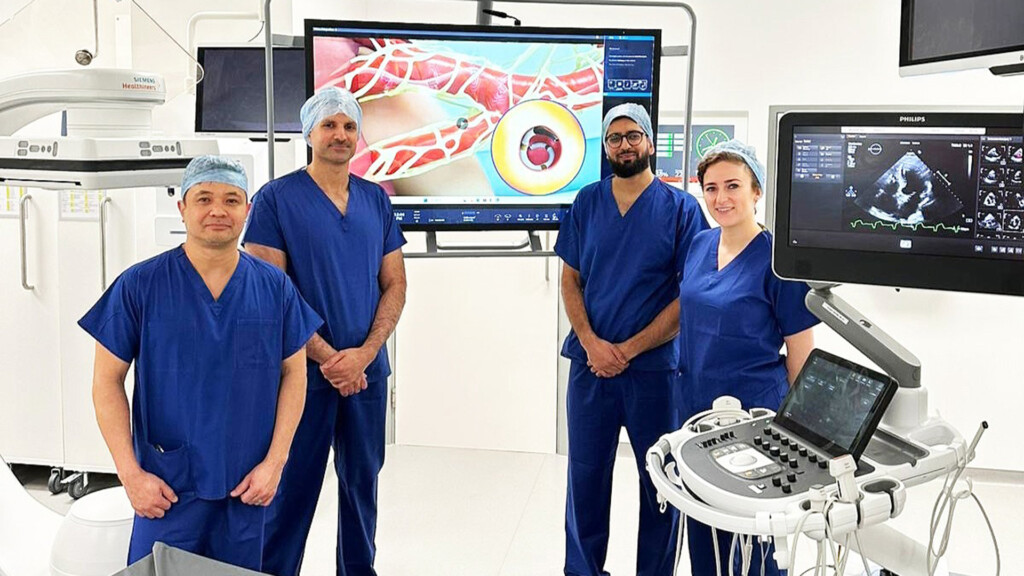
HCA Healthcare UK’s The Harborne Hospital has become the first private provider in Birmingham to launch renal denervation (RDN), a minimally invasive treatment for patients with resistant high blood pressure. Resistant hypertension occurs when blood pressure remains dangerously high despite the use of multiple medications.
The condition currently affects approximately 800,000 people across the West Midlands, significantly increasing their long-term risk of heart attack, stroke and kidney disease.
The RDN procedure involves a small catheter to deliver ultrasound or radiofrequency energy to the renal arteries. This process reduces overactive nerve signals in the kidneys that contribute to hypertension. Because the procedure is minimally invasive, most patients do not require an overnight hospital stay and can return to normal activities within a few days. Clinical studies have shown that up to half of patients who undergo RDN are able to stop taking at least one of their prescribed blood pressure medications within a year.
“Renal denervation is an important advancement in the treatment of high blood pressure, providing a safe and effective option for qualifying patients whose blood pressure cannot be adequately controlled with medication,” said Farhan Shahid, consultant cardiologist at The Harborne Hospital.
Following this Birmingham debut, the treatment is scheduled to roll out across all of the private healthcare provider’s hospitals in London in the coming weeks.
Teladoc Health UK expands virtual clinic to increase private healthcare access
Telemedicine and virtual healthcare company Teladoc Health UK has launched an evolved version of its virtual clinic, aiming to provide a scalable alternative to traditional private medical insurance (PMI).
The new model is designed to bridge the access gap for the millions of UK employees not covered by workplace PMI schemes, offering a single integrated ecosystem that combines physical, mental, and lifestyle support. By streamlining triage and clinical coordination, the service aims to resolve more health issues within the virtual environment, reducing the need for onward referrals and complex interventions.
The expanded proposition includes 24/7 access to UK GPs, mental health therapy, AI-supported physiotherapy, and specialist pathways for menopause, dermatology and cancer. Notably, the service also offers hybrid care for musculoskeletal (MSK) issues, incorporating in-person diagnostics where necessary. Unlike standard virtual GP services, this model avoids the barriers of excess payments or co-pays, making private healthcare more financially accessible for entire workforces rather than just senior leadership.
“Traditional PMI was never designed for the more common, everyday health issues many employees now face,” said David Griffiths, chief medical officer at Teladoc Health UK.
“Our model offers a scalable way to give entire workforces access to private healthcare at a much lower cost than PMI, while improving speed of access and outcomes,” he added.
The service also provides access to Teladoc’s global network of 50,000 specialists for expert medical opinions, helping employees navigate complex diagnoses with greater confidence and productivity.

AI health support to be rolled out to 55,000 Warrington patients
Warrington Innovation Network (WIN) Primary Care Network (PCN) has partnered with digital health provider Aide Health to introduce AI-powered support for patients living with long-term conditions.
The rollout covers six GP surgeries and approximately 55,000 patients, focusing specifically on chronic obstructive pulmonary disease, obesity and hypertension, the three largest contributors to local healthcare pressure.
The platform functions through short, daily check-ins on a mobile app, helping patients manage medication, monitor symptoms, and receive condition-specific education. The initiative shifts care from a reactive to a proactive model; currently, respiratory flare-ups are the leading cause of A&E visits in Warrington, while local obesity rates remain significantly above the national average. By maintaining daily contact between formal appointments, the technology aims to identify early warning signs and improve medication adherence.
“Too much of chronic disease care is reactive. We see patients when something has already gone wrong,” said Dan Bunstone, clinical director at WIN PCN. “Aide changes that… it means we can support them proactively and pick up on issues before they escalate,” added Brian Snyder, co-founder and chief operating officer at Aide Health.
Kärcher UK launches K-Mop 46 to bridge the gap in healthcare cleaning
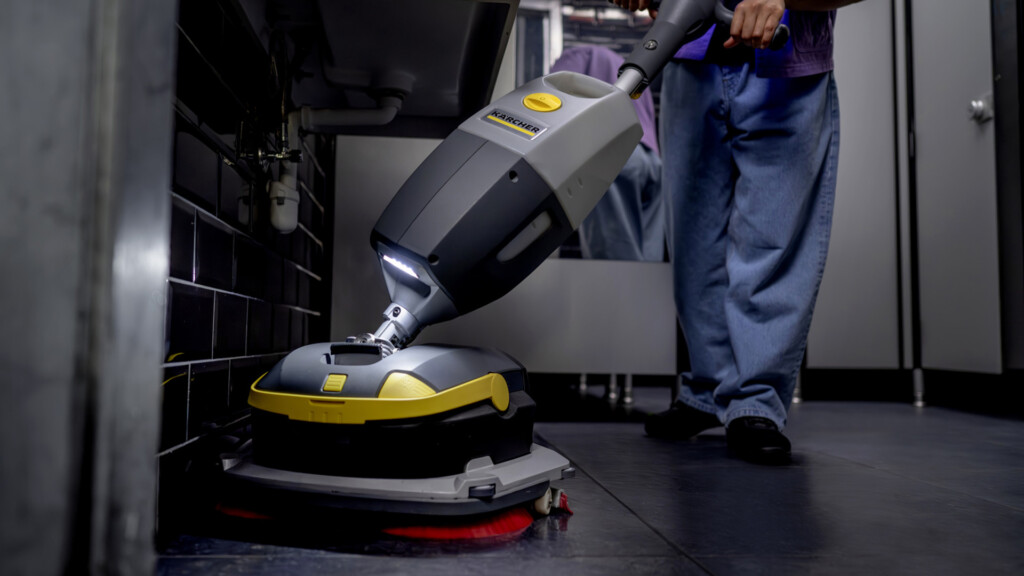
Kärcher UK has unveiled the K-Mop 46, a lightweight, highly manoeuvrable scrubber dryer designed to replace traditional mopping in high-traffic and cluttered environments, such as healthcare settings. The machine combines the agility of a manual mop with the deep-cleaning performance of a professional scrubber dryer. Specifically engineered with ergonomics in mind, it features an industry-first height-adjustable handle to reduce physical strain and repetitive movement injuries for cleaning staff.
The K-Mop 46 is suited to the hygiene requirements of the healthcare sector. It features easily removable four-litre tanks with a “residual emptying” function, ensuring the inner walls dry completely to prevent bacterial growth. The device is powered by Kärcher’s 36V Battery Universe system, with an IPX5-rated housing that protects against dust and spray water, making it durable enough for demanding clinical environments.
“With the launch of our new K-Mop, we’re giving operators a smarter, more efficient and more ergonomic way to tackle demanding cleaning environments,” said James Carroll, senior product manager at Kärcher UK.
The machine includes a language-neutral LED status ring to indicate water levels and battery life, and can be integrated with professional cleaning trolleys.