Add us as a preferred source
The latest innovations in healthcare, including a Welsh digital prescribing rollout, 24/7 palliative care expansion and the launch of a UK-wide rare disease directory.
Newmedica partners with Healthcode
Specialist eye care provider Newmedica has launched a real-time online appointment booking service for self-funded cataract patients. Powered by Healthcode’s Integrated Channel Exchange (ICE) scheduling technology, the system allows patients to search across more than 30 Newmedica locations to secure immediate appointments. This eliminates the need to call a clinic or wait for a response to an online inquiry form.
The integration is powered by Healthcode’s ICE Widget, which embeds into the Newmedica website. This technology securely connects in real-time to the provider’s internal diary system to prevent double-bookings. While real-time digital booking is already commonplace in sectors like travel and hospitality, it represents a step forward in private healthcare. The customisable widget allows providers to maintain their own branding, gather patient-specific information during the booking process and generate automated, bespoke confirmation emails.
“Our partnership with Healthcode and implementation of ICE means that users will be booking appointments in real-time, ensuring a seamless journey for patients and helping us to operate more efficiently and effectively,” said Neil Wilkins, head of marketing at Newmedica.

Priory expands Flourish addiction recovery network
Independent mental health and addiction care provider Priory has opened Beacon House in Melton Mowbray, Leicestershire. The new 17-bed facility is the third site designed along the company’s therapy-led Flourish recovery model. It is tailored for those who require structured residential support but do not need traditional hospital-based inpatient rehabilitation.
Priory has reported a 39% increase in alcohol addiction treatment requests since 2020, occurring alongside a doubling of drug-related deaths in the East Midlands over the last decade.
To lower barriers to entry, the service offers flexible treatment lengths starting from 14 days, with accommodation pricing starting at £350 per night. Structurally, the residential model accommodates client pets and encourages active family involvement in the therapy process. The programme also integrates specialised therapeutic tools, such as immersive virtual reality exposure therapy, to simulate real-world trigger environments – ranging from social events to high-pressure situations. This allows clients to build resilience and practice coping strategies in a controlled setting.
“Flourish truly is a game changer in addiction services,” said Richard Sparkes, service manager at Beacon House. “As a community-based, structured alternative to hospital treatment, it provides the time, space and therapeutic support people need to build lasting recovery.”
LifeArc and RDR UK launch Raremap
Medical research charity LifeArc and Rare Disease Research UK (RDR UK) have launched Raremap, a community-powered online directory designed to map the UK’s rare disease landscape. The digital platform brings together researchers, clinical experts, charities, patient advocacy groups, funders and industry stakeholders. By consolidating these entities into a single searchable directory, the initiative aims to help users identify specialised expertise, understand organisational roles and establish collaborative partnerships more rapidly.
The directory addresses a common challenge within the rare disease sector, where fragmented information can make it difficult for both professionals and families to navigate the support and research landscape. For families receiving a new diagnosis, the platform is designed to ease the transition by providing direct visibility of support organisations. As the user base grows, LifeArc and RDR UK intend to expand the directory’s scope internationally to build a global resource for collaborative research and treatment development.
The founding partners are calling on all UK-based rare disease organisations to review the directory, submit their details for inclusion if they are not already listed, and provide feedback via the Raremap website to guide the platform’s future development.
“Progress in rare diseases depends on people sharing expertise and working together,” said Sam Barrell, chief executive officer of LifeArc. “Raremap helps build a more connected ecosystem, making it easier to share expertise and identify opportunities that might otherwise be missed. By working together, we can help create the partnerships that accelerate research and ultimately deliver more treatments to the people who need them.”
NHS England in the Midlands launches regional procurement of ambient voice technology
NHS England in the Midlands has completed a region-wide procurement of Ambient Voice Technology (AVT), marking the first and largest at-scale deployment of its kind within the NHS. Following a competitive procurement process led by the Dudley Group and Sandwell and West Birmingham Hospitals, healthcare AI platform Heidi has been selected as the sole preferred provider.
The framework establishes a centralised procurement route for all 1,239 GP practices in the region, alongside more than 70,000 clinicians across 15 acute and community trusts. The initiative removes the requirement for individual Integrated Care Boards (ICBs) and GP practices to run separate local procurement processes.
The technology uses generative AI to record patient-clinician consultations in real time and convert the spoken words into structured medical documentation, such as consultation summaries and referral letters. Clinicians review, edit, and validate the drafted notes before they are integrated into patient records.
The regional rollout follows pilot programs in the Dudley Group, where the technology delivered an 80% reduction in documentation time within a Same Day Emergency Care (SDEC) unit – equivalent to the capacity of one junior doctor. The pilot also cleared a six-month backlog of rheumatology letters down to 14 days. Nationally, an NHS England-sponsored study into AI-scribing tools showed a 23.5% increase in direct patient interaction time during appointments and an 8.2% reduction in overall appointment duration.
The project aligns with the GP contract for the current financial year, which instructs ICBs to support the adoption of ambient voice technologies to release clinical capacity and increase patient appointments.
“NHS Midlands has put in place a route that any trust or ICB in the region can now use, built on thorough procurement and real evidence from frontline services,” said the group’s chief medical officer, Hannah Allen.
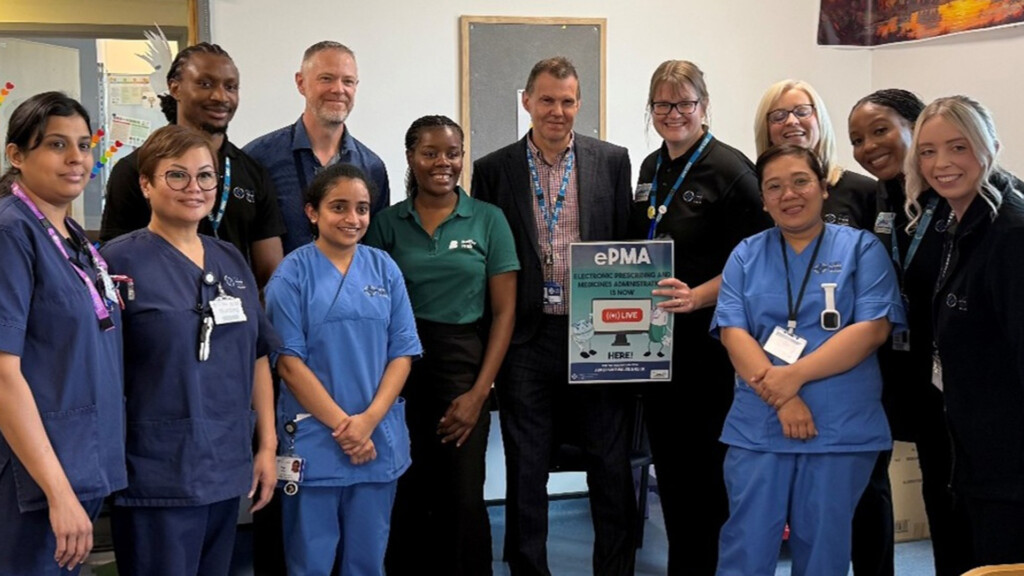
Aneurin Bevan University Health Board goes live with electronic prescribing system
Aneurin Bevan University Health Board (ABUHB) is rolling out the Better Meds electronic prescribing and medication administration (ePMA) system. This is the digital health company’s third ePMA deployment in Wales.
The first phase of the system launch went live within the stroke rehabilitation unit at Ysbyty Ystrad Fawr. The transition from paper-based medication charts to the digital platform was managed through a process of transcription, verification and clinical review. The health board, which employs more than 14,000 staff, serves a population of approximately 650,000 people across Blaenau Gwent, Caerphilly, Monmouthshire, Newport, Torfaen and South Powys.
The deployment is part of the national Digital Medicines programme led by Digital Health and Care Wales (DHCW). The implementation supports the Shared Medicines Record initiative, designed to provide a single, updated digital record of patient medications, allergies and intolerances that can be accessed across different clinical care settings.
“This milestone is a reflection of what can be achieved when healthcare professionals, digital specialists, programme teams and partners work together with a shared purpose,” said Craig Roberts, senior responsible officer for the ePMA programme. “As the first step in our ePMA journey, it provides a strong foundation for the wider rollout across the Health Board.”
Perci Health partners with WTW
Specialist virtual cancer care provider Perci Health has joined London-based WTW’s health and wellbeing vendor ecosystem to offer cancer prevention, risk assessment and screening services to corporate employers.
The partnership is designed to help employers mitigate rising healthcare costs and workforce absence rates driven by cancer diagnoses. WTW’s Global Medical Trends research indicates that cancer remains the leading driver of medical claim expenses worldwide, with 57% of insurers identifying it as the fastest-growing and most expensive condition. Furthermore, nearly three-quarters of surveyed insurers report an increase in cancer incidence among individuals under the age of 40.
The new service gives WTW’s client network access to Perci Health’s virtual clinic, which offers personalised cancer risk profiling, NHS screening navigation and direct access to private screening options. Employees will also receive clinical guidance from specialist nurses to help them interpret risk factors and identify early-stage symptoms. The preventative offering addresses a growing pressure on workplace attendance; WTW’s UK absence research reveals that 51% of employers have experienced a rise in short-term absences over the past two years, while 55% report increases in long-term absence and disability.
The service is integrated into WTW’s digital benefit marketplace, allowing employers to transition from reactive treatment plans to proactive, early-intervention healthcare strategies. The partnership builds on Perci Health’s existing corporate footprint, which includes a separate collaboration launched in April with Canada Life to support group critical illness policyholders.
“Cancer is becoming an increasingly significant workforce health issue, affecting more working-age people and creating real challenges for employees and employers alike,” said Beth Husted, director of health and benefits at WTW. “Many organisations want to do more, but need practical, clinically credible ways to help people understand their personal risk, navigate screening options and access the right support earlier.”

Stockport NHS Foundation Trust deploys Clinisys WinPath
Stockport NHS Foundation Trust has completed the full rollout of the Clinisys WinPath Laboratory Information Management System (LIMS) for its pathology services. The final phase of the implementation, covering blood transfusion and blood sciences, went live in April, following the initial deployment of the system across microbiology and cellular pathology in September last year.
The new platform replaces a legacy laboratory system that had been in active operation at the trust for more than 30 years.
A phased deployment strategy was selected to maintain operational continuity and minimise clinical risk across the trust’s high-volume diagnostic services. Annually, Stockport’s pathology department processes more than 9.2 million tests in blood sciences, 500,000 microbiology tests, 140,000 cellular pathology slides and 71,000 blood transfusion tests. The transition required end-to-end clinical validation, which included migrating roughly three decades of historical blood transfusion data into the new system to comply with ISO standards prior to the final system launch.
The second phase of the rollout involved managing a daily workload of approximately 31,000 tests. To prevent disruption to primary care diagnostic pathways, the trust worked with local GP practices, assisting them in transitioning to HL7 messaging standards. The implementation also integrates into the wider Greater Manchester LIMS programme, establishing a digital platform for future regional diagnostic collaboration, advanced sample tracking and digital pathology workflows.
“We made the decision early on to split the go-live into two phases to ensure patient safety and reduce risk,” said Mark Gordon, associate divisional director for pathology at Stockport NHS Foundation Trust. “The system went live remarkably smoothly. We had confidence going into the transition due to the level of testing undertaken, and that preparation really paid off. For a system handling this volume, minimal disruption is the best possible outcome.”
Palliative care expanded in Bedfordshire
Keech Hospice, Sue Ryder St John’s Hospice and the NHS will now provide round-the-clock palliative care advice and support across Bedfordshire. Partially funded by charitable grant provider The Connolly Foundation, the Bedfordshire Palliative Coordination Service has processed 1,260 patient referrals since its deployment in December last year.
The service operates a single point of access via NHS 111 (Option 4), offering patients, families, and healthcare professionals immediate access to specialist clinical guidance, symptom control and care planning. It now handles an average of 1,550 clinical advice and support calls each month.
Operating on a shared digital health platform, the partnership enables real-time coordination between the local hospices and NHS teams. This integration is supported by a dedicated palliative paramedic provision, allowing home-care interventions during acute changes in a patient’s condition. Early service data indicate that 1,985 patients have been supported to remain in their preferred place of care.
“We’re often supporting patients with complex and rapidly changing needs, so having immediate access to coordinated palliative care is critical,” said a palliative care clinical paramedic specialist at Keech. “This service enables us to assess, manage symptoms and connect people to the right support quickly, helping them remain in their preferred place of care wherever possible and ensuring they feel supported at every stage.”