Add us as a preferred source
The founder of You & I Care discusses the perfect storm facing independent care providers, and why technology is the key to sustainable, equitable social care.
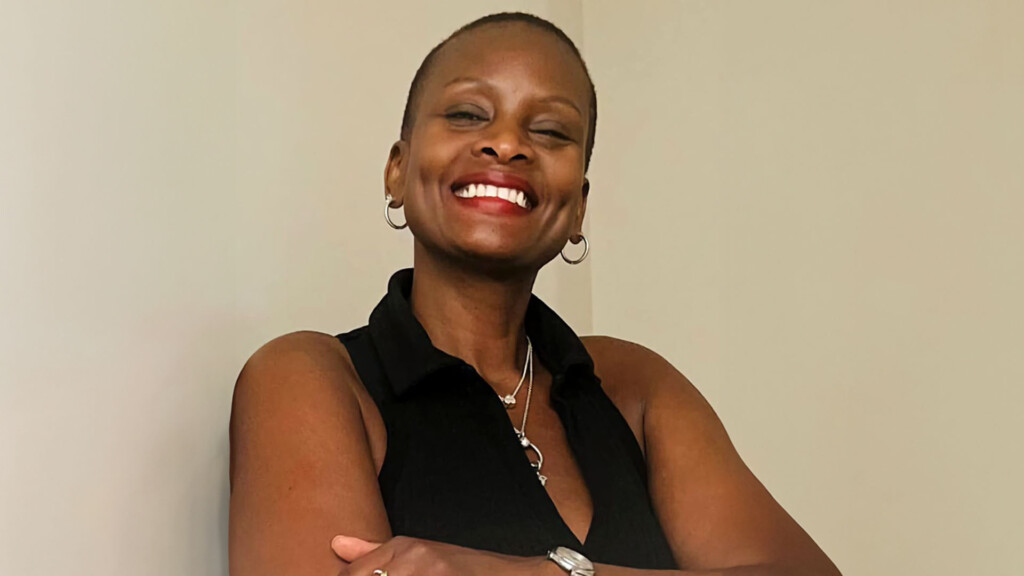
As the social care sector navigates a challenging 2026, smaller independent providers find themselves at a breaking point, caught between rising operational costs and stagnant funding. Lausa Biragi, founder of You & I Care, warns that the current trajectory is unsustainable, with many small providers already exiting a market where costs have become unaffordable.
Here, she talks to Healthcare Today about why being old is not an illness, the importance of educating the public to tackle the stigma of care, and her mission to ensure that high-quality, tech-enabled support remains a right for everyone, regardless of how their care is funded.
You have described 2026 as a perfect storm for care providers thanks to rising operational costs and stagnant funding. What is the biggest risk for smaller, independent care providers this year?
I don’t think that we can survive, to be honest; it has been extremely hard clawing our way back since the pandemic. We survived the Covid-19 pandemic, and we tried to keep things going, but there have been so many changes since then: the increments to National Insurance, for instance. It is clear that small providers are already exiting the market and closing. Most providers simply cannot be sustainable because the costs are no longer affordable.
Earlier this week, Hospice UK said that three-quarters of hospices in England are in deficit at this point in the financial year. What specific structural solution should the government be implementing?
We cannot deny the fact that the cost of care continues to increase. People are living longer, which naturally means we require more funding; furthermore, with modern health systems, many conditions can now be managed for many years. If you look at NHS Continuing Healthcare, for example, budgets are undeniably increasing, but we must all think about what is truly viable.
Take prevention, for instance. There is a common belief that when someone is elderly, they will inevitably fall. I don’t agree; falls often happen because we haven’t intervened early enough to prevent them. If there were more funding for social care, people could receive a modest monitoring package, which would avoid the need for much larger care packages later.
If someone receives a small, preventative package of care, they can be sustained for a long time. However, if we wait until there is no other choice, the budget spirals and we see more hospital admissions. This vicious circle is a significant issue.
We should be looking at funding health and social care equally, because social care supports health. While the health sector is doing a good job, it needs support from the social side; if every senior ends up in hospital, how can the hospitals cope? We need to return to a strategy where service users are looked after in their own homes. The evidence is clear: people recover much more quickly in their own environments. When someone is discharged from hospital, they regain their independence faster in a familiar setting.
“To provide truly outstanding care, you must have the right management and monitoring systems in place.”
There’s clearly an awareness within the government that healthcare needs to be within the community, within the home. Is the government heading in the right direction?
I don’t believe things are moving quickly enough. It isn’t just this current government; I think it has been a long-term problem where we haven’t fully appreciated the stigma or the actual costs involved in providing care. The nature of provision has changed, and the care we provide now is totally different. To provide truly outstanding care, you must have the right management and monitoring systems in place.
I don’t think it gets us anywhere to focus solely on what we haven’t done right in the past. We need to go back to the grassroots to educate young people and the wider public on what care really looks like. We need to get back to a place where people feel proud to work within this industry.
If the government says it understands care provision and what is required, it must look at the maths. We have recently seen an increase in National Insurance contributions; the government knows exactly how care is funded. It should be looking at the rates provided by local councils to understand whether providers can actually afford these differences.
The workforce remains a major pressure point in adult social care, with high turnover and continued vacancies across the sector. What are the biggest recruitment and retention challenges you face?
We need to stop spending on things we no longer need. For instance, I have attended several conferences where research has been funded simply to capture what care service users want to receive – but we don’t need more funding to understand that. This has been an ongoing issue for years. For as long as I can remember, the care industry has faced recruitment challenges; it is an industry that fails to attract young people and suffers from a persistent stigma. Too often, we are only seen as the point of call in a crisis.
We need to make care go viral for the right reasons – as an industry that makes a genuine difference and improves well-being. If we can attract young people, we will see better strategies and improved ways of working. We will embrace digital transformation and more cost-effective practices.
The government must also assess what is required for providers beyond just the large-scale players. Many big providers have various ways of making a profit, whether through property accommodation or other investments, which leads people to assume all providers are merely profit-making entities. I don’t think the public truly understands the different types of providers within the sector.
There needs to be mass education on what care actually looks like and the different structures involved – from supported living and investment-led models to those who simply provide frontline care.
“Being old is not an illness – it is a stage of our lives.”
How do you get the general public to understand more about the issues that you’ve just described? How do you get people to understand how the sector works?
I would advise everyone to task themselves with truly understanding what care is. It is something we often try to run away from because we assume it is for someone else.
But care is for all of us. It is for all ages. You may need care at any stage of your life. Understanding what care involves would help us all appreciate the many factors that determine outstanding care and ensure people receive it at the right point. It is difficult to explain the dynamics of care if someone believes they don’t need to engage with the subject. As long as we fail to tackle the stigma and educate ourselves on how these systems interact, we will continue to see avoidable crises.
Returning to the health system – the NHS is doing a great job, but it is overstretched. On a weekend, for example, you see admissions of seniors that simply did not need to happen. The NHS struggles because social care is struggling.
People do need hospitals, certainly, but not everyone who ends up there belongs there. There is a belief that if you are old, you will inevitably end up in a hospital bed. But being old is not an illness – it is a stage of our lives – and if managed well, hospitalisation isn’t a requirement. We all need to go back to the drawing board and ask: What is care? Who needs it? Why do we need it? Only then can we provide outstanding care.

You have been a digital-first leader for years. Can this protect the care industry from rising costs?
At You & I Care, we have embraced technology from the word go. Even before we had our first service user, we knew that if we were to provide outstanding care, technology had to be part of it. It isn’t about replacing the human element of care; rather, it improves the standard of care being provided. It eases the workload and allows us to capture statistics that show exactly how we can improve people’s outcomes.
For example, when you use technology to monitor how many times someone wakes up during the night, that data helps us reduce the risk of falls. Once the right care is in place, it improves a person’s well-being simply because they know someone is watching over them.
There is a fear among some that technology is coming to take our jobs. In reality, it improves our working ways and ensures we are effective. It provides the evidence we need to improve outcomes by capturing data in real-time.
Similarly, it changes the dynamic for families. A daughter doesn’t necessarily need to travel from Oxfordshire to Essex for a five-minute review if she can monitor her mother’s analytics remotely. She can see for herself.
This technology improves the environment and, more importantly, it improves well-being. When a parent receives care, it isn’t just them worrying – the son is worried, the grandkids are worried, and the GP is being called seven times a day. Technology reduces all of that pressure. There is no guesswork anymore.
One of your core passions is equity in the adult care system. How do we ensure that quality care doesn’t become a luxury reserved only for those who can self-fund?
At You & I Care, we have worked hard to advocate for the same standard of care for everyone. We started as a private provider, and for years, we focused on building a foundation that would eventually allow us to provide care for all. We have now moved into public provision, as we always intended, and we are proud to say that the standard of care we provide is identical, whether a service user is private or publicly funded. We hope to remain in a position where we can continue to afford that.
This has been achieved by compressing the old, traditional structures of care provision. In the past, you would have a hierarchy consisting of a registered manager, a deputy manager, a care coordinator, field supervisors, and so on. By embracing technology, we have been able to compress those roles. This allows us to use our resources exactly where they are needed – focusing them on our carers.
Our structure ensures that our funds go directly into improving the well-being of our staff and the care they provide, which in turn improves outcomes for our service users.