Add us as a preferred source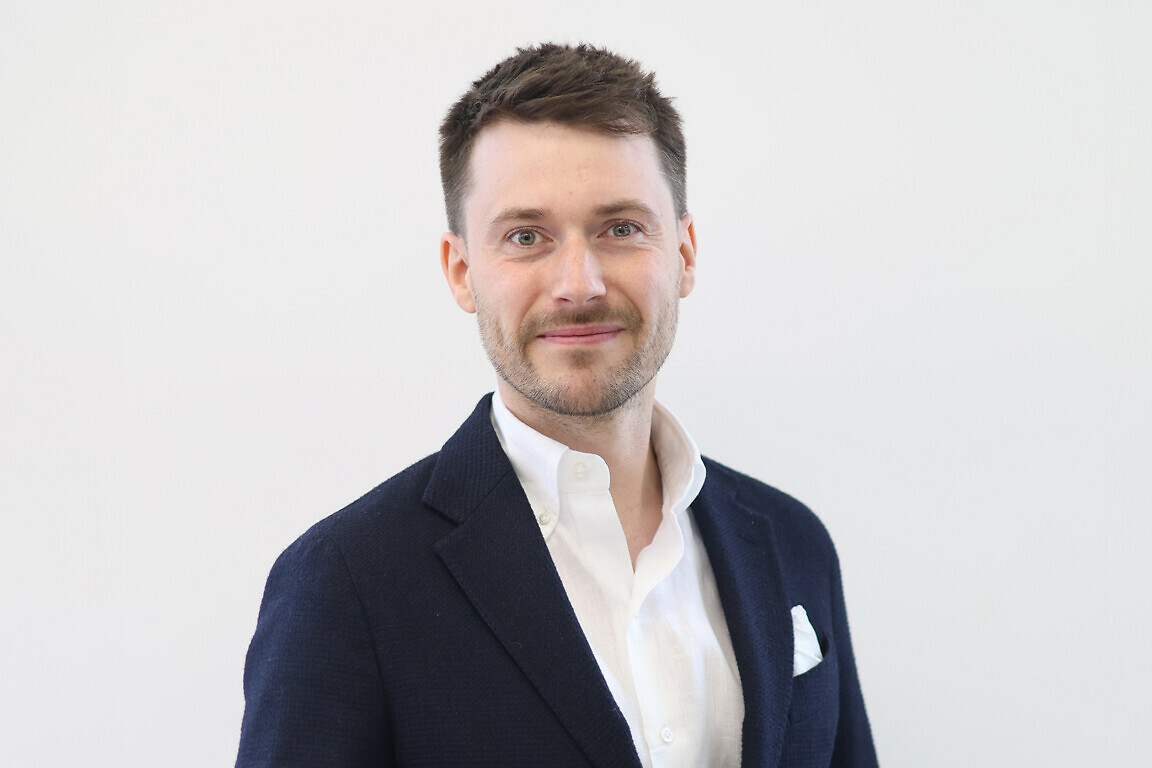
The chief executive of the newly formed Maulin Group explains why healthcare should be limited by science, not by avoidable error.
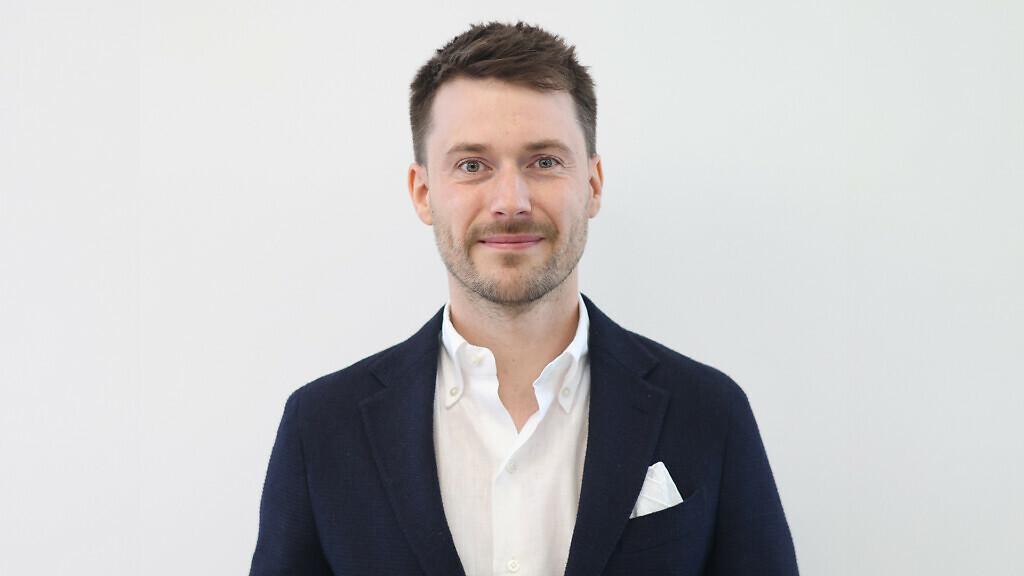
As the head of Maulin Group, a “unified architecture that integrates clinical consultancy, healthcare technology, legal services and indemnity into one connected ecosystem”, Oliver Maughan is steering a raft of entities – including specialist medical indemnity insurers THEMIS Clinical Defence, boutique clinical negligence defence firm Maulin Law, healthcare tech company Elysium Web Services and media platform Healthcare Today – with patient safety as its north star.
Here, Maughan talks about why he founded the group, why the separate parts of the organisation are now going to be brought together, and what the future holds.
Why did you create Maulin Group in the first place?
You take certain important things for granted in life. You assume that if your health fails, the healthcare system will do what it is there to do; world-class clinicians will know the answers, curative drugs and treatments will exist, and somewhere in the system, there will be the people and facilities to get you back on your feet.
What I did not expect, after working in healthcare and clinical risk for more than a decade, was how often outcomes were limited not by the boundaries of science but by avoidable human or systemic errors. Most are accidental, some are negligent, and a few are catastrophic. But the real shock to me was the scale; errors repeat because the system around clinicians is fragmented.
Over the years, investigating incident after incident, it became obvious that healthcare providers sit inside a disconnected ecosystem. They have consultants advising on risk in one place, lawyers responding to issues in another, insurers underwriting the unknown, and technology siloed rather than helping drive improvements. The left hand rarely knows what the right hand has already learned. When a system is built like that, avoidable harm continues, costs escalate, and no one, patients, professionals or providers, gets what they deserve.
That is why I built Maulin Group. My belief was simple: healthcare should be limited by science, not by avoidable error. And to achieve that, you need a system where clinical risk management, technology, legal defensibility and insurance operate as one connected framework, not four separate industries expecting the healthcare provider to join the dots manually.
Why bring these separate parts of the organisation together?
Because the pressures on healthcare are converging faster than the system can adapt. For more than a decade, I’ve watched the same types of errors repeat across the UK and internationally, and the financial and human consequences continue to climb. In England alone, around £60 billion has been reserved for clinical negligence. This is money that should be supporting care, not compensating for avoidable mistakes.
At the same time, private healthcare is accelerating rapidly. More people are choosing private medical insurance (PMI) and self-pay because confidence in public provision is strained. That growth is positive, but without intervention, the private sector risks inheriting the same structural weaknesses that have burdened the state system, namely fragmented risk management, disconnected stakeholders, and no central mechanism for shared learning.
On the state side, change is happening, but it is slow and piecemeal. Some of this work has been excellent, but it tackles pockets in isolation. It does not create a system-level solution, which is what is needed if we want to prevent harm at scale and reduce the financial burden that is overwhelming budgets.
After years of watching these patterns repeat, it became clear to me that incremental improvement is not enough. We need a new model, one that brings clinical risk, legal defensibility, technology and insurance together into a single, intelligent system. A model that prevents errors, learns from incidents instantly, and supports providers with clarity, stability and continuous improvement.
“By bringing these services together, we can respond to clinical risk as one connected system rather than as isolated providers.”
In practical terms, what will the group offer that the individual entities couldn’t deliver on their own?
Each entity on its own has always been highly effective. For example, THEMIS underwrites with precision and Maulin Law protects providers when things go wrong. Our technology platforms strengthen documentation and governance. But if we stopped there, we would just be another collection of professional services.
The mission we are on demands more than that. We are here to build a healthcare system where mistakes are identified early, fixed quickly and, crucially, never repeated. You cannot achieve that through siloed services.
This is the difference. On their own, each entity can improve parts of healthcare. Together, they can transform how the entire system prevents harm.
What does this new group allow you to do that no competitor can match?
Our competitors are strong in their individual fields, but none can match what the group structure enables. By bringing these services together, we can respond to clinical risk as one connected system rather than as isolated providers. It gives us a neural network effect. Any issue detected in one area triggers an immediate, coordinated response across all others.
Others deliver excellent services, but the integrated architecture that allows us to strengthen healthcare in real time is unique to the Maulin Group.
How will customers or partners notice the difference? What will be new to them?
What they’ll feel immediately is that, for the first time, they have a partner that stays with them from end to end. Historically, we could help with individual issues, but the impact was always limited by the fact that everything around them was fragmented.
Now, as one group, we can finally deliver what we always set out to do: work hand-in-hand with providers to control their risk, control their costs and strengthen the standard of care they deliver.
They will notice that they can innovate and scale with far greater confidence. Whether they are adopting new drugs, new technologies, new patient pathways or expanding capacity, they’ll know the ecosystem behind them is continuously managing the risk in the background. That means fewer claims, a stronger reputation and the ability to focus on care without the fear of financial or operational consequences.
In simple terms, what’s new is that they finally have a vertically integrated partner whose only mission is to help them deliver exceptional care, without attracting the avoidable errors, cost and reputational damage that have held healthcare back.
Let’s talk about the cultural or organisational shifts needed to make the new group function effectively. Are they an issue?
Healthcare is understandably protective of its culture. I’ve seen countless task teams, focus groups, and external boots-on-the-ground projects attempt to drive improvement, and it’s natural that when outsiders arrive with clipboards or recommendations, people feel defensive. That reaction isn’t the issue; it’s human nature.
What matters is how you approach it. Our mission is crystal clear; we are not here to assign blame or point fingers. We are here to remove avoidable errors from healthcare, strengthen patient safety and give providers the freedom to focus on care without being consumed by risk. When clinicians and leaders understand that, the dynamic shifts immediately. We are aligned, not adversarial.
The larger shift is mindset. For years, improvement efforts have been isolated. They produce good work, but they don’t transform the system. What we are proposing is a bigger ambition: a connected model that tackles risk at scale and learns in real time. That does require a cultural evolution, but it is one that many providers are already hungry for.
We’re not expecting overnight adoption. We’re realistic. Healthcare has deep-rooted structures, and meaningful change takes time. But what encourages me is the response we are already getting. Conversations with providers across the UK, Australia and other markets show a real appetite for doing things differently. People are ready for solutions that go beyond isolated fixes and finally address the architecture of risk.
“The bigger ambition is simple: to build the most effective clinical-risk ecosystem in the world.”
Are there areas where you expect tension or trade-offs between the legacy brands or business units?
Not really. The organisations within the group were brought together because they shared a much wider purpose from the outset. Each entity operated in its own domain, but all were aligned in their commitment to improving healthcare quality and reducing avoidable error.
They weren’t acquired to be siloed businesses; they were brought in because they contribute something essential to an end-to-end model of safer, smarter healthcare.
Does the new structure open the door to acquisitions, partnerships or investments that weren’t possible before?
Absolutely. But what’s equally important is the geographical scale it now gives us. We already have a strong footprint in the UK, and our Australian operation is growing rapidly.
At this scale, the opportunities widen significantly. International acquisitions, partnerships and investments are continual considerations because the ecosystem we’ve built can be deployed with far greater confidence. In markets like Australia, Asia, the US and the Middle East, we’re evaluating organisations that can accelerate our mission and help us bring our model to providers far sooner than would have been possible as separate entities.
What is the game plan for the next three years?
The bigger ambition is simple: to build the most effective clinical-risk ecosystem in the world, so healthcare is limited by science rather than avoidable error. That is the north star.
Over the next few years, the focus is on scale and depth. We’ll strengthen our UK position, continue expanding internationally and move into a small number of additional jurisdictions where the appetite for our model is already clear. The group structure now gives us the platform to do that properly.
We’ll also look at the right-fit partnerships and acquisitions that accelerate our mission internationally, but always with one aim: to support providers in delivering exceptional care with far greater confidence, stability and resilience.
In short, the next three years are about scale, focus and impact, taking a proven model and deploying it where it can make the greatest difference.