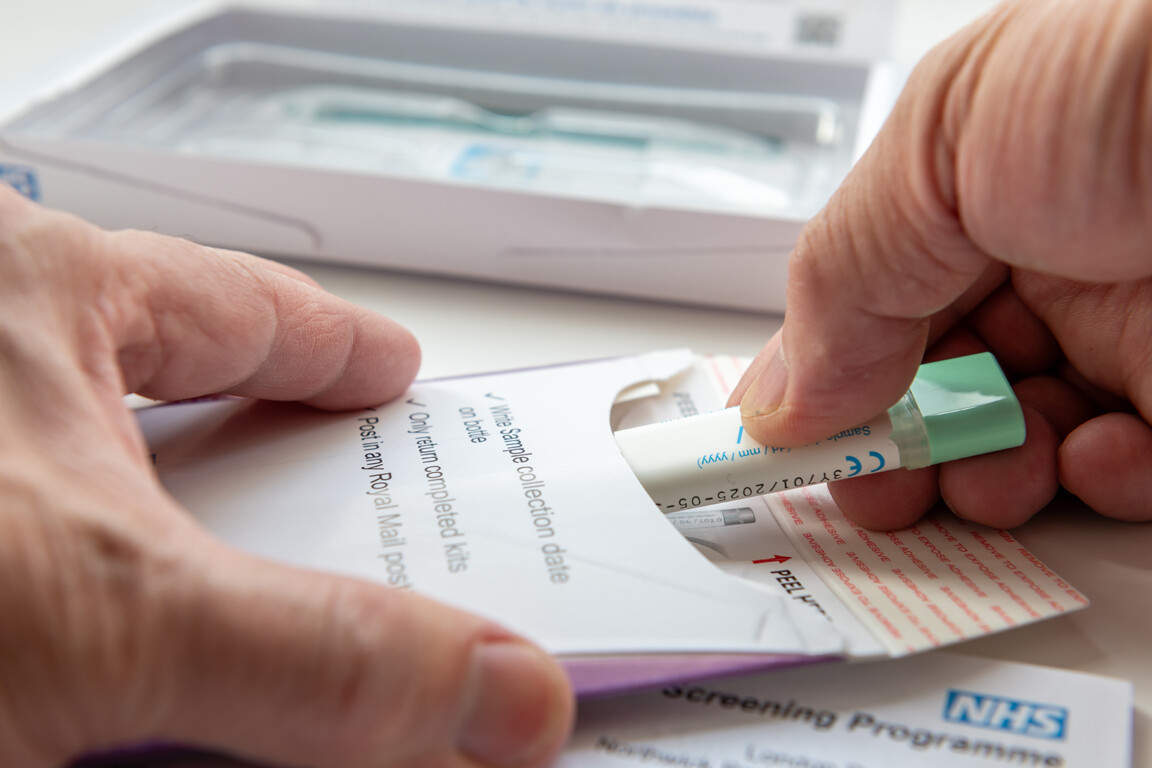
NHS to detect thousands more bowel cancers with more sensitive screening in a move which could save £32 million each year.
NHS England has said that it is to lower the threshold for a home-screening kit to trigger urgent cancer testing in a move that could save thousands of lives.
The NHS estimates the change could help detect around 600 more bowel cancers early each year in England – around an 11% increase – and find 2,000 more people with high-risk polyps in their bowel, allowing patients to have preventative surgery before any cancers develop.
At the moment, the home-testing kit, known as the faecal immunochemical test (FIT), is offered to all people over 50 years old and checks for blood in a small stool sample, which can be a sign of bowel cancer. By reducing the level at which traces of blood in a FIT test trigger further investigation – from 120 micrograms of blood per gram of faeces down to 80 – the NHS will offer 35% more screening colonoscopies each year to help diagnose or rule out bowel cancer.
“This is a major step forward in bowel cancer detection and will help save hundreds more lives from this devastating disease,” said Peter Johnson, national clinical director for cancer at NHS England.
“Testing at a lower threshold will now provide a better early-warning system for bowel cancer, helping us to spot and treat cancers earlier, often picking up problems before symptoms appear,” he continued.
Lower thresholds
Bowel cancer is the third most common cancer in the UK for both men and women, and the fourth overall, but screening can catch it early.
It is estimated that, currently, around two in 100 people who take part in bowel screening will require further testing – this is expected to increase to three in 100 following the lowering of the threshold.
Once fully implemented, testing at the lower threshold is expected to reduce late-stage diagnoses and deaths from bowel cancer by around 6%, while it is estimated that preventing and detecting more cancers earlier will also save the NHS £32 million each year.
The roll-out follows a pilot at eight early-adopting services, where closer working between NHS screening and diagnostic teams has helped more people get checked sooner, with more than 60 additional cancers and nearly 500 high-risk polyps being found and treated.
“This vital step from NHS England to lower the threshold for further tests after bowel screening will save lives. It means more cancers will be detected at an earlier stage, when treatment is more likely to be successful, while also preventing some from developing in the first place,” said Michelle Mitchell, chief executive at Cancer Research UK.