Add us as a preferred source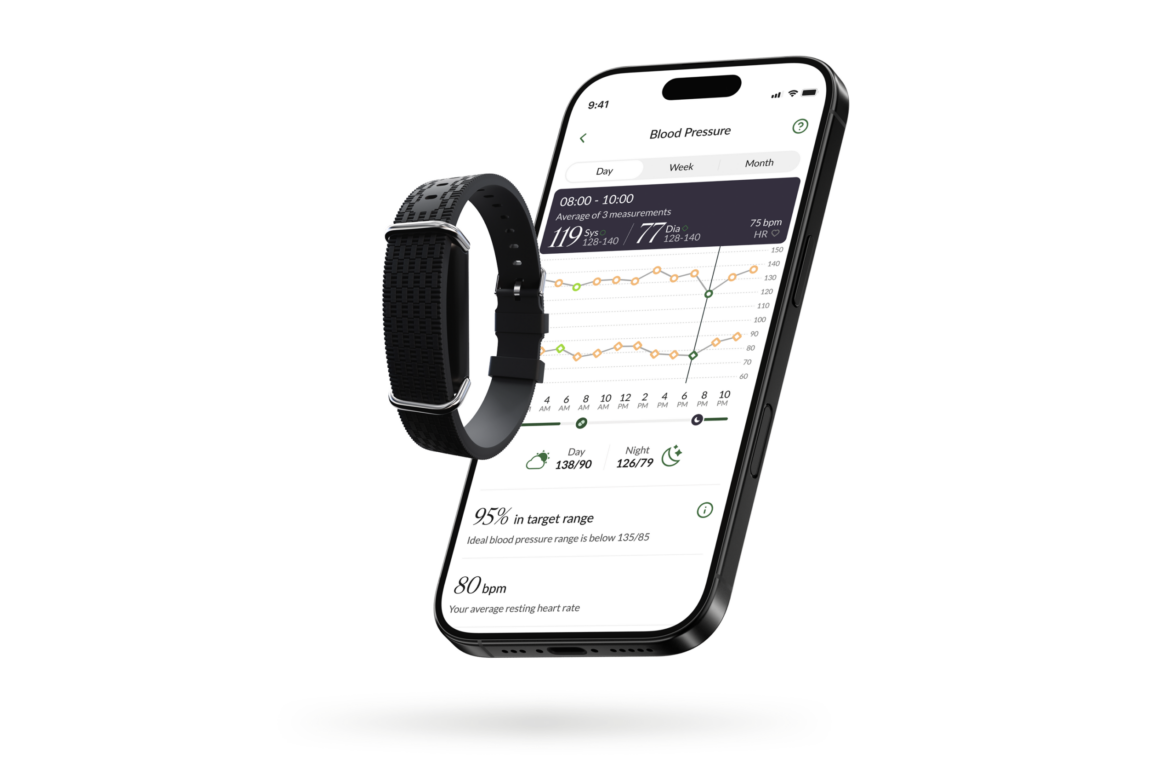
Blood pressure measured overnight and tracked over time can reveal patterns that a single clinic reading misses. The challenge is capturing that information practically, and over more than a single night. Hilo‘s continuous, cuffless monitoring aims to help address that gap.
Out-of-office blood pressure monitoring is already an established part of hypertension care and the evidence for night-time pressure is strong. According to a Lancet cohort study of almost 60,000 patients, night-time systolic blood pressure was the most informative measure for assessing the risk of all-cause and cardiovascular death when compared with clinic blood pressure readings. The findings underline the value of understanding what happens to blood pressure beyond the clinic.
But capturing night-time blood pressure presents practical challenges. Ambulatory blood pressure monitoring (ABPM) remains the reference standard for assessing blood pressure over 24 hours, but its cuff inflates at intervals through the night, potentially disturbing sleep. A recording also typically covers a single day and night. Home monitoring provides readings across multiple days, but routine home measurements generally do not capture blood pressure continuously during sleep.
“If you really want to understand what is happening during the night, you need to see patterns over time,” says Dr Tomas Bothe, a physician scientist and Chief Medical Officer at Hilo. “Even a single night is only a snapshot.”
What does continuous monitoring add?
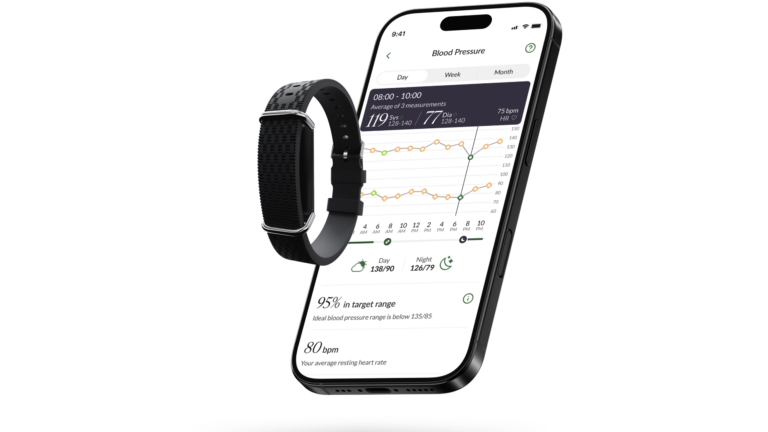
The Hilo Band is designed to fill that gap. It is a wrist-worn medical device that measures blood pressure without an inflatable cuff, using photoplethysmography (PPG) to detect changes in blood volume with each heartbeat. Hilo’s algorithms analyse the shape of each pulse wave to estimate systolic and diastolic pressure, and the band is periodically calibrated against a validated cuff.
Readings are taken automatically, generating 35 measurements a day, including while the patient sleeps. Monitoring continues overnight and across the day, helping build a picture of blood pressure patterns over time. Patients can easily download their blood pressure reports and bring them to appointments.
“We now know that blood pressure during the night is far better at predicting risk than daytime blood pressure,” says Dr Bothe. “An elevation in nocturnal blood pressure is a much stronger predictor of stroke and heart attack risk.”
Sleep also makes for a cleaner measurement, he adds. “People are generally doing the same thing: sleeping. There are fewer of the daily factors that can affect a reading.”
How is it different from a fitness tracker?
Wearables promising health insights are everywhere, so the distinction matters. Hilo is a CE-marked Class IIa medical device built specifically to measure blood pressure, rather than a wellness feature added to a fitness tracker. Its accuracy was assessed in a pivotal trial following the ISO 81060-2 protocol for validating blood pressure monitors, under different body positions, passing all the clinical criteria. Additionally, in a 2025 study comparing its 24-hour, daytime and night-time readings with ABPM, Hilo recorded a smaller overnight drop than ABPM, but once that difference was accounted for, the two showed 79% agreement in identifying nocturnal dipping patterns. It is not designed to diagnose or to replace clinical judgement. The data is there for clinicians to weigh alongside the patient’s history, symptoms and other findings.
Could seeing the data change behaviour?
There is another question worth asking: What happens when patients can see their own blood pressure over time?
Hilo calls this the “Hilo effect“: the idea that regular visibility of blood pressure encourages people to change their behaviour or stick more closely to treatment plans. It draws on the wider evidence for self-monitoring, and on the way people tend to behave differently when they know they are being observed.
Hilo’s analysis of data from 30,092 users between 2022 and 2025 found that systolic blood pressure fell by 5.8 mmHg on average over six months. The analysis was observational, so it shows an association rather than proving that monitoring caused the fall. The researchers pointed to behaviour change, the effect of being monitored, and more active treatment prompted by the extra data. For clinicians, that last explanation may be the most interesting: better information leading to better decisions.
“Success is not just telling someone their blood pressure,” says Dr Bothe. “Success is helping prevent strokes and heart attacks.”
Where could it fit?
Continuous monitoring will not suit every patient, and it does not replace home monitoring or ABPM where these are clinically appropriate. But it could help where those tools struggle: patients starting or changing treatment, those whose clinic and home readings don’t add up, and those for whom a night in a cuff is impractical. It could also help identify which patients most need a full 24-hour ABPM recording. And for patients, seeing their own trends can turn an abstract number into something they can act on.
As hypertension care moves towards earlier detection and more personalised treatment, the case for seeing what happens between appointments, and overnight, is only getting stronger.
Try Hilo for yourself
Healthcare professionals can request a Hilo Band, including a 12-month subscription, to evaluate for themselves, and explore the evidence behind it at https://professional.hilo.com/
About Hilo: Hilo is the brand of Aktiia, founded in 2018 and headquartered in Neuchâtel, Switzerland. Aktiia develops continuous, cuffless blood pressure monitoring and operates in 13 markets worldwide. Hilo‘s technology is supported by 30+ published studies and more than 30 clinical studies. The Hilo system is not intended to make diagnoses. Data should always be used in consultation with a healthcare provider.