Add us as a preferred source
The co-founder and chief medical officer of EQL explains how data-driven triage, inclusive technology design, and early intervention can release clinical capacity and modernise the patient journey.
Musculoskeletal (MSK) conditions account for one of the heaviest ongoing burdens on the National Health Service, consuming massive primary care capacity and driving up orthopaedic wait times across the country. Yet despite decades of clinical advances, access to early assessment and effective care pathways remains severely fragmented. It is dictated all too often by postcodes, socio-economic status and administrative delays.
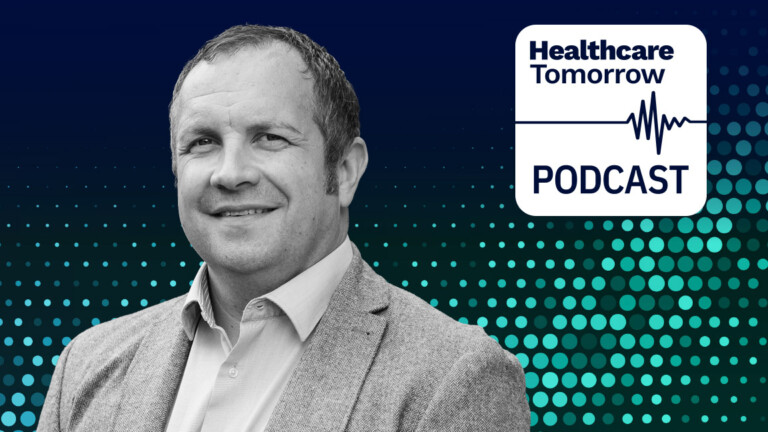
For EQL co-founder and chief medical officer Peter Grinbergs, bridging this gap requires a fundamental rethink of how patients enter the healthcare system. Here, he talks to Healthcare Today about taking clinical cues from professional sport, dismantling digital exclusion in deprived communities and why modern healthcare cannot afford to leave patients waiting while letters sit in the post.
What does the AI triage tool assess, and how does it determine risk?
I spent a number of years working in elite sport as a physiotherapist – specifically football – before I transitioned into healthtech. Throughout that journey, I was constantly struck by the stark contrast between elite sport and the real world.
In professional football, the moment you watch a player get injured, you begin making a diagnosis. Within minutes, you are implementing a management strategy. That immediate intervention meant you could reliably predict a rapid recovery.
It was only after leaving that environment that I began to question why – even in private practice – it takes so long for ordinary people to achieve a favourable outcome. The key determinants of health weren’t that public injuries were inherently worse or harder to treat. Rather, recovery depended on access: how much money you had, where you lived, or who your insurance provider was.
At its core, standard triage and assessment rely on a patient providing information about their condition to a clinician, who then interprets those responses using a fairly standardised format. Because the diagnostic questioning is largely systematic, technology presented an ideal solution to lower those barriers.

How has the AI tool been validated? What evidence underpins it?
The first stage of our process focused on standardising the intake experience. Initially, we gathered these established prediction rule sets and overlaid them with our own clinical subject-matter expertise. While academic literature provides a foundational framework, real-world patient cases rarely follow a textbook blueprint. We engage clinical experts to review the matrix, asking whether the mapped outcomes align with their practical experience and sense-checking the overall structure to ensure its clinical validity.
A key differentiator and a fundamental principle for us is that every output is ultimately made available for clinical review. While this step does not slow down the initial routing of the patient to the right care option, it provides a vital safety net. This is particularly true for urgent or “red flag” outcomes. If the system flags that a patient should attend A&E based on a specific set of high-risk symptoms, the case is immediately escalated to a clinician within our team. They can then conduct a follow-up call to ensure the patient has received the necessary advice and taken appropriate action.
To date, we have completed approximately one million assessments. That volume of data continuously feeds back into our system, allowing us to refine and optimise how it operates. By pairing data-driven insights with a robust human-in-the-loop model, we ensure physical clinicians oversee outcomes and maintain exceptionally high standards of patient safety. This three-pronged approach – combining evidence-based guidelines, expert clinical oversight and continuous human validation – guarantees we consistently deliver the right care pathways.
“The reality is that you cannot entirely eliminate false positives in triage, but what you can minimise are false negatives.”
How are you avoiding false positives or unnecessary anxiety for patients? What happens if there is a mistake, especially at these volumes?
The reality is that you cannot entirely eliminate false positives in triage, but what you can minimise are false negatives. We always err on the side of caution. Over-referring a patient to a higher-urgency pathway is not necessarily a bad outcome, and it is a principle widely accepted across healthcare.
If you call 111 or 999 with a concerning set of symptoms, the standard advice might be to attend A&E. A large percentage of the time, after a full evaluation, the emergency staff will reassure you that it isn’t serious. You could look at that outcome critically and argue that it was a wasted A&E visit driven by a false positive. In practice, however, safety-critical thresholds must be maintained. High-urgency pathways are intentionally designed with high sensitivity, which naturally leads to a degree of over-referral. No clinician would argue that sending a patient for emergency care was inappropriate when the presenting symptoms justified that precaution.
As technology providers, our responsibility is to build in sufficient safety buffers. We deliberately set a lower threshold for triggering a false positive to ensure that potential risks are caught early. You cannot remove false positives altogether, but prioritising caution in this way remains the safest approach to clinical triage.
How are you addressing digital exclusion?
When developing technology or health services, one of the first questions you are invariably asked is, “Who is your target audience?” It can be tempting to reply that you are aiming at digitally literate individuals aged between 20 and 50. We took a fundamentally different approach. The prevalence of musculoskeletal (MSK) conditions skews towards older generations anyway, so we chose not to fall into that trap. Instead, we set out to build a platform that could serve everyone, across all demographics, from the outset.
By design, accessibility was our priority, and we held ourselves accountable using real-world data. Through partnerships with the NHS, we put our model to the test. The local health service was struggling to engage ethnic minority populations effectively, so we collected demographic data during the triage process and benchmarked our reach directly against Office for National Statistics (ONS) data for the local area.
The results showed that we were actually over-representing minority groups. When we analysed why this was happening, a clear pattern emerged: interacting with a digital platform appeared to carry far less stigma.
When looking at age demographics, we uncovered a similar breakthrough. Older patients frequently expressed a reluctance to “bother the GP” with issues they perceived as minor. They also valued the autonomy our system provided; it eliminated the need to coordinate transport or rely on a companion to attend a physical appointment. They could complete the triage independently online.
Rather than making assumptions about digital exclusion, we designed the platform for universal accessibility and let the data speak for itself.

What outcomes does EQL measure?
There is no single, one-size-fits-all metric. Our approach is to collect as rich a dataset as reasonably possible to support clinical interpretation. We capture demographic background, work activity, socio-economic status, functional improvements, sleep quality and how well a patient is coping with the psychological stress of an injury. We pair this with objective metrics gathered through our self-management platform, monitoring app engagement, exercise completion and user feedback on specific interventions.
By combining these independent data points with validated clinical outcomes and – where possible – 360-degree data from our partners on long-term health economics, we build a comprehensive picture of cohort health.
Admittedly, long-term tracking in healthcare is complex. It is difficult to draw a direct line stating that because a patient completed a digital triage on a Sunday and was pain-free four weeks later, they avoided a knee replacement three years down the line. However, we can measure broader patient flow. We can evaluate whether the technology reduces GP appointments, releases capacity for clinical teams by empowering suitable patients to self-manage or lowers orthopaedic referral rates.
“Nobody wants to live in pain or poor health, often, they simply lack the tools or guidance.”
The NHS has talked about shifting from reactive to preventative care for years. Can it ever work?
It is a significant challenge because, ultimately, we are talking about driving cultural change.
In my view, long-term health needs to start early. Healthcare, physical fitness and general wellness are principles that ideally should be instilled from a young age. While that isn’t always achievable for everyone, what is achievable is providing people with the right tools. When you remove barriers and make health management straightforward, people are genuinely willing to engage. Nobody wants to live in pain or poor health, often, they simply lack the tools or guidance.
Our core philosophy is to make the process as seamless as possible. We aim to encourage positive health choices while providing direct access to clinical support whenever it’s needed. If you get those foundational elements right, it creates a ripple effect. For instance, if a patient uses our platform to manage their back pain and has a positive experience, they become more digitally enabled. The next time an injury arises, they are far more likely to take a proactive, self-managed approach.
How does your pathway plug into existing primary care and community services?
It is particularly frustrating in the UK because we have a huge, diverse population and a fundamentally brilliant healthcare system, yet the dots often fail to join up. My view is that smart, transparent use of data can unlock those disconnects. By leveraging data, we can predict when people are likely to suffer injuries, identify which interventions yield the best outcomes, and use those insights to support similar patients in the future.
We built our business around this exact principle. We don’t just provide a triage tool; we offer total transparency regarding who we are seeing, how patients are progressing, what works and what doesn’t. While data privacy is a sensitive topic – and rightly so – a collaborative, transparent approach to health data is the ultimate solution.
Patients shouldn’t face delayed care simply because a GP hasn’t received a scan result or a hospital consultation letter is sitting in the post. There is immense potential for the UK to streamline these workflows, remove unnecessary administrative barriers and truly lead the world in modern, data-driven healthcare delivery.