Add us as a preferred source
Industry leader at Quantexa explains how household-level data mapping and open decision-intelligence tools can turn neighbourhood care into a reality across the NHS.
The government’s 10 Year Health Plan places neighbourhood health at the centre of NHS reform, calling for a decisive shift in care away from acute hospitals and into local communities. Yet while the ambition to treat people closer to home is widely shared, the underlying information needed to support integrated neighbourhood teams remains fragmented – trapped in organisational silos across health, social care, and local housing authorities.
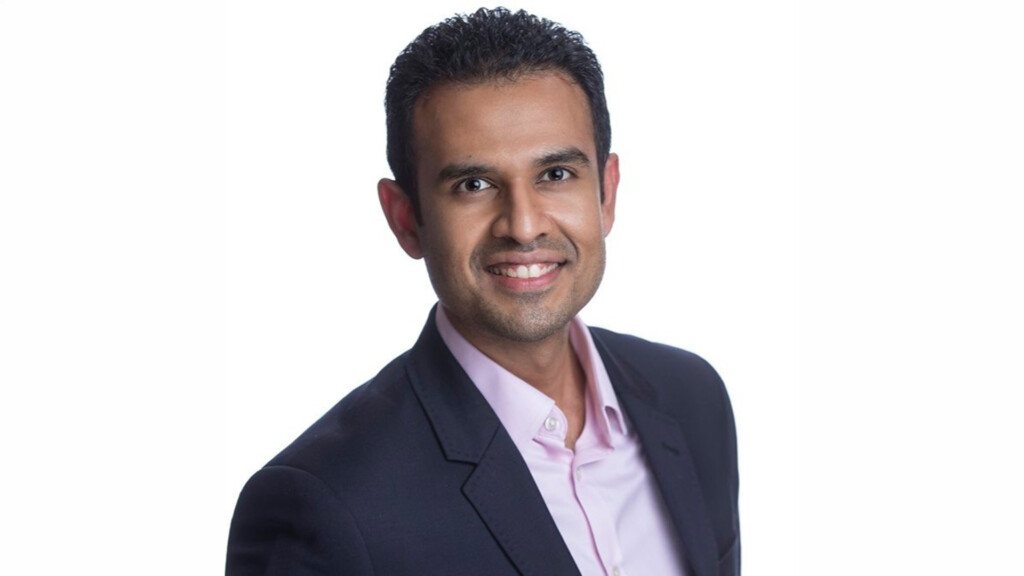
For Ram Rajaraman, healthcare and life sciences industry leader at Quantexa, shifting care upstream requires looking beyond traditional medical records to capture the wider social determinants of health. Here, he talks to Healthcare Today about bridging the gap between social care and primary care, unlocking hidden household dynamics and building the decision-intelligence platforms needed to power a truly preventative NHS.
The NHS has emphasised neighbourhood health in the 10 Year Health Plan. What needs to change in how data flows when care shifts out of hospitals and into communities?
The way we view neighbourhood models of care is as a subset of population health – essentially a practical method of segmenting regions into manageable population chunks of roughly 50,000-plus people centred around a locality. Under the current government, there is a clear opportunity to align these models more closely with local council boundaries, as well as city and regional mayoral footprints, which we view as a very positive shift.
We take that concept further by breaking neighbourhoods down into individual household units. While the household unit isn’t a concept unique to us, it is a well-established approach for managing healthcare outcomes because it helps us better understand a person’s underlying environment.
Regarding data, the key driver behind both the neighbourhood care agenda and the broader shift towards preventative care is integrating the wider determinants of health. If we want neighbourhood models to succeed, we must understand both the health and non-health circumstances of everyone living within a household. That means looking at financial circumstances, benefit status, access to informal or external carers, proximity to local green spaces, educational background and so forth – all of which directly dictate long-term health outcomes.
Take frailty in an elderly individual as an example. To evaluate their risk properly, you need to know who else lives in the household. Is a relative providing care, or do they rely on an external carer? Do they have stairs in the property? Do they receive heating credits? All of these factors shape their daily living conditions and can signal an increased risk of falls.
Bringing these wider determinants of health into the frame alongside traditional clinical data is the vital missing piece needed to make neighbourhood care truly work.
We’ve been talking about breaking down silos in the NHS for years. Why hasn’t it happened, and what’s different now?
Several key shifts give me genuine optimism. First, we are seeing a much more mature policy landscape, particularly with a strong focus on social care and delivering a genuine shift towards preventative care. Second, legislative progress through the Data Bill explicitly recognises the importance of wider social determinants of health, providing a clear information governance framework to support data-driven policy. Finally, there is the evolving trust equation. Public familiarity with data-driven tools, artificial intelligence and large language models in daily life is lowering the friction around using data in healthcare.
“It is encouraging to see models of care being fundamentally redesigned around the neighbourhood agenda.”
The problem that I’ve always seen in neighbourhood health is simply the different parts of the NHS and different parts of healthcare in the broadest sense don’t talk to each other. Is there a real shift there as well?
I don’t think there is a straightforward yes or no answer to the question. On the positive side, it is encouraging to see models of care being fundamentally redesigned around the neighbourhood agenda. That ties back to focusing first on what actions need to be taken, who sits within these integrated neighbourhood teams and what specific information they require to do their jobs – rather than simply dumping all the data into a single repository and hoping for the best.
However, a real challenge remains around organisational maturity and leadership. In the conversations we are having across various regions, the dynamic varies wildly depending on who is leading the neighbourhood initiative – whether it is a GP federation or an acute trust. Within the current ecosystem, those different leadership anchors carry very different incentives, which naturally lead to different care models. Striking the right balance between allowing for localised variation and establishing a consistent national framework that drives aligned behaviours is delicate. It is still too early to say which way the scales will tip, but we remain optimistic about the direction of travel.
Turning to Mersey Care. What was the specific problem you were trying to solve?
To set the scene, although Quantexa has been a data integration platform for ten years, we are relatively new to the healthcare sector. The two primary areas where we are doubling down from a value proposition perspective are what we call Citizen 360 and our household network solution.
Citizen 360 addresses the fundamental problem of how to integrate health and non-health data at scale when a unique identifier, such as an NHS number, is not present.
Our second solution uses knowledge graphs to build an picture of a household. Traditional household definitions rely strictly on GP address records or family relations, but real-world pathways are far more fluid. For example, in a children and young people’s pathway, a child might reside at location A permanently, but spend part of the year in a care facility at location B. During that period, the true “household” expands to include that care facility. Furthermore, care workers often struggle to verify actual familial relationships versus informal terms like “aunties” or “uncles” used in certain cultural contexts. Our approach maps these relational networks to provide a true picture of the household.
We put this into practice through our pilot with Mersey Care NHS Foundation Trust. The challenge we set out to solve was identifying vulnerable children within a household before they became known to the care system. By combining health and local authority housing data, we constructed a comprehensive household model and applied locally agreed risk criteria to flag potentially vulnerable children for further case review.
The initial pilot focused strictly on data feasibility, but even in these early stages, our model identified up to 150% more vulnerable children than traditional identification methods would have caught.
“My hope is that every neighbourhood has access to what we would describe as a neighbourhood decision intelligence platform.”
How do you handle the data privacy issue? That’s a difficult tightrope to walk.
For specific use cases like safeguarding, there are well-established legal frameworks and implied data privacy rules governing information sharing. An important distinction regarding Quantexa’s deployment model is that we bring our software directly to the customer’s data. We do not process patient information ourselves, nor does any data ever enter our internal systems. Instead, we provide NHS organisations with the underlying capability, tools and training to execute the integration, analytics and household mapping within their own secure environments. That architecture stems directly from our origins delivering technology in highly regulated sectors like global banking and government.
Beyond safeguarding, where you begin mapping households more broadly, complex data privacy challenges naturally emerge – most notably around identifying individuals within a dwelling who may not wish to be registered as living there. That is an issue we are actively exploring on a regional, organisational and national level as we help drive the broader governance conversation forward.
At present, one potential avenue we are evaluating is using household-level insights rather than individual-level identification to advance preventative care while navigating privacy constraints. While we have not fully resolved every facet of this challenge yet, we are hopeful that upcoming legislation, including the Data Bill and the single patient record initiative, will help establish clearer national frameworks for handling these sensitive data privacy boundaries.
If we get this right, what does a genuinely connected neighbourhood health system look like in three years’ time?
In three years’ time, my hope is that every neighbourhood has access to what we would describe as a neighbourhood decision intelligence platform. That capability should support frontline staff across every model of care by embedding data-driven intelligence directly into daily clinical behaviours. Crucially, it must also measure real-world benefits to create a continuous feedback loop: better data inputs yield richer insights, which drive improved patient care and clinical outcomes, which in turn feed back into better data.
Achieving that virtuous cycle is by no means a distant pipe dream. When you combine the current policy landscape and the government’s strong emphasis on social care with advancing digital maturity across the NHS and wider public agencies, the groundwork is already there. What has fundamentally changed over the past five years is the rapid digitisation of social determinants records, coupled with modern technology that can seamlessly ingest unstructured data. Bringing all those elements together makes me extremely confident that this vision can become a reality.