Add us as a preferred source
As the US extends its hospital-at-home regulatory waiver, Mass General Brigham’s Shiv Sutaria argues that scaling up virtual wards requires a shift in clinical data management and staff culture.
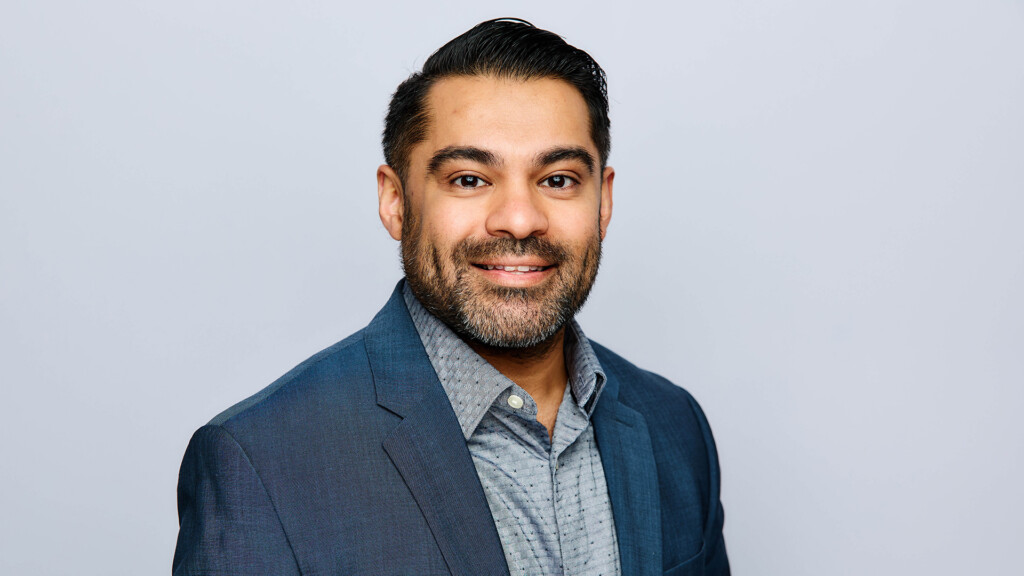
Shiv Sutaria, assistant chief information officer for Mass General Brigham (MGB) Healthcare at Home, believes that the future of acute medical care isn’t confined to a traditional hospital ward. It is unfolding in the patient’s living room. What began a decade ago as a modest research pilot in Boston has transformed into a structural shift in how healthcare systems handle bed shortages and patient recovery. With more than 360 hospitals across 37 US states now delivering acute care outside their physical walls, he believes that the true barrier to scaling this model is no longer the technology itself, rather it is the human change management and data discipline required to sustain it.
Speaking to Healthcare Today, Sutaria reflects on the “win-win-win” of the post-pandemic virtual ward boom, details the hidden danger of drowning clinical staff in continuous medical data, and argues that a successful home hospital programme must protect families by treating medical teams as guests, rather than expecting relatives to become full-time clinicians.
What is fundamentally different about the Home Hospital model compared with traditional care delivery?
It began as a research pilot back in 2016 at Mass General Brigham (MGB). The core objective was straightforward: to determine whether the quality of care was equivalent to a traditional hospital setting, and how patient outcomes compared to their counterparts in brick-and-mortar facilities.
While it started as a small-scale pilot, the initiative gained momentum in 2020 during the COVID-19 pandemic. This acceleration occurred when the Centers for Medicare & Medicaid Services (CMS) in the US launched the Acute Hospital Care at Home waiver. This waiver was crucial. It provided the necessary regulatory and financial frameworks, as well as the formal authorisation required for programmes to combat the pandemic.
As the model expanded, we conducted further research and confirmed that the clinical outcomes are superior. There is lower mortality, a reduced need for patients to be discharged to rehabilitation facilities, and a lower rate of readmission. Ultimately, we found this to be one of those rare initiatives that represents a genuine win-win-win for everyone involved. Today, the model has achieved significant scale in the US, with approximately 365 hospitals across 37 states now delivering this form of care.
What have you had to redesign clinically because the care is happening at home rather than in a hospital building?
If you were to establish a programme like this from scratch, the very first thing I would emphasise is that you cannot underestimate the sheer scale of change management required. It demands a complete cultural shift for your entire staff – the nurses, paramedics and doctors within the hospital – as well as for the patients and their families.
It is an entirely new concept for the modern era, even though, if you look back hundreds of years, receiving treatment and recovering at home was the norm. Over time, our culture and mindset shifted toward the belief that you must go to a hospital to get better. I cannot overstate the importance of addressing that mindset, because no single person or quick fix can solve it. It is a challenge that requires a systematic solution. You have to ask: how do we approach this change management? How do we effectively demonstrate to people that this is a programme worth pursuing, that it delivers excellent clinical outcomes, and that it is truly the right choice for our patients?
“We have to be entirely mindful that the caregiver is fully considered.”
How do families factor into the care model? Are they just now informal caregivers by default?
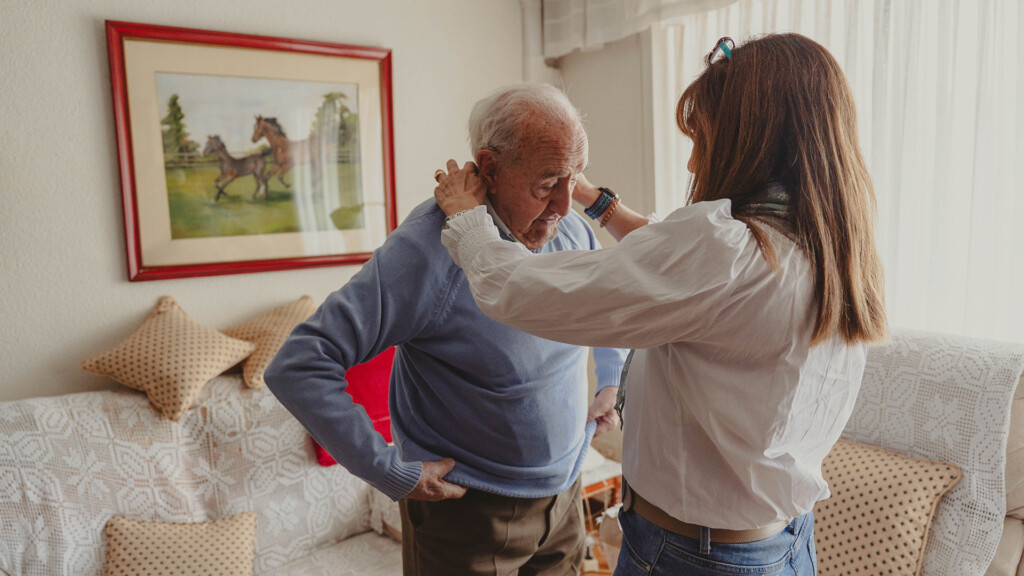
You need to design the programme in such a way that you are providing ancillary services alongside the purely medical ones. In our case, for instance, our home hospital programme can provide a home health aide. If a patient needs assistance with eating, getting up, or showering, we can provide an aide to be in the home up to 24/7 if necessary. We also provide food services.
We simply have to be entirely mindful during the design phase to ensure that the caregiver is fully considered and that we are minimising the impact on them. Of course, there is no way to eliminate the impact absolutely – you are in their house, so you are going to affect their routine in some way. However, you can at least put services in place to support the patient, so they do not feel like a burden to their family.
Remote patient monitoring promises continuous insight, but often just creates data overload. How have you managed that tension?
There are two distinct sides to this issue: the technological aspect and the clinical aspect.
From a technological perspective, you absolutely have to carry out a great deal of due diligence regarding with whom you partner. You must evaluate which remote patient monitoring company is the best fit for your team and, crucially, for your patients. That is the first part of the homework.
The second part requires looking inward to determine what data is actually important for your specific patients. Figuring out which individuals require remote monitoring and which do not is an equally vital question. If you are inundated with too much data, you simply cannot make decisions that are helpful to anyone.
However, over the last two or three years, as programmes have grown larger and more confident, operational experience has led teams to pull back on these constant data feeds. Instead, they are moving toward spot checks – perhaps once or twice a shift, or every four to eight hours.
Ultimately, you have to ask yourself what the patient would actually require if they were in a traditional hospital.
How do you make sure safety isn’t compromised in less controlled environments?
This is where the home hospital model truly shines. In a traditional hospital, you enter a system governed by fixed protocols. In a home hospital setup, however, you are evaluating every single patient individually: what do they specifically require, and how can we create the best possible experience for them? Safety remains everyone’s absolute priority. If you think a patient even remotely needs a certain level of oversight, you ensure they have it. You can then scale it back later.
After all, that is how recovery actually works. Realistically, we recover slowly, day by day, as patients. Our care models need to reflect that reality, rather than treating health as a binary where you are acutely ill right up until the moment you are suddenly perfect and ready to leave.
Is Home Hospital genuinely reducing costs or just redistributing them across the system?
The financial side of things is a complex question to answer. To demonstrate a meaningful cost reduction for a health system, a programme like this needs to be operating at a significant scale.
The cost to the patient is even more complicated because it varies heavily depending on their insurance coverage. Most studies have shown that this model definitely reduces the overall financial burden on the participating health system. However, because health systems differ so widely in the size of their home hospital programmes and their operational setups, any specific figure I could give you would be wildly inaccurate.
That said, in the vast majority of cases, the cost is entirely comparable to a traditional stay. It certainly does not cost more than a brick-and-mortar hospital.
“I foresee this model rapidly picking up speed right across the world, and most definitely throughout Europe.”
Can this model work outside the US system? Within state systems like the NHS?
I am aware of initiatives in Canada, Italy, the UK, Australia and Saudi Arabia.
When you look internationally, you encounter completely different payer environments, varying local and national regulations that must be adhered to, and distinct local standards that you are required to follow. Even within the US, there are state-by-state regulations to navigate.
To help navigate this, there is actually an academic body in this space called the World Hospital at Home Congress. It comprises academic organisations and leaders, who are actively involved in helping to shape the future direction of this care model.
What are your expectations over the next five or six years? Do you see home hospital being picked up more broadly?
To give a concrete example, since January 2022, the home hospital programme at Mass General Brigham has served over 10,000 patients. Those 10,000 individuals would otherwise have spent 48,000 days in a traditional hospital setting, meaning we have saved nearly 50,000 bed days.
There is an immense amount of momentum right now, particularly in the US, from a regulatory standpoint. The CMS waiver I mentioned earlier was initially being extended by only six months or a year at a time. Consequently, many health systems were understandably cautious; they were wary of launching a full programme only to have the regulatory framework vanish. However, earlier this year, we were granted a five-year runway through 2030.
This long-term extension is going to supercharge the momentum of these programmes in the US. A great many providers which were waiting on the sidelines during the short-term extensions will now take the plunge and build out their own operations. Based on that, alongside the sheer volume of interest and the exceptionally sharp questions I received after my talk, I foresee this model rapidly picking up speed right across the world, and most definitely throughout Europe.