Add us as a preferred source
The vice president of neuromodulation for Europe, the Middle East and Africa at Boston Scientific outlines the importance of closing the clinical awareness gap for deep brain stimulation.
Parkinson’s disease is one of the fastest-growing neurological conditions worldwide. It currently affects nearly 12 million people – a figure projected to reach 25 million by 2050. Beyond the human impact, the financial toll is staggering: the average societal cost of Parkinson’s sits at more than £17,000 per patient a year, climbing to nearly £85,000 in advanced stages when healthcare, productivity loss and informal caregiving are all factored in.
Despite this looming crisis, a bottleneck remains in how advanced therapies are delivered. A recent Boston Scientific survey of 60 UK healthcare professionals revealed a paradox: while clinical confidence in deep brain stimulation (DBS) is universal (100% rate it effective), 88% of respondents report that eligible patients are failing to access it.
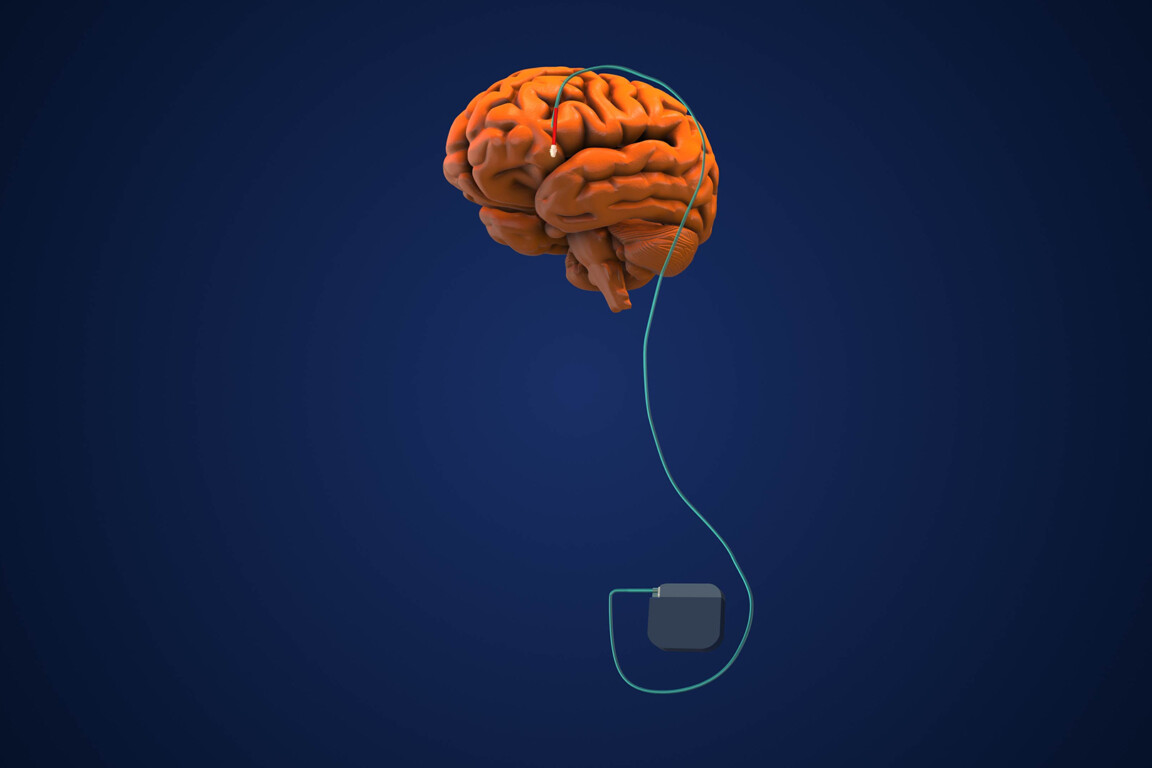
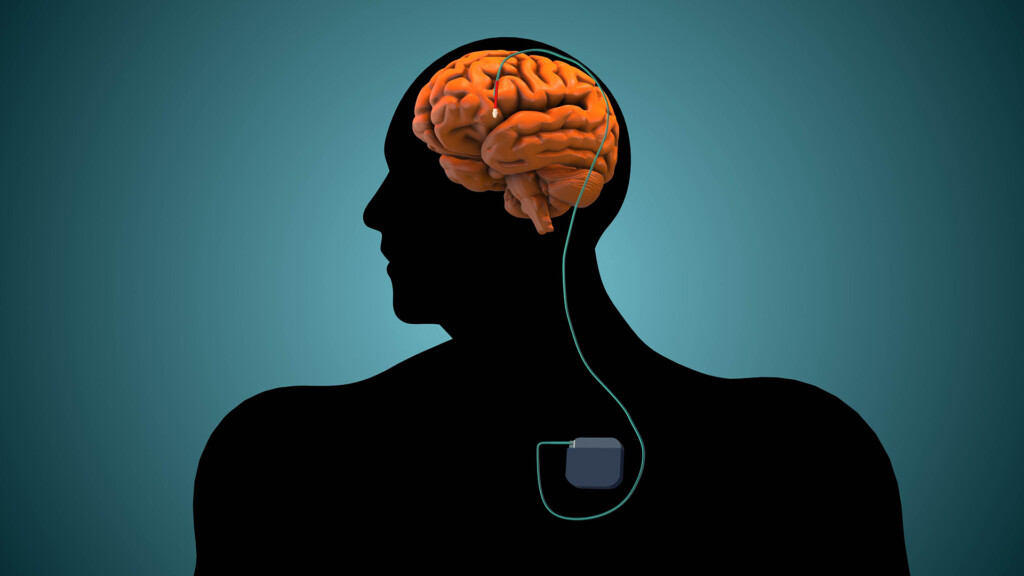
DBS uses a small, surgically implanted device to send signals to a targeted portion of the brain. This can improve motor function and reduce a number of symptoms.
Unsurprisingly, NHS capacity limitations are cited as a primary barrier by 82% of clinicians, but the data points to a deeper issue: a knowledge divide between DBS programmers and referring general neurologists. Only a third of referrers report high familiarity with DBS, compared to 98% of direct programmers. Furthermore, four-in-ten referrers remain unsure whether modern image-guided DBS – which dramatically reduces programming time and improves precision – enhances the patient experience.
Here, Vincent Sourdaine, vice president of neuromodulation for Europe, the Middle East and Africa at Boston Scientific, shares his perspective on reforms to referral pathways that are needed, what needs to be done to support clinician education, and how to ensure that every suitable Parkinson’s patient gets an assessment in time.
If clinicians are so confident that DBS works, why do 88% believe patients who could benefit from it are still missing out?
It is increasingly frustrating that so few patients actually benefit from it. Outside the UK, this is a procedure performed by very few centres and very few neurosurgeons, with patients followed up by few neurologists. Capacity is an issue; respondents cited NHS capacity as one of the top three barriers. But beyond that, there are also significant differences in familiarity and training, particularly earlier in the referral pathway.
I always use the example of my own GP. When I spoke with him about DBS, he didn’t know about it at all, even though managing health is his job every day. I’m not pointing fingers at him, of course, but it highlights that we have a real challenge when it comes to identifying and referring potential DBS patients. Again, this isn’t about placing blame; it’s about asking how we can make the entire pathway work better – from awareness, identification and referral to specialist assessment, treatment and follow-up.
Are we on the cusp of a change? Is the medical community starting to take DBS more seriously than before?
Those of us working in this therapy are genuinely trying to change the situation, partly because we realise there is a real risk of DBS remaining a niche treatment. Parkinson’s is a progressive disease affecting around 11 million people globally today, a figure projected to reach 25 million by 2050. It is growing rapidly, so we simply have to change our approach.
We can see this reflected in the survey findings. The clinicians programming DBS systems week in, week out are not the ones who need convincing. The people we need to reach are the referring clinicians. Naturally, they get far less direct feedback on what modern DBS, particularly image-guided DBS, can actually achieve. They know less about image guidance simply because they are not managing these patients on a daily basis, so they don’t see the degree of personalisation we can now offer.
“Today you almost have to be an “expert patient” just to access DBS. That is what has to change.”
How can we transform referral pathways so that access to DBS depends on patient suitability rather than the individual neurologist’s familiarity with the therapy?
The media has a role to play here, too, because fundamentally this is about awareness. That is probably the single best lever we have: raising education and awareness among referring clinicians who aren’t directly involved in DBS programming. Local awareness is critical. Indeed, 38% of survey respondents highlighted training and expertise gaps here. We need better education, better information sharing and clearer communication right across the pathway.
I would go even further and include patient communities. Patient associations do a wonderful job of keeping people informed, and we also try to empower patients directly. Today you almost have to be an “expert patient” just to access DBS. That is what has to change. A patient shouldn’t have to become an expert and actively fight to ask for DBS themselves.
Is the problem a lack of awareness of DBS, or is it just that hospitals can’t afford to treat it?
The issue isn’t really the cost of the device per se. It is simply a capacity problem. There are very few centres, very few surgeons and very few neurologists. Of course, as a device manufacturer, we can help by simplifying the procedure to make it shorter, as well as streamlining the programming and follow-up care.
I am always asked about the cost of DBS. It is easy to say, “Oh, it is just too expensive”. But I would like us to look at the broader picture and consider the total societal cost of Parkinson’s. Parkinson’s disease carries a high cost whether you treat it or not. Globally, it is estimated to impose an economic burden of around $250 billion each year, factoring in healthcare costs, lost productivity and informal care. Furthermore, the average cost of illness per patient is nearly €21,000 a year.
When we talk about access to treatment, the economic question is far wider than just how much a DBS device costs. The relevant question today is: What does Parkinson’s cost patients, families and society, and what value do effective treatments create?
How early should DBS be considered in a patient’s Parkinson’s journey? Are we leaving it too late?
There isn’t a single point in time that applies to every patient – Parkinson’s is highly individual. Every patient is different, and every brain anatomy is unique, so each case must be assessed individually by the treating physician based on symptoms, needs and the overall clinical picture. That is precisely why DBS succeeds: its personalisation.
What matters most is that DBS becomes part of the conversation at the appropriate time, rather than being a therapy that patients only discover very late in their journey. Patients deserve to understand all the options that may be available to them and to have access to a specialist assessment.
That starts with ensuring clinicians across the board are far more aware of DBS as a viable treatment option, so that when it is appropriate, patients are given the chance to be referred. That is where we are struggling. Here in the UK, as well as in France, Italy, Spain and Germany, we see relatively good levels of adoption compared to the rest of Europe or the Middle East. But even here, getting patients referred at the right time remains a challenge.
“Overall, the perception among physicians who work closely with these patients is incredibly positive.”
One figure that leapt out at me from the research was that four in ten referring clinicians are still unsure whether it improves the patient experience. Why is there still such uncertainty about the technology?
Perhaps it helps to first clarify what image-guided DBS actually is. Put simply, it gives you three core advantages: first, you can see far more; second, you can shape the electrical stimulation with greater precision; and third, you can use that detailed visual information to personalise programming for the individual patient. It is really about visualising the brain, informing clinical decisions and delivering tailored programming – all of which saves valuable time.
Overall, the perception among physicians who work closely with these patients is incredibly positive. That is one of the most remarkable aspects of treating Parkinson’s: when a therapy works, you see the immediate physical impact.
However, as the survey findings highlight, referring clinicians are the notable exception. They rate image-guided DBS significantly lower simply because they have far less day-to-day exposure to it. Because they aren’t working with the technology directly, they naturally have less conviction about its ability to deliver personalisation and better patient outcomes. It is fundamentally a question of exposure – and that represents a clear opportunity for us to drive greater education and share more information across the referral network.
If I can ask a final question to pull it together, what does success look like for a DBS patient?
For me, time is what really matters – that is the key point. Success would mean a patient being informed about DBS within the first two years of their Parkinson’s diagnosis, enabling them to make an educated choice much earlier. There is ongoing clinical work looking into the specific benefits of introducing DBS at an earlier stage, and it will be interesting to see those results. But that is the essence of it: if you are diagnosed with Parkinson’s, you deserve to know all of your options within those first two years.