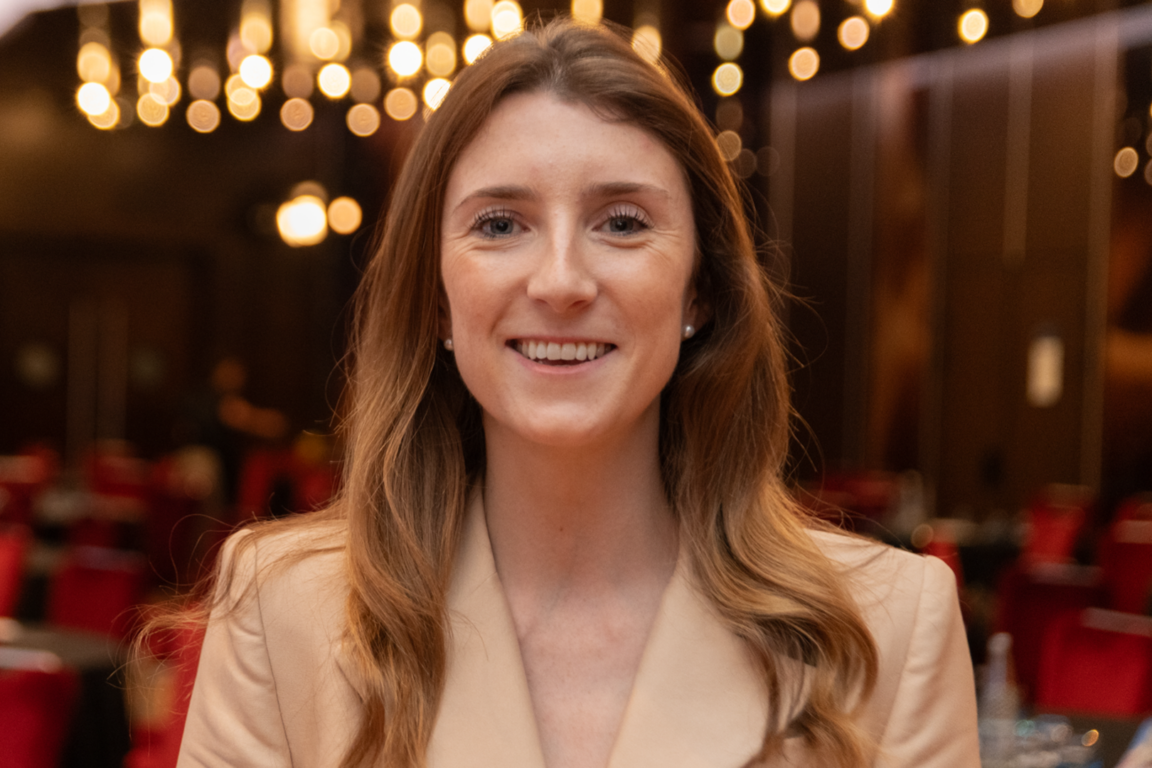
Nexus HE’s Emily Harrison explains what traditional medical education models are still getting wrong and changing clinical behaviour.
For Emily Harrison, founder and managing director of Nexus HE, the crisis in modern medical education isn’t a lack of information; it is a lack of impact. In a world where the average healthcare professional is bombarded with more than 30 educational invites a week, the traditional model of passive webinars and static symposia has reached a point of diminishing returns. To Harrison, education shouldn’t just be about knowing more; it must be the catalyst for doing differently.
Here, she talks to Healthcare Today about what traditional medical education models get wrong, the philosophy that drives her to view competitors as collaborators, and why the next three years of AI-driven, personalised learning will fundamentally redefine the relationship between the clinician and the classroom.
What are traditional medical education models still getting wrong?
A critical question often overlooked in medical education is not how we deliver information, but how we drive actual change. We are currently operating in an environment of information saturation; the average healthcare professional receives approximately 34 invitations per week to participate in various educational courses. While the industry has become adept at delivering content, it is failing to focus on the transition from knowledge to practice. Education should be the baseline, but we must build upon that by providing clinicians with the tools to move through the progression of “needing to know,” “needing to act,” and finally, “acting in practice”.
To achieve this, we must move away from one-off initiatives – such as isolated symposia, webinars or modules – and instead develop formats that bridge the gap between awareness and management. At Nexus HE, we look at established systems like Moore’s Outcomes Framework, which assesses learners across seven core criteria. However, while that framework focuses on the end result, it often neglects the most vital stage: the work that happens before the education is even delivered.
The turning point for impactful education lies in identifying the specific nature of the gap. Is it a lack of knowledge, a required shift in attitude and mindset, or a need for improved skills and practical confidence? Once the gap is categorised, only then can we match the appropriate educational model to it. The traditional approach – simply pushing out new guidelines or clinical data the moment a drug is approved – is no longer sufficient. That is not how we drive systemic change or effectively address the real-world challenges clinicians face in their daily practice.

How do you balance educational integrity with the fact that much medical education is industry-funded?
The traditional model of medical education is often reactive; an RFP (Request for Proposal) is issued by a pharmaceutical company, and agencies move to align their education with that specific funding. We advocate for a more comprehensive, curriculum-based overview. If we are addressing a broad field like dermatology or cardiovascular health, we often identify significant educational needs that fall outside the narrow scope of a specific RFP.
This creates a strategic tension: how do you prioritise the business model of solving a specific clinical burden while maintaining a library of expertise that clinicians find valuable? For us, the “integrity piece” is paramount. We acknowledge the value of pharmaceutical insights, but we do not allow them to be the sole architect of the educational journey.
When we identify a gap that doesn’t 100% align with a funder’s targeted focus, we don’t ignore it. Instead, we conduct our own research – surveying healthcare professionals, engaging with patients, and consulting Key Opinion Leaders (KOLs). We then include these “extra-curricular” gaps in our proposals.
While this carries the risk of not securing the full funding, we have found that funders often welcome this additional value. By backing our claims with evidence-based rationale and patient insights, we are essentially showing the funders what they don’t know, allowing for a much more holistic approach to the disease state.
“We prioritise ensuring that our specific cohort of learners reaches the highest levels of competence.”
How do you measure whether education has actually changed clinical behaviour?
When I founded Nexus HE, my primary objective was to address the industry’s greatest pain point: the inability to measure and demonstrate clinical change accurately. To solve this, we developed GAUGE, an automated tool integrated into our learning hub.
This system allows us to track longitudinal change across Moore’s Outcomes Framework from Level 1 through to Level 5. We move beyond simple participation data to capture self-reflective assessments, where learners report on their shifts in confidence and competence, specifically comparing their previous practice to their current clinical behaviour.
To add a layer of objective rigour, we recently launched a matched survey model. We invite a cohort of our healthcare professional learners to share survey QR codes with their patients. By capturing the patient’s experience directly, we create a more robust picture of impact that goes beyond the clinician’s self-reporting.
In the US, where compliance structures allow for de-identified electronic health record access, we can go even further – matching learners to clinical reports to observe site-specific changes in testing, prescribing, and treatment optimisation before and after our educational intervention.
While it is difficult to claim that a single course definitively caused a specific prescription, the correlations are becoming harder to ignore. We have had feedback from UK funders who, after supporting a Nexus-led programme, saw new sales invoices from institutions they had never previously penetrated – linked directly to our education in the absence of any other marketing activity.
Ultimately, achieving this “gold standard” of measurement requires us to understand that change is initiated differently for every individual. Some clinicians need to be intellectually convinced, some require new practical skills, and others might just need a single poignant insight from an expert role model.
Can you meaningfully track that behaviour has actually changed and that clinicians haven’t slipped back to old behaviours?
Our GAUGE tool is designed to move beyond the one-off educational event by testing learners over many months to ensure long-term reinforcement. We recognise that repetitive, reinforced education is what truly shifts the needle. By tracking unique learner profiles over time, we can see how a healthcare professional may arrive for a specific course but then move through a broader curriculum. Our system is built to recommend and suggest further modules based on identified gaps in their profile.
Unlike larger platforms that may focus on having millions of registered users, our strategy at Nexus HE is to remain more specialised and focused. We prioritise ensuring that our specific cohort of learners reaches the highest levels of competence.
One of the greatest challenges in achieving this is the current funding and compliance landscape. Funders often scatter their grants across multiple providers over the course of a year, which leads to a fragmented narrative. There is frequently no oversight regarding who is continuing the story once one provider’s project ends. We advocate for a more joined-up approach, where funders allow us to see the broader landscape of who else they are working with.
In our view, other high-quality education providers are not competitors – they are collaborators. If another agency fills a gap effectively, we have no hesitation in sharing that content. As educators, our primary objective isn’t market share; it is driving the specific changes that lead to the best possible outcomes for patients.
“For an education provider to survive and remain purposeful in this era, the focus must shift entirely to personalisation.”
If we get medical education right, what changes at a system level: costs, outcomes, workforce pressure?
Looking ahead, I believe the industry will shift away from merely disseminating information toward supporting healthcare at a systems level. While there is no shortage of delivery models or tools, the true goal is to become a partner to clinicians within their specific healthcare environments, supporting them in the practical delivery of care.
There is a personal dimension to this mission for me. My mother always hoped I would become a physician, following in my father’s footsteps, but I realised that my passion lay in supporting those who are already excellent in practice. I wanted to understand what they needed to facilitate change. Philosophically, I believe that everything begins with education. Whether we are reflecting on global events or trying to evolve a community’s mindset – such as bridging the gap between the perspectives of older and newer generations – education is the only way to facilitate meaningful reflection and growth.

Where does Nexus want to be in the next three years, and what changes do you see coming down the line?
The rapid evolution of AI is accelerating growth at an unprecedented pace. For an education provider to survive and remain purposeful in this era, the focus must shift entirely to personalisation. Clinicians no longer want a blanket approach; they need education that feels specifically curated for them, their clinical setting, and their unique patient demographic.
To meet this need, we are evolving our learning hub into a series of adaptive learning pathways. This means the educational journey is not fixed; it shifts and adapts based on the learner’s specific responses. Furthermore, we are moving beyond traditional formats like 15-minute talking head videos. We are currently developing an AI tutor or librarian – a specialised LLM that allows clinicians to query our existing high-quality content in real-time.
Instead of passively watching a video, a learner can simply ask, “I need to know about X,” and the AI will extract that specific insight from our verified educational library. Just as tools like ChatGPT provide different responses based on the user’s context, the future of medical education must be self-guided and adaptive.