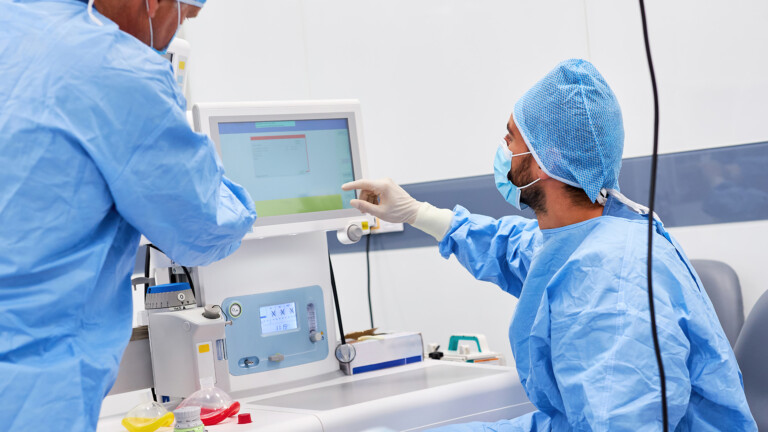
Almost two-thirds of NHS consultants have said that they are keen to work for the new hospital when it comes online next year.
Almost two-thirds of NHS consultants have said that they are keen to work for the NHS’s online hospital when the service launches next year, a new poll has revealed. Six in ten consultants (60%) said they would be interested in working for NHS Online alongside their current NHS roles. This is many more than will be needed to run the service.
At the end of September last year, the government announced the fully digital hospital model as part of its 10 Year Health Plan to shift the NHS from analogue to digital. It will allow patients to access specialist care, book scans, manage prescriptions, and receive clinical advice from home via the NHS App. It plans to launch a fully digital hospital model, NHS Online.
The survey of nearly 300 consultants and specialist doctors also found that nearly half (48%) would be willing to offer at least four hours a week of their time, with the opportunity to care for patients innovatively, work flexibly and improve patient experience among their top reasons for wanting to sign up.
“It’s fantastic to see that consultants and specialist doctors are hugely supportive of the NHS’s new online hospital, with nearly two-thirds willing to offer their time for this revolutionary service alongside their current roles,” said Stella Vig, national clinical director for elective care at NHS England.
No replacement
The NHS Online service, which was announced by the Prime Minister in September 2025, won’t replace traditional care as patients will always have the choice of face-to-face appointments.
The idea is that patients referred by their GP will be able to book specialist appointments directly. If scans or procedures are needed, they can be scheduled at Community Diagnostic Centres closer to home. The hope is that this will offer greater convenience and faster access. Clinicians will also be able to triage patients and review their notes remotely, potentially outside office hours, without the patient needing to be present.
The NHS has selected nine common conditions – glaucoma, macular degeneration, cataracts, inflammatory bowel disease, iron deficiency anaemia, prostate enlargement, raised PSA, menopause and menstrual problems, which may be a sign of endometriosis – as the first to be treated by the NHS Online service.
Prostate problems like prostate enlargement and a raised prostate-specific antigen (PSA) level will also be covered by the service, along with eye conditions including cataracts, glaucoma and macular degeneration.
NHS Online will also provide support for other painful and distressing conditions, such as iron deficiency anaemia and inflammatory bowel disease.