
The secretary general of the European Confederation of Pharmaceutical Entrepreneurs warns that the UK’s pricing and reimbursement frameworks need to adapt.
There has been a great deal of discussion over the past few months in the UK about pharmaceutical pricing. The US government under president Donald Trump has pushed – successfully – for Britain and Europe to raise pharmaceutical prices in an attempt to avert threatened tariffs on the sector. But there is more to be done. There is a fear that unless Britain and Europe adapt to the new global pricing reality and establish Most-Favoured-Nation (MFN)-compliant pathways for orphan drugs, patients could face slower access to innovative therapies, more selective or delayed launches, and reduced long-term investment in high-risk rare disease research.
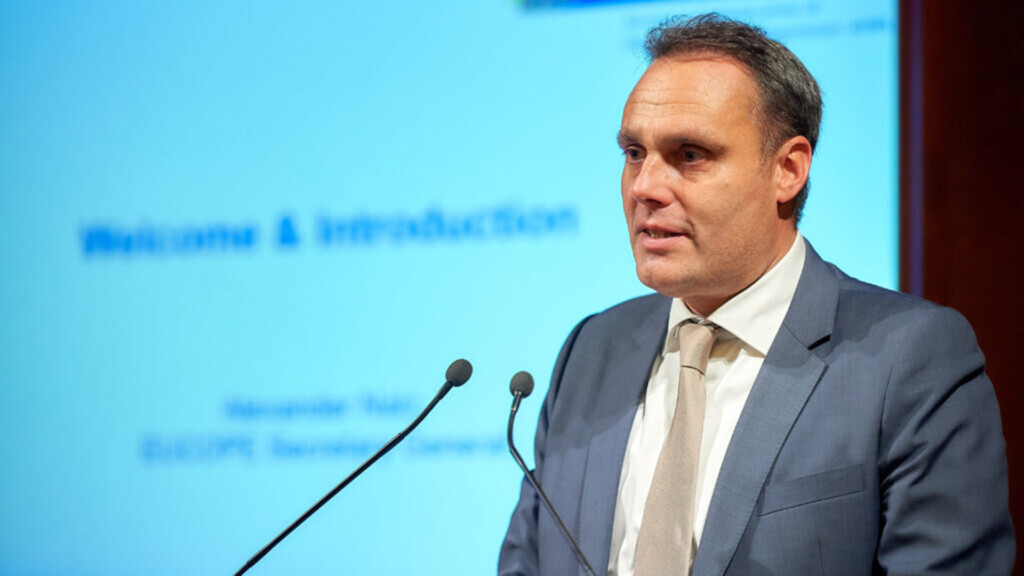
Alexander Natz, secretary general of European Confederation of Pharmaceutical Entrepreneurs, talks to Healthcare Today about why this is an issue, appropriate pricing and the need for a European rare disease action plan.
You’ve warned that UK patients could face slower access to innovative therapies because of its pricing and reimbursement frameworks. How big an issue is this?
For a year now, we have been dealing with Most-Favoured Nation policies, a trend initiated by the Trump administration early last year. This is not exclusive to the EU – it also includes the UK. Essentially, it means that the US is benchmarking and comparing its prices with other European countries. In most of these programmes, the benchmark is the G7 plus Switzerland and Denmark, which obviously includes the UK. This would mean that the willingness to pay in the US is capped at the price levels of those G7 nations.
You can already see that the way you price your medicine in a given country has become very competitive. While pharmaceutical companies can set their own price in the beginning, the NHS eventually comes in and price negotiations begin. This is what is happening across Europe and in many other countries, the systems are lowering prices. If those prices are then exported to the US through benchmarking, it creates a problem for potential patient access in European countries. That is something we are working on very closely with local decision-makers in Europe to ensure there is a common understanding of this US policy, because it could potentially affect patient access to innovative therapies in your country.
“We cannot expect that – just because of a US measure – the willingness to pay will suddenly double in all our countries.”
Is this just about getting UK taxpayers to pay more for their medicines?
I don’t think it is. I think the first thing is that you should readjust your willingness to pay for innovative medicine. That is one thing, and I think we have seen that happening in the UK. My interpretation of what happened with the Voluntary Scheme for Branded Medicines Pricing and Access (VPAG) in the UK is that the willingness to pay has been reassessed. I believe it is necessary that we reassess our willingness to pay for innovative medicines.
However, we cannot expect that – just because of a US measure – the willingness to pay will suddenly double in all our countries. Our goal at the trade organisation I run is to engage in discussions with decision-makers to see if we have a common understanding of what is happening in the US.
We need to ensure we are on the same page and, based on that, develop potential solutions to hedge the risk and ensure companies are still coming to Europe, because that is our ultimate objective.

If there is a change of government at the next US elections, do you get a sense that this policy will be continued?
I would assume that the Democratic Party would continue with this policy simply because, under the administration of [former president] Joe Biden, they initiated the Inflation Reduction Act. While it is known for many other things, it contains a significant section on how to reduce the costs of innovative medicines.
Because of this, I think it is very unlikely that we will see the wheel turned back on this issue. Once you have decreased medicine prices, it is politically very difficult to reverse that, as it would likely be unpopular with US voters, patients, and the general population.
What I believe we must do in Europe is ensure we are engaging in serious discussions with our governments, the Department of Health, and the NHS. It is important that we are operating at the top level of our assessment mechanisms, such as NICE, while maintaining a clear understanding of the implications that pricing decisions have on access.
Our primary objective is to ensure a common understanding and to discuss what is in the toolbox to guarantee continued access for European patients.
The UK represents a relatively small share of global pharma revenues. Why does UK pricing matter so much to your members?
UK pricing matters, first and foremost, from the perspective of the UK patient. It is a large territory and a significant country – one that is particularly important for the pharmaceutical industry. There is a great deal of production and research ongoing in the UK, supported by world-class universities.
It is also the case that the UK is included in many country baskets for international reference pricing. If the UK price is set too low, you not only face that ripple effect in the US but also, potentially, across other European countries. The UK is important simply because of its market size and the fact that its system is accustomed to providing patients with access to innovative treatments, but it is also a very important hub and country for the pharmaceutical industry to remain active in.
“It is vital that we place access at the very centre of our discussions.”
What does “good” look like? What is a win for the broader European pharmaceutical industry?
It is vital that we place access at the very centre of our discussions. Here in the EU, as well as at the Medicines and Healthcare products Regulatory Agency (MHRA) in London, we have an excellent regulatory system, but we must now focus specifically on access, and on what constitutes appropriate pricing and reimbursement for that innovation.
We need to create MFN-compliant pathways in Europe so that companies have a predictable understanding of what they are entering into when they move into different countries. To that end, we are currently engaged in bilateral discussions with many decision-makers across Europe. This is not so much a Brussels-based issue or a matter of EU legislation; it concerns national pricing and reimbursement systems.
Ultimately, what “good” looks like is a Europe that, in its totality, is open to innovation, open to paying for that innovation and committed to ensuring patient access. We saw during the pandemic how important it is – not just that we are quick, but that we have actual access to medicines.
This is not just an important industrial factor; the pharmaceutical industry is very often the solution to health threats. Whether it is biosecurity, smallpox, or mpox, there are so many significant threats where the industry plays a critical role. Consequently, we must maintain an innovative and positive industrial policy for these types of companies.
Are we heading toward a two-tier Europe in rare disease access?
First of all, I want to start with something positive. In the EU – and this also applied to the outcomes in the UK for a very long time – we have had a good rare disease policy. Historically, there was a willingness to invest in this area, with regulatory exclusivities of ten years. Even if a compound is well known, if it is developed for a rare disease, it still receives that ten-year period. This has led to improved access and the development of rare disease therapies.
There are, however, 30 million people in Europe living with a rare disease and there is still so much that needs to be done. On top of that, 95% of rare diseases still have no treatment option. We have three therapies for spinal muscular atrophy, and we have treatments for Duchenne muscular dystrophy and certain types of cancer that wouldn’t have been developed without both strong policy and these exclusivities.
But there is much more to do. The positive news is that I don’t believe we are losing our way, but we must be careful not to reduce these exclusivities. Current pharmaceutical legislation is seeing these periods curtailed slightly, but the most important message I want to send is that we need a European rare disease action plan. We need to integrate rare diseases into all areas of policy, and that can only be achieved through a dedicated action plan.