Add us as a preferred source
The latest investment rounds and corporate developments in digital health and life sciences, from real-time continuous hormone monitoring and menstrual health supplements to precision siRNA therapeutics.
Kāhu SiliconBio secures £1.2 million SPRIN-D award
University of Edinburgh spinout Kāhu SiliconBio has secured £1.2 million in funding from the German Federal Agency for Disruptive Innovation (SPRIN-D) to adapt its bioelectronic sensing platform for real-time continuous hormone monitoring.
Founded in 2025 by biophysicist James Flewellen and Teuta Pilizota, the company is commercialising research from the university’s Centre for Engineering Biology, building on foundational development backed by the Industrial Biotechnology Innovation Centre (IBioIC).
Standard diagnostic protocols for hormone-related conditions rely on static blood or saliva samples, which capture only a single data point. This lack of temporal data makes diagnosing and managing fluctuating conditions particularly challenging. Kāhu SiliconBio’s system tracks dynamic hormone shifts across the day, generating detailed physiological profiles linked to circadian rhythms, stress levels, nutrition and the menstrual cycle.
The platform fuses synthetic biology with integrated silicon microelectronics. Bioengineered microorganisms are designed to react to specific target hormones, while an integrated electronic interface converts those biological interactions directly into instant, quantifiable digital signals. By providing continuous, objective biological feedback, the technology aims to unlock deeper clinical insights into prevalent gynaecological and endocrine disorders, including endometriosis and polycystic ovary syndrome (PCOS).
Although the technology was originally engineered to detect trace chemical compounds in industrial liquids and environmental water samples, its modular architecture allows the biosensor to be reconfigured for diverse molecular targets.
The company has previously secured non-dilutive and strategic support from Scottish Enterprise, Innovate UK, Silicon Catalyst UK, and the Roslin Institute Campus Innovation Account. Kāhu SiliconBio will use the new funds to refine its sensor hardware, expand its technical team and establish new academic and clinical research partnerships.
“Hormones play a fundamental role in health, but we still have limited visibility into how they change throughout our lives and how those fluctuations relate to disease,” said Flewellen. “This funding will help us take an important step towards creating a new type of biological sensor that could give both researchers and patients a much deeper understanding of hormone patterns and their impact on women’s health.”

Mirae raises $5.4 million seed funding
AI-driven speciality care platform Mirae has raised $5.4 million (£4.2 million) in seed funding led by Oxford Science Enterprises. Commercialising research originating from the University of Oxford’s Computational Health Informatics Lab, the platform captures patient health data between routine clinical visits and translates unstructured daily observations into real-time insights for speciality clinicians.
Mirae is initially directing its platform toward inflammatory bowel disease (IBD), including Crohn’s disease and ulcerative colitis. The technology is currently being used within a prominent US health system to gather real-world patient data streams for ongoing clinical model validation and point-of-care workflow integration.
Managing complex chronic conditions creates significant clinical and operational burdens because diseases evolve continuously while care is delivered episodically. Mirae bridges this information gap with a conversational AI companion that enables patients to log symptoms, daily behaviours and medication responses in natural language. The algorithm prompts follow-up questions and maps symptom patterns against clinical records, lab results and peer-reviewed medical literature.
For clinicians, Mirae functions as a point-of-care copilot before appointments. By automating the reconstruction of patient history between visits, the platform allows physicians to evaluate targeted therapeutic interventions and prevent hospitalisations through earlier flare detection.
“Where you live should not dictate the quality of care you receive. A lot of the variability in care and outcomes comes from the fact that clinicians are working without a full view of what has happened between visits,” said co-founder and chief executive Anuj Patel. “When you combine experiential data with clinical data, you begin to understand and model disease more effectively and have a path towards true precision medicine.”

DITTO raises $6 million seed round
London-based menstrual health startup DITTO has raised $6 million (£4.7 million) in seed funding to expand its supplement portfolio and clinical research pipeline.
The round was led by European early-stage investor FoodLabs, with participation from existing backer Eka Ventures.
Co-founded by neuroscientist and nutrition scientist Alice van der Schoot alongside former L’Oréal brand director Adam Kugler, the company has positioned its business model around condition-specific, clinical-grade formulations rather than generic wellness solutions.
The company’s flagship product, Premenstrual Daily, targets premenstrual syndrome (PMS) and premenstrual dysphoric disorder (PMDD) symptoms, including fatigue, mood swings and physical pain. The formulation uses a delivery technology that combines dry active ingredients and lipids in a single time-released capsule. By layering nutrients for staged release in the gut, the system reduces competitive transport inhibition where nutrients block each other’s absorption pathways. In an initial clinical trial of the finished product, 88% of participants reported a significant reduction in symptom severity.
DITTO will use the new capital to scale its product portfolio, expand consumer reach and fund ongoing clinical programmes, including a larger trial, a real-world evidence study and a systematic review investigating potential physiological links between PMDD and ADHD.
“Women’s health has many distinct and complex subsections – different conditions, different symptoms, different underlying biology and different life stages – each deserving targeted, expert-level supplements,” said van der Schoot. “Women are increasingly sceptical that supplements over-promise and under-deliver. The next generation of successful supplement brands will be those that combine both specificity and product-level clinical evidence.”
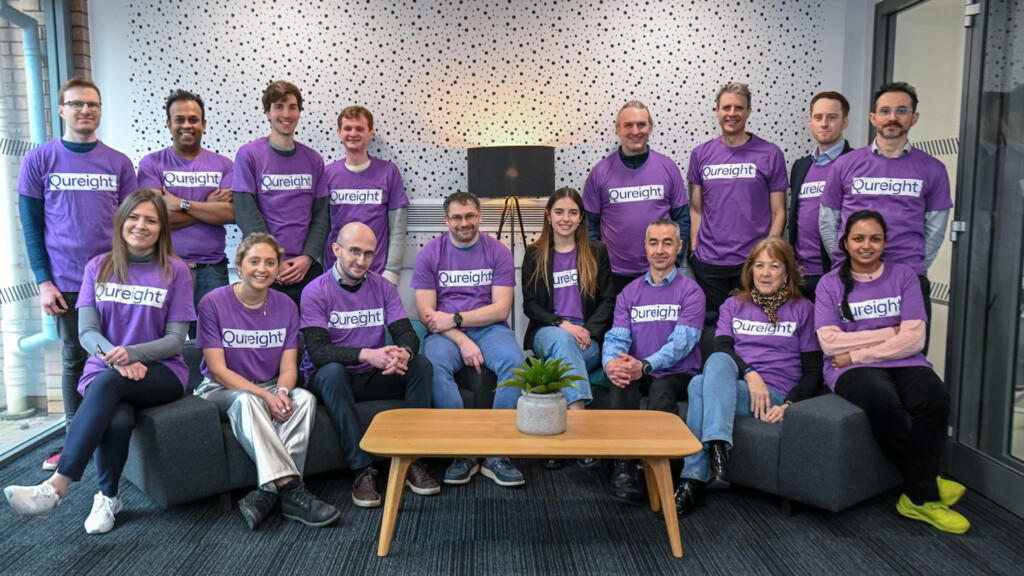
Qureight secures $20 million Series B funding
Cambridge-based digital health company Qureight has closed a $20 million (£15.5 million) Series B round of funding led by Molten Ventures. The financing saw participation from existing institutional investors Hargreave Hale AIM VCT, XTX Ventures, Guinness Ventures, Meltwind and Ascension.
Qureight is an end-to-end imaging Contract Research Organisation (CRO), which provides enterprise-grade image processing and precision diagnostic endpoints for clinical trials with a focus on complex cardiothoracic conditions.
Building on its established clinical trial models in lung fibrosis, Qureight will use the funds to expand into adjacent therapeutic areas, including asthma, pulmonary hypertension, bronchiectasis and drug-induced lung toxicity. The company’s integrated software suite encompasses global imaging CRO operations to automate scan ingestion and site onboarding, AI lung biomarkers to quantify structural tissue changes, and data science solutions such as synthetic control arms to streamline trial costs and duration.
To support expanding biopharma demand, Qureight will also grow its commercial team. In conjunction with the financing, Inga Deakin, partner at Molten Ventures, and Anna Salim of Hargreave Hale have joined Qureight’s board of directors.
“Expanding our 3D imaging deep learning models with our new AI laboratory will complement our existing dominance in lung fibrosis, allow us to enter new markets, and solidify our leadership position in the lung and heart imaging CRO market,” said Muhunthan Thillai, co-founder and chief executive of Qureight.
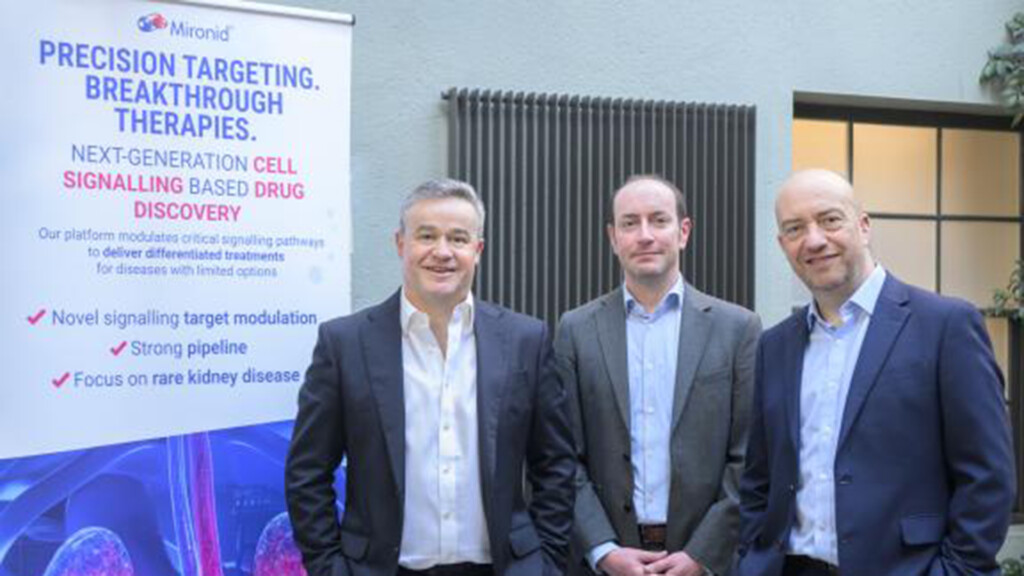
Mironid raises $46 million Series B funding
Glasgow-based biopharmaceutical company Mironid has closed a $46 million (£34 million) Series B funding round to develop its lead therapeutic candidate for autosomal dominant polycystic kidney disease (ADPKD). The financing was supported by new investor the Scottish National Investment Bank alongside an existing syndicate including the Roche Venture Fund, Epidarex Capital, Sofinnova Partners, BioGeneration Ventures and the University of Strathclyde.
Spun out of the University of Strathclyde and Heriot-Watt University, Mironid develops targeted small molecule therapies for hereditary and degenerative renal disorders. ADPKD is the most common inherited kidney condition, affecting more than 12 million people worldwide and leading to renal failure in half of all patients by age 60. Caused primarily by genetic mutations in the PKD1 or PKD2 genes, the condition triggers the progressive, uncontrolled formation of fluid-filled cysts that damage surrounding kidney tissue.
Proceeds from the round will be used to advance the company’s proprietary LoAc small molecule platform into early-phase clinical trials. LoAc candidates directly target cyclic adenosine monophosphate (cAMP), a key signalling molecule that drives both cellular proliferation and fluid secretion across all stages of ADPKD progression. By inhibiting intracellular cAMP pathways, the therapeutic class is designed to halt new cyst formation and arrest existing cyst growth, offering an alternative mechanism with a potentially improved safety profile compared to current standard-of-care options.
“This financing will allow us to progress the clinical development of our lead candidate, bringing us closer to transforming the treatment landscape for patients with rare kidney diseases,” said Neil Wilkie, chief executive of Mironid.

Psyomics secures Innovate UK loan
Digital health company Psyomics has secured an Innovation Loan from Innovate UK to accelerate the commercial deployment of its regulated digital mental health technology across the NHS. The undisclosed debt financing will serve as growth capital to evolve the company’s proprietary beseen platform into a Class IIa regulated medical device while expanding its clinical software suite.
In January, the company launched a new digital tool for neurodiversity that supports NHS services in the demand for neurodevelopmental referrals and backlogs.
Rising demand across adult, child and adolescent mental health services, compounded by NHS workforce shortages and legacy administrative systems, has driven severe diagnostic and treatment wait times. Psyomics provides digital clinical decision support tools that engage patients at the earliest point of contact. The platform standardises and automates pre-assessment data collection, generating comprehensive, structured clinical reports that integrate directly into NHS electronic patient record (EPR) systems.
“This debt finance serves as the catalyst for our most ambitious expansion yet,” said Melinda Rees, chief executive of Psyomics. “By accelerating the evolution of our beseen platform into a regulated medical device, we are unlocking unprecedented clinical intelligence that empowers mental healthcare Trusts to intervene earlier, more accurately and with greater impact than ever before.”
Silence Therapeutics prices upsized $175 million public offering
London-headquartered clinical-stage biotechnology company Silence Therapeutics has priced an upsized underwritten public offering in the US, to raise approximately $175 million (£136.5 million).
The transaction was made up of 13 million American Depositary Shares (ADSs) – each representing three ordinary shares of £0.05 – at a price of $13.50 per ADS.
Silence has also granted the underwriters a 30-day option to purchase up to an additional 1.9 million ADSs at the public offering price. Cantor, Jefferies, Morgan Stanley and William Blair acted as joint book-running managers for the offering.
The company uses its mRNAi GOLD platform to design short interfering RNA (siRNA) therapeutics that target and silence disease-causing genes in the liver. Silence is advancing a growing clinical pipeline targeting rare and common cardiovascular, hematologic and metabolic disorders with high unmet clinical need.
Proceeds will bolster the company’s balance sheet as it advances its clinical-stage pipeline into late-phase development.