Add us as a preferred source

The partnerships director of Parkinson’s Europe says that improving access and raising awareness of deep brain stimulation are really two sides of the same coin.
Access to life-changing medical technology should never depend on a patient’s postcode, yet for people living with Parkinson’s disease across the UK and Europe, geographical location remains a major barrier to care. Beyond NHS capacity pressures and funding constraints, structural inequalities frequently prevent suitable candidates from accessing advanced therapies like deep brain stimulation (DBS).
Addressing these disparities involves tackling a widespread knowledge gap. Many patients miss the critical window of opportunity for DBS simply because the conversation was initiated too late, or because fear and uncertainty surrounding invasive procedures went unaddressed during early clinical consultations.
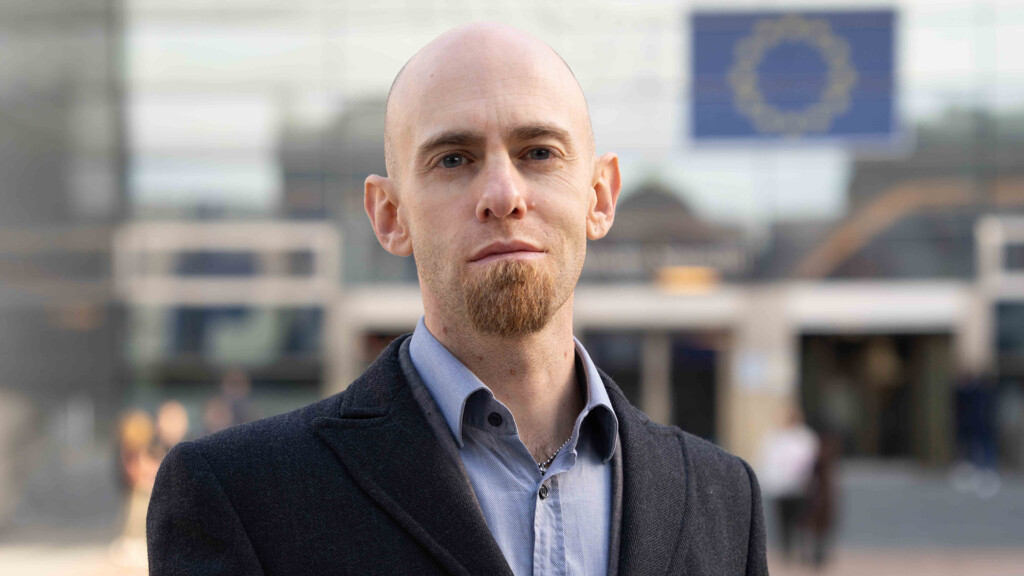
Following on from our interview with Vincent Sourdaine, Francesco De Renzis, partnerships director at Parkinson’s Europe, speaks to Healthcare Today about breaking down regional access barriers, debunking the last resort myth, and ensuring that every patient receives the right treatment at the right time.
Why aren’t more people who could benefit from DBS reaching the point of being assessed for it?
If we look at the survey Boston Scientific conducted with NHS clinicians in the UK, NHS capacity was cited as the most significant factor, certainly. But that isn’t the whole story. First of all, while this survey gathered views from clinicians working within the NHS, it clearly highlights an underlying issue around awareness, training and information. The clinicians directly involved in DBS programming are naturally far more confident and knowledgeable. On the other hand, many clinicians responsible for referring potential DBS candidates simply aren’t aware enough about the therapy – a lack of knowledge that was cited in a significant number of cases.
It is a truly multifactorial picture. Beyond the clinical side, there is also a lack of information or even fear among patients themselves, given the perceived risks associated with brain surgery and all the uncertainty that entails. Added to that is the problem of limited access to specialist centres.
While these specific findings focus on the UK, at Parkinson’s Europe we look at the broader regional picture – and we see these exact same issues, to varying degrees, across different healthcare systems throughout Europe. Every system is different, but the fundamental friction points remain similar. Ultimately, this means that people who could genuinely benefit from DBS are left with suboptimal treatment.
Parkinson’s Europe itself has run a DBS awareness campaign, but whose responsibility is it to improve that awareness?
Again, there isn’t a single one-size-fits-all answer. It is really a puzzle where different pieces need to fall into place together.
As a patient organisation, our primary audience consists of people living with Parkinson’s, their families, and their carers. What we can do is share clear information and build empowerment. It isn’t just about handing over information; it is about empowering people with the right knowledge so they can go to their appointments and ask the right questions. If the clinician doesn’t happen to bring up DBS at the right moment, an informed patient or family member can at least initiate the conversation. From there, it becomes a shared decision between them and their specialist.
On the clinical side, there obviously needs to be structured training and information delivered across healthcare systems. Ideally, it should be the clinicians who know precisely when to discuss advanced options like DBS – or other device-aided therapies – and when the right window of opportunity opens. Timing is critical, and involving the family is essential because they play such a vital role in the patient’s care. We know that DBS is not suitable for everyone, but when it is the right fit and intervention happens at the right moment, it can help a person maintain a far higher quality of life for much longer.
As you mentioned previously, NHS capacity is a major barrier. What does that lack of capacity actually look like for someone living with Parkinson’s?
If we look at the survey findings, capacity is certainly what a large number of respondents highlighted. However, I wouldn’t limit the conversation to that alone. While capacity is a key element – not just for the NHS, but for other European healthcare systems too – there are clearly other contributing factors.
Take the training of healthcare professionals, for example. Comprehensive training naturally incurs costs, which requires dedicated investment. One could argue that, ultimately, everything comes down to budget allocations and funding decisions, but even though capacity was singled out as a critical barrier, it isn’t the only one. There are several moving parts that need to be addressed together.
“From a health economics perspective, acting before that window closes makes absolute sense.”
Parkinson’s Europe has previously found substantial delays in referral and waiting for DBS. How much of the problem is simply that patients are being referred too late?
When it comes to DBS and other device-aided therapies, there is a persistent misconception – particularly among people living with Parkinson’s – that these treatments are strictly a last resort when everything else has failed. In reality, there is a growing clinical consensus that if this intervention is introduced at the right moment, it can help maintain a better quality of life for much longer.
In that sense, late referral is a significant problem because it causes patients to miss that critical window of opportunity. Maintaining a good quality of life touches every aspect of a person’s day-to-day existence: it means staying in the workforce for longer, continuing to care for your family and avoiding the risk of falls and physical frailty. Avoiding that decline prevents the need for more complex downstream medical interventions that ultimately place a heavier burden on the health service. From a health economics perspective, acting before that window closes makes absolute sense.
How much do patients themselves know about DBS? Are people being offered the option early enough to have meaningful conversations about it?
It is difficult to generalise across every patient, but in any case, what is critical is that the conversation happens at the right time – without pressure on either side.
From our own research at Parkinson’s Europe, we see that patient satisfaction is significantly higher when people are thoroughly informed ahead of time. In a survey we conducted a couple of years ago among people who had undergone DBS, respondents were generally satisfied with the therapy overall, but satisfaction was noticeably higher among those who had received clear information on key topics prior to the procedure.
Specifically, patients need realistic expectations about quality-of-life improvements – what DBS can and cannot achieve. They also need a full, transparent understanding of the surgical details and risks involved; after all, brain surgery is a major undertaking. Finally, they need clear guidance on how to manage and live with the device day-to-day. When these elements are addressed early, post-operative satisfaction improves dramatically.
That conversation must happen at the right time. It shouldn’t be rushed or forced, and it must give both the patient and the clinician the space to make a genuinely informed decision about whether DBS is the right path and what it can realistically deliver.
“From a health equity perspective, access definitely needs to improve, both within the UK and across Europe.”
There is a huge rich-poor divide in access to DBS. How can this be fixed?
From a health equity perspective, access definitely needs to improve, both within the UK and across Europe. We see major regional disparities. Whether you can access care depends heavily on where you live: whether a specialist centre or a movement disorder specialist is close by or far away. We see this divide between different countries, but also within individual countries when comparing rural and urban areas.
Simply having a therapy available in a country on paper is not enough if accessing it is too complicated. Having to travel long distances for specialist consultations or surgery takes a significant toll on people living with reduced mobility, who then have to rely on family support and extra resources.
All of these practical realities must be factored into the broader puzzle if we are to ensure that everyone can receive the right treatment at the right time. That sounds like a very simple concept, but in practice, it remains incredibly difficult to achieve.

DBS can be life-changing for some, but it isn’t suitable for everyone. How do you make sure that improving access and awareness doesn’t just increase the number of people having surgery?
Improving access and raising awareness are really two sides of the same coin.
Improving access means ensuring that anyone who is genuinely suitable and stands to benefit from the therapy can actually receive it. Raising awareness, on the other hand, ensures that the vital conversation we discussed earlier takes place at the right time and in the right way. This allows the clinician, the patient and their family to properly assess together whether DBS is truly appropriate for them.
Naturally, increased awareness and better information will likely lead to a higher uptake of DBS surgery – and indeed other advanced neurotherapies where available. But what we hope to see through this process is that the people who stand to benefit the most are the ones who ultimately receive it, and that their decision is a fully informed one. They will be making that choice because they have been given all the necessary information, have been able to ask the right questions and have received the right guidance from their wider medical team. When that happens, patients undergo the procedure with clear expectations, reap the greatest possible benefit, and enjoy a higher quality of life for longer.