Add us as a preferred source
The chief executive of Cedars-Sinai International argues that the traditional cradle-to-grave government model is reaching a breaking point, and that the future of care depends on private sector agility.
For Heitham Hassoun, the expansion of healthcare into global markets is not merely a strategic business play; it is a response to an irreversible shift in the global economic landscape. As the chief executive of Cedars-Sinai International, Hassoun is overseeing a transformation in how one of the leading medical institutions in the US connects with the world.
From the establishment of high-touch concierge clinics in London to complex hospital partnerships in the Gulf, he is moving beyond the old model of medical tourism toward a vision of seamless, broad-shouldered care that follows the patient wherever they are.
A “Texas-born Aramco brat” who transitioned from a career as a master academic surgeon at Johns Hopkins to a leader in global health administration, Hassoun brings a pragmatic perspective to the table.
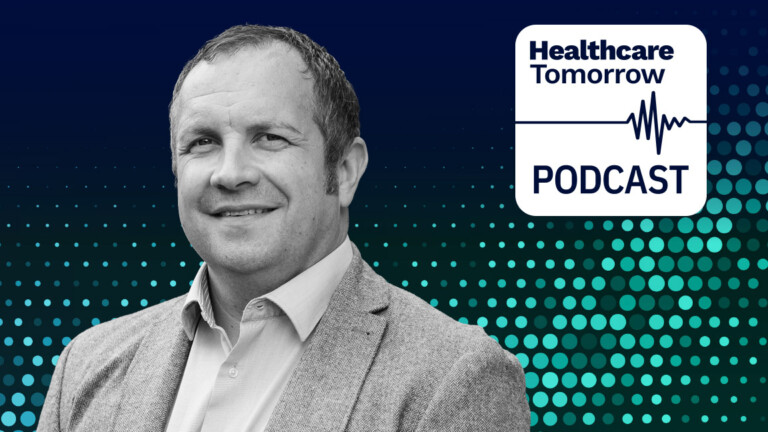
Here, he speaks with Healthcare Today about the alphabet soup of state-regulated systems, the necessity of building modern railroads for medical data, and why the most successful healthcare delivery must be built on trust and local relationships rather than just a famous brand name.
What made London the right location for your first UK flagship clinic?
Ultimately, this boils down to two core pillars. The first is straightforward: London remains a global capital and a historical crossroads. Within the context of healthcare, and specifically for the Cedars-Sinai international patient community, London is a place many consider a second home or, at the very least, a primary business hub.
The second pillar is a more complex concept centred on healthcare delivery models. We operate in private healthcare, which is a fundamentally different system from what you see across most of Western Europe. Our US model is often unfairly maligned because it is widely misunderstood. Unlike systems where the government owns the facilities – the alphabet soup of state-run entities like the NHS – the US system is a payer-based model rather than an asset-based one. Delivery is primarily private and community-based, as it has been for a century.
As the rest of the world begins to diversify from government-led delivery toward the private sector, there is a significant opportunity in Europe. Given London’s status as a global anchor, it is the natural starting point for us to engage with this growing private market.
Harley Street is already saturated with elite providers. What gap did you identify that wasn’t being filled?
I don’t tend to view our entry into the market through the lens of filling gaps in London. It is a natural question, but our approach is driven from the inside out. We believe we have the best model for our specific community, and our goal is to serve them wherever they are.
We recognise that there is nothing more vital than the trust between an individual and their healthcare provider. Some people want the government to be that cradle-to-grave partner; I personally want a private provider I can trust.
Cedars-Sinai is that trusted partner for a community that has now gone global. This community is no longer confined to West Los Angeles; it consists of people across the world who want continuity of care and access to our expertise regardless of their coordinates. I see myself as building a modern railroad for healthcare. London is a vital starting point.
“The underlying economic system has changed, and the old way is no longer sustainable.”
How much of this is about accessing UK patients versus serving international patients already coming to London?
Healthcare is simultaneously local and global. Even as a global citizen, you build a sense of home wherever you land. When I am in London, I have my preferred restaurants and my regular shops; I start to build a local life. Naturally, you might also choose to access certain aspects of your healthcare in that same environment.
While we certainly have specific financial targets and P&L projections, our primary goal is to provide 24/7 access to care that serves both the local resident and the international traveller. We believe patients are increasingly comfortable with remote physician connections, and our own doctors will be mobile and available around the clock.
To facilitate this, we are moving beyond the typical fee-for-service model found in local primary care. We are looking to create a concierge subscription model for clients who value that level of continuous access. Personally, I don’t see a need to differentiate between the experience of a local patient and one who is travelling. The business is designed to accommodate both without friction.
Do you see UK private healthcare becoming more “Americanised” in terms of pricing, access and service models?
The way you frame the question reflects a deep-rooted connection to the NHS and a government-based model. When you suggest that healthcare is becoming “Americanised”, an American wouldn’t see it that way; they just see it as healthcare. In truth, if you look at the world today, almost everything is Americanised in the sense that it is consumer-driven, defined by free-flowing supply chains and market prices rather than heavy regulation.
If you cling to the traditional model where the government provides healthcare from cradle to grave, you are actually experiencing a transformation, whether you want to or not. The underlying economic system has changed, and the old way is no longer sustainable. The birth of a robust private sector is as much a result of market demand as it is a strategic play.

What differences stand out to you between UK and US patient expectations? Are they changing?
It is a fascinating question, and I have the luxury of working within a truly global context. When you move through different worlds, you learn what is truly important to people. What I’ve found is that, at our core, we are far more alike than we are different.
But to get to the core of the patient’s perspective, I think they come to us for three main reasons.
First, they are seeking a different way to experience healthcare – not necessarily to replace what they have at home, but to layer something else on top of it. Second, they often simply lack access; perhaps the wait times are too long, or a specific drug or therapy isn’t available in their home country.
The third dimension is trust. While trust is deeply individualised, when it comes to your own parents or your loved ones, you will go to the ends of the earth to find a therapy that helps them live longer. For many, the US and the institutions I’ve mentioned represent that last resort. Providing access to that level is a major part of what we do.
What does “coordinated care between the UK and US” actually look like in practice? How do you ensure consistency of standards across borders?
That is our ultimate goal, though I believe we are still only scratching the surface.
One way we address global standards is by creating formalised, institutional relationships. It is a very organic process. We establish hospital-based KPIs – both outcome and process measures – which each facility then reports. We share this data blindly across a loose, quasi-institutional multinational network. This allows us to see the benchmarks and focus on improvement; once you know what to measure, you know how to get better.
In many ways, this hospital-based approach is what Joint Commission International (JCI) was designed to do at its inception. As an accreditation body, it provides a baseline platform so a patient can walk into a facility anywhere in the world and know there is a set standard of care. But even with thousands of JCI-accredited hospitals globally, we are still just beginning.
Ideally, I would love to see an international regulatory body for healthcare, similar to what you have in aviation with the International Air Transport Association (IATA).
“We aren’t interested in the Cleveland Clinic model of entering a market, buying an asset and planting a flag.”
How do you manage regulatory, insurance and data-sharing challenges across two very different systems?
While the dream is to have everyone on a single platform, the reality is becoming increasingly complex due to heightened concerns around privacy and cybersecurity.
These technological hurdles, however, don’t change the underlying principle: we must find ways to port, capture and share information to improve the patient journey. In the absence of a universal digital platform, the fundamentals remain the same. It is about ensuring that providers across different institutions are communicating, establishing clear policies for data sharing, and maintaining rigorous handoff procedures to ensure continuity of care.
Is this the beginning of a genuinely new model of global care?
We have clear principles driving our growth. The first is an unwavering focus on patient care. While we certainly look to diversify our revenue streams – exploring new markets through innovation, technology, knowledge transfer and strategic business investments – every dollar we earn as a non-profit is reinvested into driving excellence.
The second pillar of our strategy is collaboration. We aren’t interested in the Cleveland Clinic model of entering a market, buying an asset and planting a flag. Healthcare must be completely infused with local talent and the local fabric. When it comes to a large-scale, complex asset like a hospital, we believe it must be done with a local partner.
We are fully committed to this collaborative path, not just in London but beyond. We want to be a part of that Western European landscape, but wherever we go, we will move with the right partners and at the right scale.