Add us as a preferred source
The latest breakthroughs in healthcare, including the adoption of AI fertility platforms across Europe, a partnership to bridge the cancer screening gap, specialist leg ulcer care, AI-powered infection risk detection, and much more.
Bluecrest Wellness and Perci Health partner for cancer screening
UK private health screening provider Bluecrest Wellness has joined forces with Perci Health to provide specialist clinical support for individuals receiving abnormal cancer screening results. The collaboration aims to address what they describe as a significant limbo period in post-screening care, where patients often feel uncertain about the meaning of their results and the necessary next steps.
Research conducted by Censuswide for Perci Health suggests that almost three-quarters (73%) of UK adults believe access to a specialist cancer nurse would be helpful for discussing symptoms or screening concerns. Through this new service, Bluecrest customers who receive “amber” or “red” results gain virtual access to cancer nurse specialists. These experts provide personalised guidance and reassurance.
The service is designed to be a joined-up experience, tracking outcomes via regular follow-up communications. If investigations confirm no cancer is present, individuals are discharged; however, if a diagnosis is confirmed, they are directed into appropriate NHS or private clinical pathways. This shift from merely identifying risk to supporting clinical navigation actively represents a vital step in improving early detection outcomes across the UK.
“Screening is only effective if people know what to do next. Too often, individuals are left in limbo after an abnormal result, unsure how serious it is or how quickly they need to act,” said Kelly McCabe, chief executive and co-founder of Perci Health. “This partnership ensures that people have access to specialist clinical guidance at a moment that can feel highly stressful and uncertain, helping to provide reassurance, clarity, and practical next steps when individuals are trying to make sense of an abnormal result – so they are not left navigating that experience alone.”

FutureLife adopts end-to-end AI fertility platform across European network
FutureLife Group, a pan-European provider of IVF and genetics services, has partnered with San Francisco-based Alife Health to adopt its AI platform for clinical decision support.
This agreement makes FutureLife the first large-scale European fertility network to commit to a multi-tool AI platform at an institutional level. The deployment covers clinics across 16 countries, including three English sites: CRGH in London, BCRM in Bristol, and Herts & Essex Fertility in Hertfordshire.
The partnership centres on the deployment of its CE-marked AI tool designed to assist embryologists in assessing blastocysts for transfer decisions. Using deep learning, the tool generates an objective AI score for each embryo, providing a data-driven foundation for clinical choices. This technology is intended to improve consistency and laboratory performance across FutureLife’s network, which performs more than 77,000 IVF cycles a year.
Beyond embryo selection, the platform includes tools to support patients throughout their treatment journey. These resources offer outcome projections before treatment begins and provide visibility into the chances of success following retrieval. By integrating these AI-driven insights into clinical workflows, FutureLife aims to raise the standard of care and provide families with greater transparency and understanding during the IVF process.
“Fertility care must continuously evolve to reflect the best available science,” said FutureLife chief executive Francisco Lobbosco. “By integrating AI into our clinical workflow, we are raising the standard of care for the patients and families who trust us,” he added.
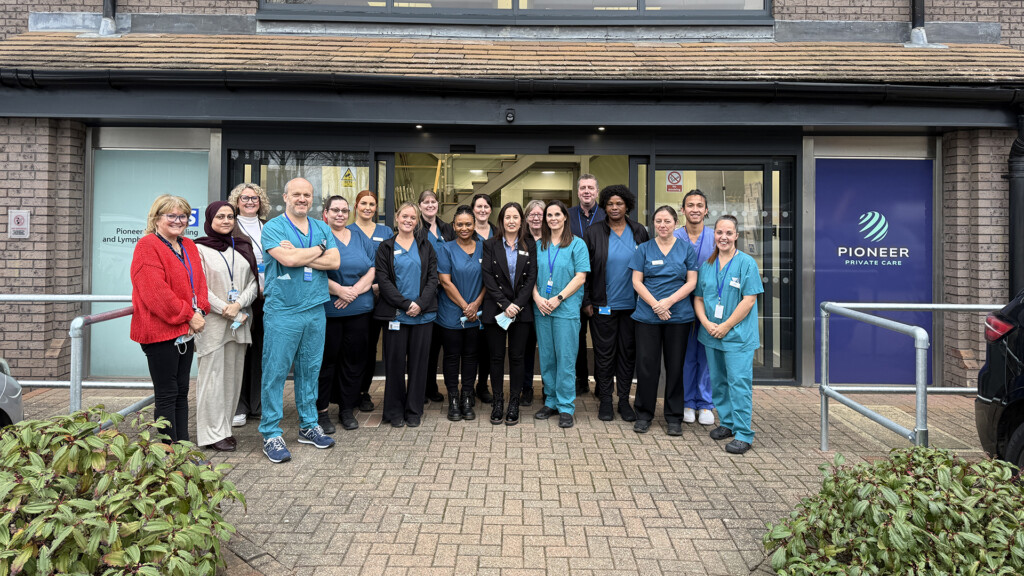
UK Vein Clinic and Pioneer partner to improve specialist leg ulcer care
UK Vein Clinic, a specialist provider of consultant-led vein care, has partnered with Pioneer Wound Healing and Lymphoedema Centres. The collaboration aims to improve outcomes for patients suffering from chronic wounds, lymphoedema and underlying venous disease by bringing together two expert services.
“We know that venous disease is a major driver of delayed healing and recurrence of leg ulcers,” said UK Vein Clinic founder Jason Powell. “Working alongside Pioneer means we can deliver venous assessment earlier in the pathway, in line with national and international guidelines for leg ulcer care,” he added.
Leg ulcers represent a significant health burden in the UK, affecting more than 1 million adults, with up to 730,000 cases treated annually.
The partnership reflects a commitment to improving access to specialist assessments, as venous insufficiency is the primary driver of leg ulcers and a key reason for their recurrence. By combining UK Vein Clinic’s minimally invasive treatments with Pioneer’s wound healing expertise, the initiative provides a coordinated pathway aligned with national guidelines. This ensures that venous disease is identified and treated alongside wound care, addressing a common gap where patients often face long waits for vascular assessment.
According to the founders, this practical step will help reduce delays and support more sustainable outcomes for patients who often face long and difficult recovery journeys. Patients with lipoedema and lymphoedema frequently have underlying vein issues that exacerbate their symptoms. By offering integrated vein scans and treatments, the service wants to provide the joined-up care for which healthcare professionals have long advocated.
Royal Hospital for Neuro-disability implements AI to detect infection risk
The Royal Hospital for Neuro-disability (RHN) and UK healthtech firm Sanome have announced early results from the first real-world implementation of MEMORI, an AI-powered clinical decision support platform. Designed for highly vulnerable patient populations, the Class IIb certified software is now live across neuro-rehabilitation and ventilator wards at the London-based hospital.
The system is integrated directly into the hospital’s electronic patient record (ERP) to assist in the earlier recognition of infection risk, which can often be difficult to detect in patients with complex neurological conditions.
The platform acts as a clinical co-pilot by analysing multimodal hospital data – including vitals, observations, and medications – to surface real-time insights within the existing EPR workflow. This co-design approach ensured that the best-practice advisories and risk-surfacing methods reflect the specific needs of the RHN patient population. Retrospective studies have shown that the technology can detect infection-related deterioration up to 72 hours earlier than standard warning tools, providing clinicians with a critical window for earlier intervention.
Early evidence from the first three months of use indicates high levels of clinical adoption and no adverse events. Sanome plans further deployments this year at East Kent Hospitals University NHS Foundation Trust and Royal Devon University Healthcare NHS Foundation Trust. “These results matter because they show that successful clinical AI implementation starts well before go-live,” said Benedikt von Thüngen, chief executive and founder of Sanome.
Evaran launches global care management platform
Software developer Evaran has launched, marking the unification of three established software providers – CareLineLive, MOA Benchmarking and Health Metrics – under a single care technology platform.
Backed by the technology-focused investment firm Accel-KKR, the new company aims to resolve the challenges posed by fragmented systems in the care sector. By connecting clinical, operational, and governance data, the platform provides a holistic view of care delivery and risk management.
The platform’s debut arrives as care providers face intensifying regulatory pressure and a growing demand for transparency and accountability. Currently supporting more than 1,100 providers and 170,000 care recipients across 2,100 locations globally, Evaran is designed to reduce administrative complexity. The integration allows frontline teams to move away from manual data management and focus more heavily on direct service delivery and day-to-day operations.
Leveraging unified data, the platform is set to introduce AI-powered capabilities that shift oversight from retrospective reporting to proactive prevention. By highlighting patterns in emerging risks, the system helps management teams make informed decisions in real time. The group’s leadership emphasises that this connected approach is critical for the UK, Europe and Australasia, where consistent and reliable care delivery depends on total visibility across the organisation.
“By bringing together the systems providers rely on into a unified platform, we’re helping reduce complexity so teams can spend less time managing systems and more time delivering care, coordinating services and running day-to-day operations,” said Tyron Ball, chief executive of Evaran.

GenesisCare Bristol upgrades cancer diagnostic and radiotherapy technology
Independent specialist cancer care provider GenesisCare has completed the installation of new CT scanning and radiotherapy equipment at its Bristol centre. The investment is designed to ensure that patients in Bristol and the wider South West region can access oncology services within a modern, purpose-built environment. By providing these advanced capabilities locally, the provider aims to reduce the need for excessive travel for patients and their families during intensive treatment periods.
The technological upgrade features a Siemens CT scanner, which is capable of capturing organ motion and patient breathing during the scanning process. Additionally, the centre has introduced an Elekta Evo linear accelerator equipped with the Iris adaptive imaging system. This is paired with a HexaPOD six degrees-of-freedom couch, enabling sub-millimetre positioning accuracy for both standard and complex stereotactic ablative radiotherapy (SABR), including the delivery of high-dose treatments.
Beyond the Bristol site, GenesisCare is significantly expanding its UK network, which currently includes 14 specialist centres. New systemic anti-cancer therapy centres are scheduled to open in Royal Tunbridge Wells and Guildford by the end of the year, alongside a state-of-the-art facility in Leeds.
“This investment in the latest evidence-based equipment enables patients to continue accessing the best possible treatment alongside the highest standards of care,” said Katie Price, centre leader at GenesisCare Bristol.
Ripple Scale to pioneer digital health publishing for the NHS
Manchester-based Ripple Scale has introduced a new category of digital health publishing, which aims to change how clinician-led innovation is built and scaled across the NHS.
Led by digital health expert Heather Cook, the company addresses a critical structural gap between frontline clinical insight and system-wide adoption. The platform allows clinicians and researchers to develop digital products using a low-code environment where regulatory compliance, infrastructure, and distribution are already built in.
“Digital health publishing is the missing commercial layer between clinical insight and system-wide delivery,” said Cook. “It enables providers to access a curated portfolio of proven, clinician-built solutions through a single platform, reducing complexity, lowering risk, and making large-scale adoption finally achievable”.
The model offers an alternative to the traditional venture-backed startup route, which often requires clinicians to leave their practice to raise capital. Under the Ripple Scale framework, innovators can bring products to market while remaining in their clinical roles, earning royalty income based on adoption and usage – much like an author with a publisher. This approach shifts innovation from a high-risk, founder-led journey into a repeatable, platform-enabled system that reduces the operational burden on NHS teams.
For NHS organisations, the model provides what it calls a curated portfolio of assured, clinician-built solutions accessible through a single platform. This is designed to simplify fragmented procurement processes and repeat assurance requirements that often hinder the scaling of new tools.
Emerging from the experience of no-code platform Cogniss, Ripple Scale says that it wants to unlock a portion of the estimated £78 billion in economic value that could be generated by improving innovation adoption across the UK health system.
Wesleyan to offer doctors financial advice
Specialist financial services provider Wesleyan has launched a new coffee clinic initiative in Birmingham to provide NHS doctors with accessible financial guidance.
Located near the Queen Elizabeth Hospital Birmingham, the clinic offers doctors a free coffee and the opportunity to speak with a specialist adviser or take home information to review later. The project is designed to fit around the clinical schedules of healthcare professionals who often face significant time pressures.
The initiative responds to research showing that 67% of UK doctors now hold multiple roles, balancing NHS work with private practice, teaching, or consultancy. This shift toward portfolio careers has introduced new financial complexities, such as unexpected tax bills, which have affected 36% of doctors with multiple roles. Additionally, around 14% have reported difficulties accessing mortgages, and 17% have struggled with loans due to their varied income streams.
Despite the benefits of higher earning potential and flexibility, 59% of doctors cite increased workloads and administrative burdens as major challenges. NHS pension structures and non-linear career paths mean that many practitioners require specialist support that reflects the realities of modern medical careers. By bringing this guidance into a familiar, low-pressure environment, Wesleyan aims to simplify the process of financial planning for those managing multiple professional identities.
“The coffee clinic provides an accessible, no-obligation way to start those conversations and access practical financial guidance when the time is right,” said Alec Collie, head of medical services at Wesleyan.
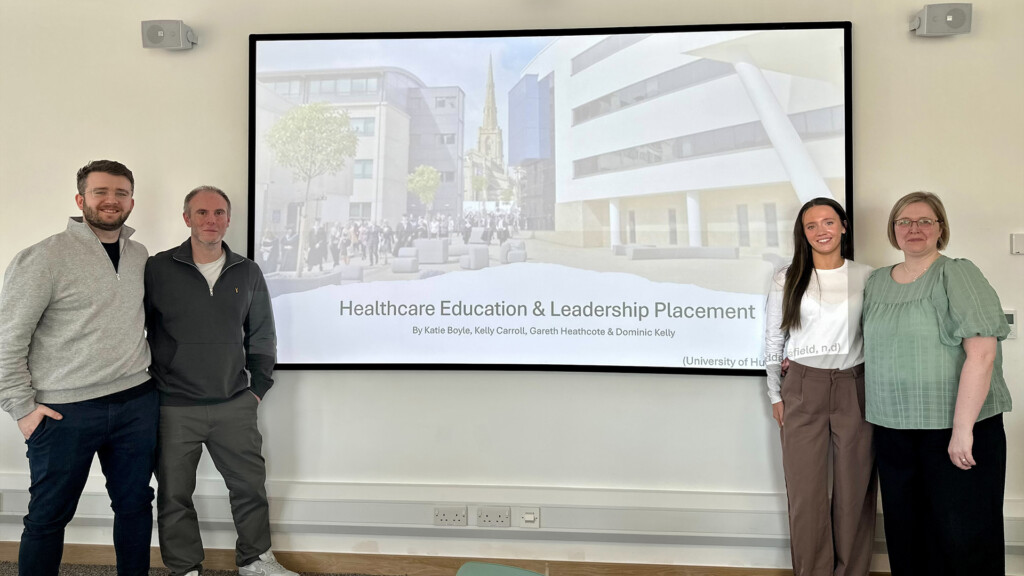
University of Huddersfield students use video resources for physiotherapy education
Four final-year physiotherapy apprenticeship students at the University of Huddersfield have completed a project designed to bridge the gap between academic theory and clinical practice. Katie Boyle, Kelly Carroll, Gareth Heathcote and Dominic Kelly co-designed, filmed and edited a series of practical skills videos to serve as a resource for their peers. The project forms part of a wider initiative within the School of Human and Health Sciences to prepare students for their professional pathways beyond university.
The practice-based learning experience was structured to address all four Chartered Society of Physiotherapy pillars, with a specific focus on leadership and education.
“This experience offered the learners a unique insight into inclusive teaching and learning approaches in physiotherapy education and has contributed to an array of outstanding co-designed resources that will benefit our physiotherapy learners for years to come,” said Joshua Birtwistle, senior lecturer in physiotherapy.
The university expects these student-led materials to have a lasting impact on how practical skills are demonstrated and mastered within the physiotherapy curriculum.