Add us as a preferred source
The latest innovations in healthcare, including international expansions, breakthroughs in AI and treatment, as well as scanning and technology upgrades.
Livi partners with Klarna to bring on-demand digital consultations to customers
Leading digital healthcare provider Livi is to partner with Klarna, a flexible payment and digital banking platform, to expand on-demand clinical consultations to UK members as part of the digital healthcare surge.
Organised through Klarna’s £49.99 a month Max package, users will have access to free same-day digital appointments with GPs, physiotherapists and mental health practitioners, booked through the preexisting Livi app.
The partnership represents yet another example of banking apps expanding into health and lifestyle, as both Klarna and digital banking app Revolut offer premium subscriptions to the mental health platform Headspace, as well as Revolut offering sleep tracker app Sleep Cycle in its premium monthly plans.
“For Klarna members, access to Livi completes a suite of benefits that already spans mental wellness, fitness and lifestyle – bringing clinical-grade healthcare into a programme designed to support every dimension of how members live, move and feel”, said Daniel Lange, VP of product at Klarna.
Online medical consultation has expanded as a business model in the years since the coronavirus pandemic, and private healthcare companies such as Bupa and TapGP have expanded into the growing UK telehealth market. Klarna aims to capitalise on this growing demand.

Aide Health partners with Temple Health to tackle Type 2 diabetes
British digital health company Aide Health has expanded into the US in a partnership with Temple Health to develop a new app aimed at transforming treatment for those who suffer from Type 2 diabetes worldwide.
Almost half of the patients with Type 2 diabetes face difficulties controlling blood sugar levels, leading to complications and rising costs. The new My Health Aide program aims to use Aide Health’s conversational AI to support those with the illness. Through short daily interactions, the tool helps patients adhere to their medication, monitor their condition and access relevant information, while clinicians receive patient data to tailor treatment to individuals.
The research team behind the programme is attempting to see how relevant AI-driven support can be in improving glycaemic control, medication management and patient care.
“My Health Aide represents an important opportunity to strengthen access to the support patients need to achieve better outcomes. By reaching patients earlier with timely, evidence-based interventions, this initiative aims to improve disease management and long-term engagement,” said Janet Lee, programme lead and director of the Laboratory for Implementation and Dissemination Science (LIDS) at the Lewis Katz School of Medicine at Temple University.
The platform has been designed with a simple interface to prioritise user experience in elderly patients, with clinicians hoping that the emphasis on medication management will help them control their blood sugar levels, avoiding complications.
Genomics launches r&d AI
Mystra AI, biotech company Genomics’ latest project, has targeted streamlining drug discovery and validation with its new AI.
The vast majority – some 95% – of drug candidates in clinical trials fail, which has pushed the average cost of bringing a new medicine to market beyond $2.3 billion. With greater human genetic data, however, they are 2.6 times more likely to succeed in clinical trial.
Mystra AI hopes to leverage a database of genotype-phenotype information, as well as analytical knowledge and models, to help predict which candidates will be successful, aiding in research. The database of 45,000 studies has identified more than 100 drug targets for a variety of diseases, aiding scientists in research and development and licensing – leading to reduced cost of development by doing “the work of an entire PhD in minutes”, as Rowland Illing, chief medical officer at Amazon Web Services, puts it.
“We have built the largest human genetics dataset to deepen our understanding of human biology and diseases. By integrating this vast catalogue of human association data into an advanced AI platform, we are giving scientists worldwide the tools and data they need to discover the next generation of life-saving treatments,” said David Thornton, president of Genomics.
Mystra AI has already been adopted by pharmaceutical companies, such as Novo Nordisk, BridgeBio Pharma and Relation Therapeutics, reporting the AI as having increased efficiency, streamlined workflow and provided a key database of research through an intuitive framework.

LaennecAI launches new ChatGPT for doctors
Zorgm Pro, LaennecAI’s latest project, is built around the need for doctors to stay in continuous contact with developments in the medical field, as the rate of technological innovation in testing and treatment means they can no longer rely on traditional education. The result is a free medical education answer engine for verified doctors in India and the UK, designed to support continuing medical education, self-learning and evidence-based clinical updating.
Traditional AI was not built specifically for clinical use, and has been noted for shortcomings in breadth, as it can take from open web content without full curation, traceability, regional alignment or sourcing. The design philosophy here is what Jase John, co-founder of LaennecAI, calls “by doctors, for doctors”.
Based on regional specificity, the platform is tailored to each country’s guidelines, including FDA resources, US Library of Medicine sources, Indian Council of Medical Research (ICMR) recommendations and Ministry of Health and Family Welfare (MoHFW) guidance for India.
LaennecAI maintains that Zorgm Pro is not a diagnostic tool, prescribing tool, triage system, bedside clinical decision-support system, or Software as a Medical Device – rather, it is “designed to organise trusted guidelines, medicines information, international references, and peer-reviewed medical literature into a curated knowledge base”, said LaennecAI co-founder Arathy Varghese.
The free AI is currently offered exclusively to doctors, with verification being managed through their National Medical Commission registration for doctors in India, while doctors in the UK can verify through their General Medical Council registration.
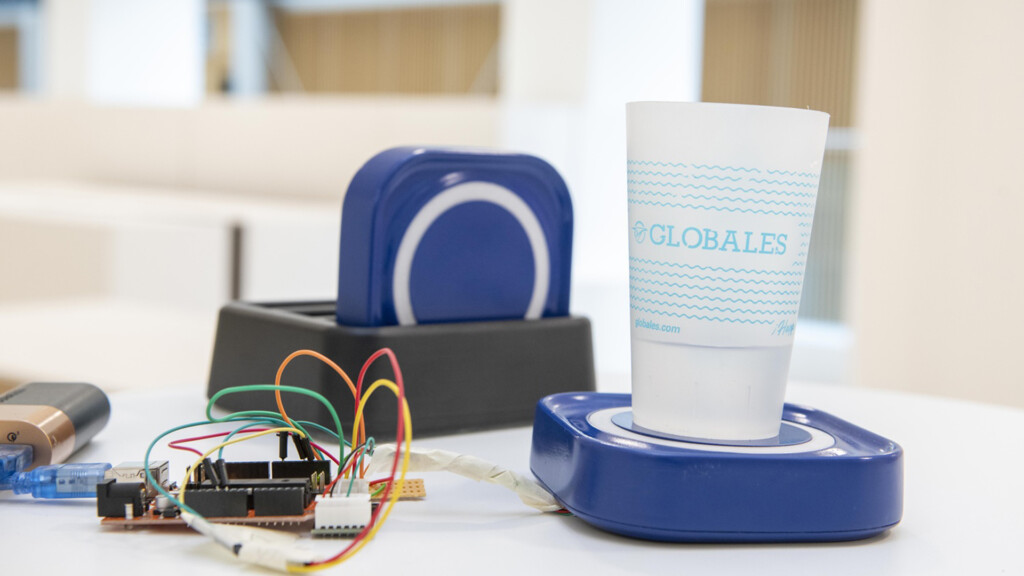
Smart coaster could tackle hidden epidemic of dehydration in patients
Cameron Sandy, a student at Nottingham Trent University (NTU), has developed a smart drinks coaster to tackle the epidemic of dehydration in hospitals among elderly patients. Speaking from personal experience, Sandy refers to dehydration as being recorded as a secondary condition in hospitals, sitting underneath other health issues.
According to reports, dehydration costs the NHS between £500 million and £1 billion a year.
The device, designed with an LED reminder to flash if a load sensor on the cup detects no shift in weight within an hour, is designed to be waterproof, easily stackable and affordable to reproduce.
“An overnight hospital bed is estimated to cost the NHS between £350 and £750 per patient… If improved hydration helps reduce a patient’s stay by even a single day, the savings could cover the cost of up to 21 hydration coasters”, said Sandy.
Doctors are positive about the development due to its ability to increase patient wellbeing affordably, as well as reduce strain on staff by creating marginal improvements across hospitals.
“If adopted widely, the smart hydration coaster could help address one of the NHS’s most persistent yet under-recognised challenges – ensuring that patients, quite simply, remember to stay hydrated”, said product design lecturer at NTU, Joseph Stewart.
NHS Wales sonography software update
In a move to strengthen ultrasound reporting, hospitals across Wales have rolled out Health Net Connections’ Viewpoint 6 advanced sonography reporting system.
Hoping to create a nationwide ultrasound reporting process to build a modern system of records, doctors are positive that the consistent imaging data and streamlined workflow will enable faster, safer and more consistent patient care across the region.
“This will make it easier for clinicians to access the information they need, work together more effectively, and make faster, informed decisions. Ultimately, this supports safer and more consistent care for patients across Wales”, said John Kingan, healthcare informatics sales leader at Philips UK and Ireland.
Sceptics have raised issues with the platform’s potential connectivity issues, as a systemwide change could lead to growing pains, as other NHS software may struggle to cope with the multiple third-party systems needed with the technology. Despite this, the Viewpoint 6 system has remained stable with no notable issues being reported in its implementation, in addition to clinicians describing it as easy to use, unproblematic and consistent in its ability to assist patient care.
“This gives clinicians faster, more consistent access to images and reports, smoother cross-site collaboration and improved reporting quality and, most importantly, delivers better continuity of care, greater reporting reliability, and enhanced patient safety for communities across Wales,” said Faith Bose, sales director at Health Net Connections.

GenesisCare funds CT and radiotherapy capabilities in Milton Keynes
Following the installation of next-generation CT scanners and radiotherapy equipment in Bristol, independent specialist cancer care provider GenesisCare has pledged to expand through the installation of the same equipment in its centre in Milton Keynes.
The upgrade will include a Siemens Somatom X.cite CT scanner to improve scan times, as well as an Elekta EVO Linear Accelerator – prioritising precision in delivering both high and low-dose radiotherapy treatments in their outpatient cancer care facility.
“This investment in the very latest technology means patients can access the best possible treatment alongside the highest standards of care, and closer to home,” said Nicole Baynton, centre leader at GenesisCare Milton Keynes.
The investment is part of GenesisCare’s broader development of its cancer care across the UK, expanding beyond its 14 existing cancer treatment centres. In addition to the installation of new equipment, the company has announced three new centres set to open before the end of the year. With two therapy centres in Royal Tunbridge Wells and Guildford, as well as a new cancer centre in Leeds, it hopes to expand access to private cancer treatment across the country.
Ashford and St Peter’s Hospitals partners with RLDatix
After four years trialling alternative providers, Ashford and St Peter’s Hospitals NHS Foundation Trust has decided to re-appoint workflow software company RLDatix to deliver its electronic rostering platform, Allocate Optima, across all Agenda for Change staff, covering the majority of the trust’s workforce.
The trust will implement two new pieces of RLDatix software: SafeCare, an acuity-based staffing tool that adjusts workflow levels according to patient needs; and Loop, a staff engagement and management tool.
Management is hopeful that Allocate Optima, SafeCare and Loop will reduce reliance on temporary staffing, improve workflow and support staff wellbeing.
Implementation is currently ongoing, and the trust expects full rollout to be completed by late August.
“By bringing together rostering, acuity-based staffing and staff engagement tools in a single platform, the trust will have greater visibility of demand and the flexibility to respond in real time… This is key to reducing reliance on temporary staffing, supporting staff wellbeing and, ultimately, delivering safer care for patients”, said Paul Sanders, president UK and Ireland of RLDatix.
The announcement aims to position Ashford and St Peter’s as a leader in digital workforce optimisation within the NHS, with the technology not just benefiting staff workflow but mental health through the digital mental health support programs available on the app.