Add us as a preferred source
The latest innovations in healthcare, including a corporate rebrand, expansion into lab services and the launch of a biomarker testing service in the UK.
Digital GP provider Livi rebrands to Kry
Digital primary care provider Livi has rebranded to Kry, unifying its UK operations with the Swedish-founded group’s wider European business under a single identity.
The transition aligns the UK branch with existing operations in Sweden, Norway and France to support a pan-European strategy focused on integrating online consultations, physical healthcare and patient pathway coordination.
The company launched in Sweden in 2015 and expanded into the UK in 2018 under the Livi name, where it has delivered more than four million consultations in partnership with the NHS, private insurers, and employers. Across Europe, the group employs approximately 4,000 healthcare professionals, operates 60 physical care sites, and has completed more than 14 million patient appointments. Demand for the provider’s remote consultations in the UK has grown by nearly 39% over the past three years.
“We have gone from being a Swedish digital challenger to being a major, established healthcare player across several European markets,” said Kalle Conneryd Lundgren, chief executive of Kry. “When you operate at this scale, it is not enough simply to provide excellent care locally. It is just as important to be clear about who we are. A shared brand makes it easier to build trust and to work together across borders.”
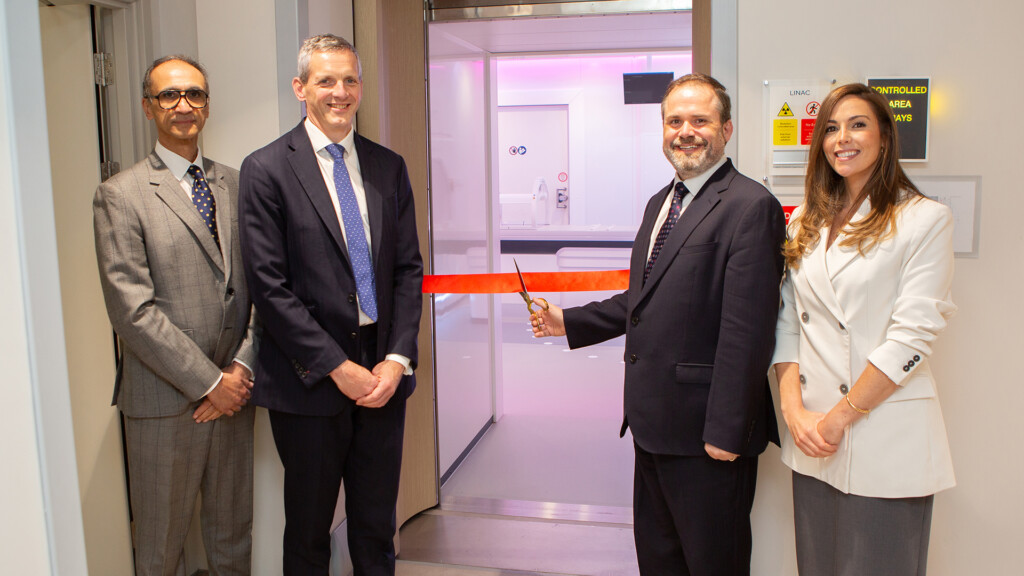
HCA UK invests in MR-guided radiotherapy technology
Private hospital operator HCA Healthcare UK has expanded its complex cancer care capabilities with a £15 million investment in the Elekta Unity MR-Linac at The Harley Street Clinic in London. The installation is HCA UK’s first MR-Linac system globally and makes the facility one of a small number of providers in London offering MR-guided adaptive radiotherapy.
The technology combines a high-resolution magnetic resonance imaging (MRI) scanner with a linear accelerator, which allows clinical teams to visualise anatomical structures and track tumour movement in real time during radiation delivery. This approach enables precise beam targeting even as internal organs move or tumours change shape during a treatment session. The technique is particularly advantageous for treating soft-tissue cancers subject to internal motion, such as prostate and central lung tumours, where accurate tracking permits higher radiation doses while sparing surrounding healthy tissue, potentially shortening total treatment schedules.
Along with the deployment, HCA UK has joined the international Elekta MR-Linac Consortium to participate in global collaborative research and clinical evidence development for MR-guided treatment protocols.
“MR-guided radiotherapy represents a significant advancement in how we deliver precision cancer treatment,” said John Conibear, clinical oncologist and radiotherapy lead clinician at HCA UK. “The ability to see and respond to tumour motion in real time allows us to treat with greater accuracy and confidence, particularly for tumours that have traditionally been challenging to target.”
Circle Health Group expands into UK laboratory operations
Independent hospital operator Circle Health Group – part of the global healthcare organisation PureHealth – has expanded into direct laboratory operations across the UK following the takeover of selected laboratory infrastructure from Unilabs.
The transition brings existing pathology, histopathology, blood sciences, microbiology and specialist diagnostic services under Circle Health Group’s operational umbrella. The network currently services more than 90 external healthcare clients alongside Circle’s nationwide hospital network. The integration is supported by PureLab, PureHealth’s laboratory subsidiary, which operates over 150 laboratories internationally and processes more than 25 million tests each year using automated and AI-enabled diagnostic technologies.
The move forms part of Circle Health Group’s strategy to integrate diagnostics directly into its hospital workflows, targeting improved turnaround times, operational responsiveness and clinical collaboration between laboratory teams and hospital clinicians.
“Integrating diagnostics more closely with our hospitals allows us to deliver a more connected model of care,” said Circle’s chief executive Paul Manning. “It strengthens collaboration between clinicians and laboratory specialists, improves operational responsiveness and provides a strong foundation to support our continued growth while maintaining high-quality services for our external healthcare partners.”

Duality Healthcare expands into new Belfast headquarters
Northern Ireland-based primary care provider Duality Healthcare has opened a new 2,500-square-foot headquarters at Weavers Court in Belfast. The expanded facility doubles the size of the firm’s administrative base to accommodate a workforce that has grown past 100 personnel across its clinical, virtual, and corporate operations.
The headquarters expansion follows the opening of Duality’s flagship Belfast city-centre clinic on Bedford Street earlier this year, adding to existing sites in Newry, Ballymena, Derry/Londonderry and Omagh. The company is preparing to launch a further two physical clinics in the coming months, expanding its regional footprint alongside a UK-wide virtual GP service.
The move coincides with the business securing Great Place to Work certification, an independent workplace culture accreditation evaluated directly through employee feedback.
“Duality Healthcare has grown significantly this year, both in terms of increasing the services we provide and the size of our team and clinical network, so moving into a new, larger space for our headquarters is another important milestone,” said chief executive John McEvoy. “We have ambitious plans to continue growing the business, and that will mean even further expansion of our team, so the new office provides the capacity to continue growing.”
Semble and ORB launch patient consent-led NHS GP record integration
Healthcare technology company Semble has partnered with health data integration platform ORB to allow private healthcare clinicians consent-led access to real-time NHS GP records.
The collaboration connects ORB’s NHS data connectivity with Semble’s practice management system. The tool gives independent practitioners direct access to a consenting patient’s full NHS GP record within their existing workflow. Patients authenticate access via their NHS login, linking their GP profile to ORB, which then surfaces the records within Semble.
The integrated record view encompasses consultations, active problem lists, current and historical medications, allergies, diagnostic test results, immunisations, hospital discharge summaries and clinical correspondence. By removing the need to manually request static GP summaries – which can take weeks to arrive – the system aims to reduce administrative delays, prevent drug interactions, and mitigate clinical risks associated with incomplete medical histories across private and independent care settings.
“Before ORB, private clinics and hospitals could wait months for a static, abridged GP summary – a snapshot that was already out of date by the time it arrived,” said Danny Glover, chief executive and co-founder of ORB. “ORB changes that. We give healthcare organisations outside NHS boundaries rapid, secure access to real-time NHS GP records, with the patient’s consent.”

Preventive health membership Axo Longevity launches in the UK
Preventive health startup Axo Longevity has launched its subscription-based biomarker testing membership in the UK. Designed to move beyond consumer wearable tracking, the service enables individuals to monitor more than 100 internal health markers through blood testing and personalised digital analytics.
Founded in 2025 by Andrew McCarthy, Sergio Tang and Octavia Seymour, the service operates an annual membership model. Members complete two rounds of phlebotomy testing per year via partner laboratory networks – including Randox Health and Sussex Pathology – at nationwide collection sites located within John Lewis and Holland & Barrett stores. The collected data is analysed against health-optimal ranges rather than population averages, generating an Axo Longevity Health Score, a biological age metric, and tailored recommendations accessible through an AI health coach platform.
The company’s clinical framework was developed alongside sports medicine specialists, led by chief medical officer Niko Mihic, medical supervisor at Real Madrid FC. Early demographic data from the provider indicates that 63% of its membership base is aged between 35 and 54, reflecting growing interest in diagnostic blood panels among consumers accustomed to daily fitness and sleep tracking.
“I looked healthy. I trained, I ate well, I had no symptoms and felt good. If I had graded my health from one to ten, I would have said nine. In reality, I was closer to a six,” said chief executive McCarthy. “A biomarker is an indicator of your health… Why should you look at it? Because it tells you who you are, what you’ve done, and how you can get better.”
Medovate and JEB Technologies merge
Mildenhall-based medical device developers Medovate and JEB Technologies are to unify their operations, teams and product portfolios to operate as a single entity under the Medovate name. The combined organisation will offer end-to-end services spanning initial concept design, clinical development, regulatory approval, contract manufacturing and international commercialisation.
The merger follows two years of strategic collaboration, during which the companies jointly introduced medical devices across more than 12 international markets, including the US, Saudi Arabia, the UAE, Australia, New Zealand and several European countries. By consolidating manufacturing and commercial infrastructure under one roof, the integrated company aims to streamline the development pathway for NHS clinicians, independent innovators, and medtech firms.
Medovate’s commercial portfolio includes a system designed to improve patient safety during regional anaesthesia, and a device used for transperineal prostate biopsies under local anaesthetic. The pipeline also features devices currently in development. As part of its growth plans, the consolidated business intends to secure regulatory clearance to launch a new medical device across the US and Europe next year.
“By bringing JEB Technologies and Medovate together as one company, we are combining manufacturing excellence with the development and commercial expertise needed to take promising medical innovations into clinical use in many countries around the world,” said Craig Sturdy, international distribution manager at Medovate.

Wesleyan brings Coffee Clinic to NHS staff in Newcastle
Financial services firm Wesleyan has brought its UK Coffee Clinic tour to Newcastle, offering informal financial health checks to NHS medical staff at the Royal Victoria Infirmary. The initiative provides clinicians with free refreshments alongside accessible guidance from specialist financial advisers, designed to accommodate demanding hospital shift patterns.
The pop-up service addresses the growing financial complexity facing healthcare professionals, particularly as more clinicians adopt portfolio careers. According to research commissioned by Wesleyan, 67% of UK doctors now hold multiple roles – combining NHS commitments with private practice, locum work, academic teaching, or consultancy.
The survey revealed that 36% of doctors managing multiple roles have received unexpected tax bills, while 17% experienced difficulties securing loans or business finance, and 14% faced barriers when applying for mortgages due to variable income streams. Additionally, 59% cited increased overall workload as a challenge of portfolio working, alongside managing NHS administrative demands (31%).
By offering on-site sessions and digital follow-ups via QR code, the initiative aims to help clinicians navigate NHS pension structures, multi-stream tax liabilities, and personal financial planning without adding to their administrative burden.
“Doctors in the North East and across the UK are juggling a range of responsibilities alongside their clinical work, adding another layer of complexity when it comes to managing their finances,” said Wesleyan’s head of medical services Alec Collie. “Many doctors we speak to are navigating multiple sources of income, different pension arrangements and tax obligations, often with little time available to focus on their financial planning. The Coffee Clinic offers a convenient way to begin those conversations and get practical guidance to help manage their finances.”
Serve First releases tool to automate IPC compliance
Operational excellence platform Serve First has launched Vision, an AI-powered capability that converts existing site camera feeds into real-time operational data to evidence hygiene and infection prevention and control (IPC) standards in healthcare settings.
The technology processes video feeds locally on a dedicated device at each location, blurring human faces at source to maintain privacy and ensure no personally identifying data or video footage leaves the facility or is uploaded to the cloud. By analysing local visual data, the system provides automated evidence for hand hygiene compliance on entry and exit, timestamped verification of bay and room cleaning completion, and automated access logging for sterile or controlled clinical areas.
Rather than functioning as an isolated analytics system, Vision integrates directly into Serve First’s operational platform, connecting live visual compliance metrics with existing task workflows, clinical audits, and staff training modules. The edge-processing approach also minimises data transmission costs, enabling deployment across broader healthcare estates beyond targeted high-risk sites.
“Healthcare teams need to maintain high standards of hygiene and infection prevention every day, but proving that the right processes have been followed can still depend heavily on manual checks, logs and periodic audits,” said Serve First chief executive and co-founder Erol Ayvaz. “Vision changes that by turning key hygiene and access processes into practical, real-time evidence. Teams can see where checks have been completed, where spaces have been cleaned and where controlled areas have been accessed, helping them act quickly and maintain a clearer record of compliance.”
Midlands Air Ambulance Charity launches The MAAC Academy
Midlands Air Ambulance Charity has consolidated its education and training under a newly rebranded entity, The MAAC Academy. The academy translates the real-world operational and clinical experiences of the charity’s frontline pre-hospital care teams into structured educational programmes.
The academy’s curriculum spans basic first aid training for the general public alongside advanced clinical development, specialist courses, and bespoke training solutions for healthcare professionals and emergency services. Serving also as a collaborative hub for research and innovation, the initiative builds upon the charity’s 35-year history of delivering critical care across the region.
“We know that the best education is rooted in real-world experience, and that is one of the key strengths of The MAAC Academy,” said Emily Browne, associate director of education at The MAAC Academy. “Our education team draws on the knowledge and expertise of clinicians who deliver advanced pre-hospital emergency care every day, translating that experience into practical, relevant learning that can be applied in the real world.”