Add us as a preferred source
The latest innovations in healthcare, including AI physiotherapy, virtual cancer care, glucose microsensor, infusion pumps, construction at Wimbledon Quarter, cosmetic surgery and tech-enabled home-based healthcare.
Perci Health secures CQC registration for long-term cancer recovery
Perci Health, the UK’s largest provider of virtual cancer care, has secured registration with the Care Quality Commission (CQC). This allows the organisation to deliver specialist-led care specifically for individuals living with the long-term effects of cancer and its treatment. The move strengthens Perci Health’s end-to-end support, bridging the gap between active treatment and long-term recovery.
Following this registration, the provider has launched a national virtual clinic led by consultants to treat chemotherapy-related neuropathy. This service – the first of its kind – integrates pain specialists, physiotherapy, psychology and exercise oncology to address a traditionally underserved area of patient care. Approximately 66% of people supported by Perci Health are affected by chemotherapy-induced peripheral neuropathy, which often delays their return to the workforce.
The expansion aligns with the National Cancer Plan’s focus on improving quality of life and survival beyond initial treatment. As cancer incidence among adults aged 25 to 49 has risen by roughly 25% since the early 1990s, the demand for return-to-work support has become a defining challenge. Perci Health has already supported over 8,000 people and aims to provide proactive, personalised care that is not always consistently available within existing NHS or private pathways.
“CQC registration allows us to build on what we already do through our multidisciplinary model by layering in consultant-led medical care,” said Perci Health’s chief executive Kelly McCabe. She noted that this clinical oversight helps reduce long-term side effects and empowers patients to recover more fully. Matt Brown, the firm’s medical director, added that while many long-term effects are clinically manageable, patients often struggle to access coordinated specialist care once their primary treatment ends.
Flok Health expands AI physiotherapy across 11 NHS regions
The UK’s first AI-powered physiotherapy clinic, Flok Health, is expanding as part of an NHS England initiative to scale digital provision across the health service. The digital clinic provides patients with same-day appointments for back pain via a smartphone app, aiming to provide immediate access to MSK (musculoskeletal) treatment.
In its first large-scale pilot in England last year, the clinic more than halved waiting lists for back pain and reduced waiting times for all MSK conditions by 44% in less than ten weeks. Following this success, the AI clinic has been rolled out across 11 NHS areas, including Cambridgeshire, Peterborough, Airedale, South Yorkshire, Northamptonshire, and three London boroughs.
The expansion follows NHS England’s Medium Term Planning Framework, which encourages Trusts to deploy regulatory-approved digital solutions at pace. Flok Health is currently the only digital physiotherapy provider in the UK or Europe with Class IIa Medical Device clearance.
“It’s been incredibly exciting to see such a positive response to our technology from NHS Trusts and commissioners across the UK,” said Finn Stevenson, chief executive and co-founder of Flok Health. “Our goal is to continue to deliver gold-standard MSK care at population scale, enabling patients to access care immediately, whilst freeing up clinical capacity for patients who want or need to see a clinician face-to-face.”
New data reveals that patients treated by the AI clinic saw an average improvement in MSK-HQ score of 6.16 points, exceeding the five-point threshold for clinical significance. Furthermore, early analysis suggests the technology is successfully mitigating traditional barriers to care, such as travel and inflexible appointment times, by reaching a higher proportion of patients from deprived areas compared to traditional face-to-face services.
Sava reports world-first clinical results for glucose microsensor
London-based startup Sava has reported the world’s first ten-day clinical evidence for continuous glucose monitoring (CGM) using its proprietary microsensor technology. The independent study, which included 46 participants with Type 1 and insulin-dependent Type 2 diabetes, demonstrated that glucose can be reliably measured in interstitial fluid over a full 10-day period. The trial validates the clinical foundation for a biosensing platform designed to perform comparably to traditional filament-based CGMs.
Unlike conventional CGMs that use a hypodermic needle to insert a filament up to 10mm into the skin, Sava’s technology uses miniaturised sensors that are approximately ten times shorter. This design reduces skin tissue disruption while maintaining access to the necessary fluid for accurate readings. During the study, the microsensors showed a mean absolute relative difference (MARD) of only ~0.8 percentage points compared to a leading commercial CGM, with accuracy drifting by only ~1.5 percentage points over the wear period.
The company plans to make it commercially available next year, subject to regulatory approval, as it prepares for a pivotal clinical study later this year. While diabetes is the initial focus, Sava’s long-term vision is to develop a modular, multi-analyte platform capable of monitoring various biomarkers simultaneously. This shift aims to move healthcare from reactive testing to preventative, continuous molecular insight at scale.
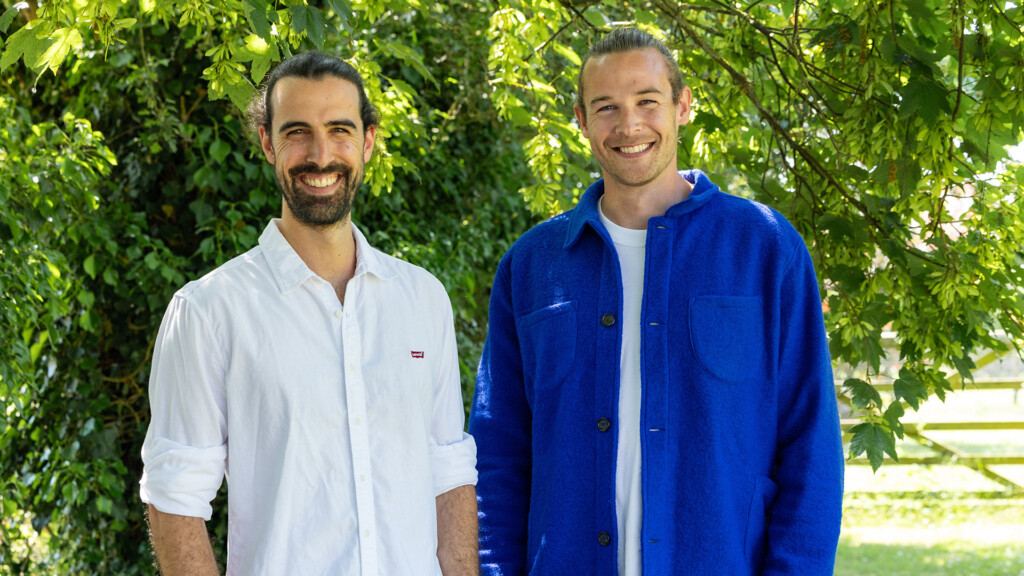
“Microsensors were long treated as a future promise. Powerful in theory but unproven in practice. That phase is now over,” said Renato Circi, the firm’s co-founder and co-CEO. He noted that the focus has now shifted from proving the possibility of the technology to scaling its application. Fellow co-founder Rafaël Michali added that with the glucose foundation in place, the company can now expand into new analytes to unlock entirely new medical applications.
RFiD Discovery launches GPS tracking for infusion pumps
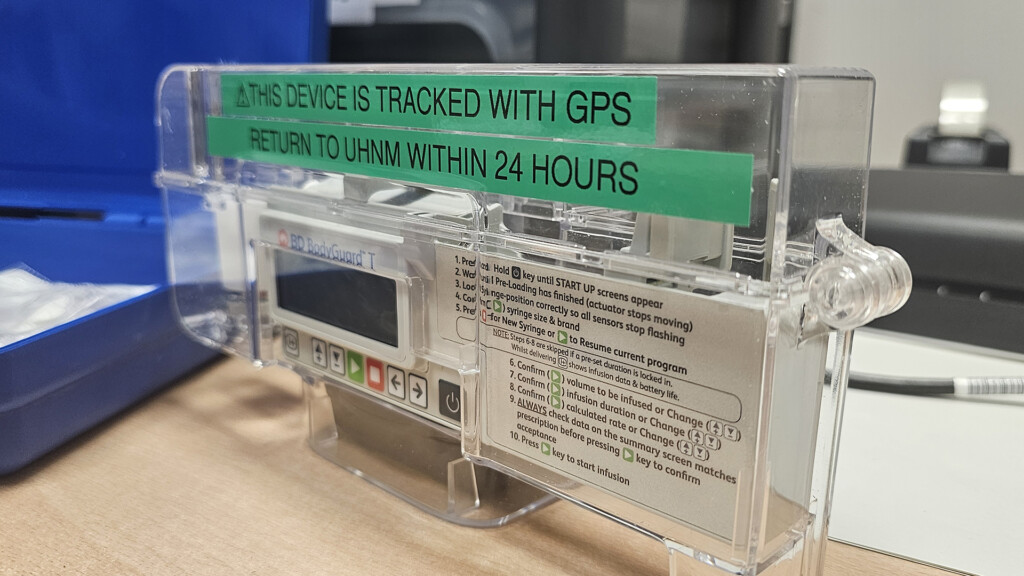
RFiD Discovery has launched a GPS and Wifi-enabled tracking system specifically for its BodyGuard T infusion pumps to prevent equipment loss in both hospital and community settings. Designed for palliative and end-of-life care pathways, the solution allows clinical teams to maintain visibility of devices once they leave hospital estates. This addresses a long-standing challenge where providers often lose track of equipment sent home with patients, leading to shortages and delayed discharges.
The technology has already been deployed at University Hospitals of North Midlands NHS Trust (UHNM), where it has entirely eliminated syringe pump losses. Previously, the Trust had lost 40 pumps within nine months, with each device costing approximately £2,500 to replace. By integrating advanced GPS tracking tags into medical-grade lockboxes, the Trust has recovered devices previously thought lost and avoided more than £100,000 in replacement costs, allowing the system to pay for itself within weeks.
Beyond financial savings, the real-time mapping and automated geo-fencing alerts have improved patient flow by ensuring equipment is available for new admissions. The shock-resistant and waterproof tags integrated into the existing RFiD Discovery platform do not disrupt clinical workflows, as they remain compatible with standard manufacturer locking barrels. This stability allows engineering and nursing teams to focus on direct patient care rather than administrative equipment recovery.
“Pumps going missing once in the community is a persistent frustration for many hospitals,” said the firm’s general manager Arron Duddin. He added that providing real-time visibility without changing how teams work helps protect vital equipment and support better care.

Affidea begins construction on flagship medical centre at Wimbledon Quarter
Construction has started at Affidea’s flagship medical centre at Wimbledon Quarter, marked by a ribbon-cutting ceremony attended by project partners and the Irish ambassador to the UK. The 30,000 square foot facility is set to be the first private clinic located within a UK retail destination, representing a move towards accessible, community-based healthcare.
Opening later this year, the centre will offer a range of services including private GP care, a minor injuries unit, advanced diagnostic imaging, and specialist outpatient treatments. The facility will also house state-of-the-art surgical suites, all designed within a modern, single-level environment. This model aims to bring high-quality healthcare under one roof, enhancing convenience for the local community.
The project is a collaboration between Affidea and the Elliott Group, aiming to shift healthcare delivery away from large, centralised hospital settings. By integrating medical services into a retail hub, the initiative seeks to reduce the stress and travel time often associated with traditional hospital visits. The development is expected to redefine how patients access professional care by making it a seamless part of their everyday lives.
“This new Affidea clinic in Wimbledon represents a clear departure from the traditional model,” said Barry Downes, chief executive of Affidea UK and Ireland. He added that the goal is to deliver professional care closer to where people live, work, and shop, ensuring that visiting a doctor feels more like a supported, local experience.
Signature Clinic and CES Medical form clinical partnership in Kent
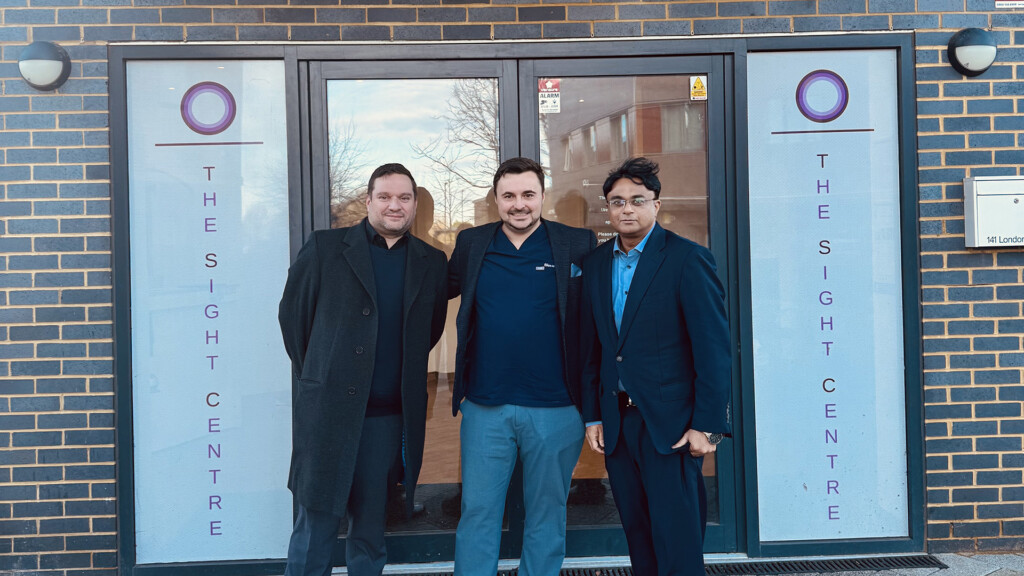
Signature Clinic, the UK’s largest provider of cosmetic surgery by volume, has signed a strategic clinical partnership with CES Medical. Under the new agreement, patients in the South East will be able to undergo cosmetic surgery at CES Medical’s Tunbridge Wells facility. The collaboration allows Signature Clinic to expand its geographic reach while using CES Medical’s established clinical governance framework for surgical delivery.
The partnership coincides with the appointment of Theogren Balakrishnan as principal surgeon at the Tunbridge Wells site, where he will lead local cosmetic surgical services. Beyond the immediate surgical provision, the two organisations intend to facilitate referral opportunities across multiple UK regions. Signature Clinic focuses on day-case procedures under local anaesthetic, which are designed to be less invasive with faster recovery times for patients.
CES Medical, an emerging ophthalmology provider with a growing footprint across the South East, aims to broaden the range of specialist services available at its Kent base through this collaboration. Both providers are also actively exploring further partnerships with ophthalmology practices across the UK as part of a wider national expansion strategy. This approach focuses on working with high-quality clinical providers to maintain consistent standards of care at scale.
“This partnership reflects our strategy of working with high-quality clinical providers to expand access to cosmetic surgery while maintaining consistent standards of care,” said Signature Clinic’s chief executive Sayani Sainudeen.
Care Safe’s Telford office receives ‘Good’ rating from CQC
Care Safe, a tech-enabled provider focused on home-based healthcare, has seen its Telford office rated as ‘Good’ by the Care Quality Commission (CQC). The office, which opened in April last year, provides domiciliary and personal care to local patients across Telford, Wolverhampton and Welshpool, as well as the wider Shropshire and North Wales regions. This is the first of Care Safe’s four locations – including London, Essex and Port Talbot – to be recognised by the independent regulator, with further ratings for other branches currently in the pipeline.
The company is part of the Health Tech Services Group (HTSG), which integrates advanced technologies such as artificial intelligence and facial recognition into its safeguarding and care solutions. Beyond its core clinical delivery, Care Safe operates on the TACIT principles (technology, administrative, consultancy, infrastructure and training) and offers in-house CPD training to upskill its staff. This focus on training ensures that healthcare teams remain proficient in the latest medical advancements and regulatory compliance standards.
“We are delighted to receive this CQC rating. It’s a tremendous endorsement for our private clients who already use us or those who are thinking about using us,” said Samit Kumar Biswas, chief executive and founder of Care Safe.