Add us as a preferred source
Representing the Basel Area Life Sciences Supercluster, Kirsten Detrick argues that US biotech firms must abandon commercial misconceptions and embrace cross-functional collaboration.
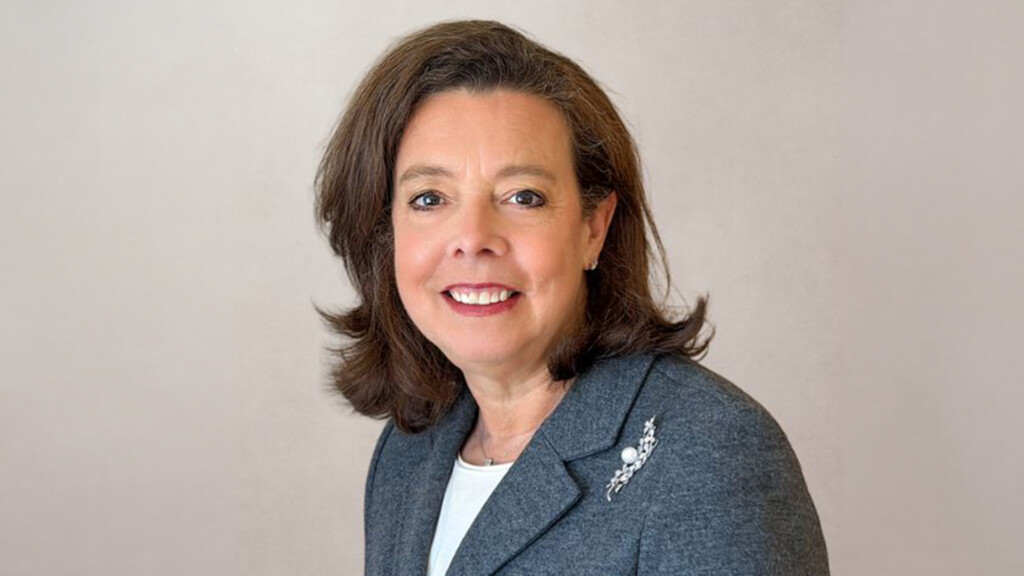
For Kirsten Detrick, adjunct professor of business administration at Tuck and Basel Area Life Sciences Supercluster representative in the US, successfully launching a breakthrough therapy in Europe is no longer a simple matter of clearing regulatory hurdles. It demands a fundamental strategic evolution, moving away from isolated functional silos and towards an integrated geographic ecosystem where commercial, pricing and manufacturing teams collaborate from day one.
Drawing on her extensive experience as a senior biotech executive and leading programmes across multiple therapeutic areas, she talks to Healthcare Today about the strategic importance of building a centralised European presence, why density of human capital makes Basel a unique scientific powerhouse, and why the transatlantic flow of ideas remains an essential connective tissue for global innovation…
When a US biotech decides to expand into Europe, what are the biggest misconceptions they bring with them?
There are a few misconceptions that come up time and again. The first is that expanding into Europe is either impossibly complex or simply not worth the effort. That often comes down to practical concerns – language, for instance. In reality, the language of business is English, so that is rarely the barrier they imagine it to be.
What is more relevant at the moment is the uncertainty created by recent decisions from the US federal government, particularly around so-called “most favoured nation” pricing. That has introduced a level of hesitation that simply wasn’t there four years ago. Companies are now asking whether entering European markets could have unintended consequences for their pricing strategies in the US.
As a result, I’m seeing two broad reactions. Some companies are pulling back entirely and deciding not to enter Europe at all. Others are proceeding cautiously, taking tentative, incremental steps. The companies that tend to be most successful are those that recognise this isn’t something to approach half-heartedly. It requires a clear strategy.
One of the biggest shifts is around commercial strategy. What used to be a relatively straightforward decision for a younger biotech – to partner out an asset – has become more complicated. Increasingly, these companies are realising they want to retain global pricing power. But that means launching products themselves, and that in turn requires a presence in Europe. For many, that’s a fundamental change in mindset – and one they hadn’t fully anticipated before.
“There’s a lid for every pot. That means we should be working, as an industry, to make every therapy available to patients wherever possible.”
At what stage should a biotech realistically start planning its European strategy: pre-clinical, Phase II or only post-approval?
The optimal time to start making these considerations hasn’t really changed: it’s still late Phase II, moving into early Phase III. The reason is that, while we often think of Europe as a single market, in reality it comprises many different reimbursement systems.
There may be a central regulatory pathway – through the European Medicines Agency, alongside separate frameworks in the UK and Switzerland – but reimbursement is far more fragmented. Each country has its own requirements, and that has important implications for how you design your clinical strategy.
Ideally, you need to start building those requirements into your clinical trials from the outset. It used to be enough to focus on securing regulatory approval and then assume everything else would follow. That is no longer the case. Approval is only one part of the equation; demonstrating value to multiple national payers is now just as critical.
European pricing and reimbursement systems are a hot topic. How much does that require US companies to rethink their strategies?
There’s a lid for every pot. That means we should be working, as an industry, to make every therapy available to patients wherever possible. That said, it doesn’t mean every therapy can be made available to everyone immediately.
What this translates into in practice is a shift in how organisations are thinking about expansion. Increasingly, they recognise the need to build out their executive teams and operational presence in Europe, to establish a central base from which they can engage across multiple markets. That also requires careful prioritisation – deciding where to launch first, how to sequence markets, and how best to allocate limited resources.
We’re seeing far less of the old model, where companies would partner out an asset, observe how that partner executed the launch, and only then attempt to commercialise subsequent assets themselves. More companies are recognising that, if they want to retain control and maximise value, they need to take that step from the outset – launching their first asset themselves rather than waiting for a second or third opportunity.

Do you see a growing divergence between what gets funded in the US versus Europe? Are we seeing a widening gap between scientifically exciting assets and commercially viable ones?
Since around 2023, capital markets have been undeniably tough. This year, however, there are early signs of renewed momentum. There’s a bit more energy in the market – perhaps not a return to the exuberance of the late 2010s and early 2020s, but a noticeable shift nonetheless.
What has changed is the level of discipline. A few years ago, there was greater willingness to back long-shot investments. That appetite has largely disappeared. Today, commercial viability is front and centre.
At the same time, there are still compelling success stories emerging. Companies like Parabola and Revolution Medicines – both of which have generated significant interest – highlight the continued potential for breakthrough therapies, particularly in areas such as oncology.
Overall, the market feels healthier. There is renewed enthusiasm, but it is more measured and rational than in previous cycles. That balance – between optimism and discipline – suggests the sector is moving back onto a more sustainable footing.
Can smaller biotech firms compete when large pharma dominates global market access capabilities?
I have the privilege of working with many of these smaller companies, and that is where you see real excitement.
Of course, that doesn’t necessarily mean they remain independent. Many of these organisations are focused on demonstrating proof of concept and then exiting in a way that allows a larger company – perhaps not big pharma, but a more established player – to take the asset forward and fully realise its potential.
There is significant space for these smaller players. Basel, for example, is often associated with Novartis and Roche, and rightly so – they provide the depth of expertise that anchors the ecosystem. But alongside them are hundreds of smaller biotech companies, nurtured within that environment. These organisations are driven by people who are deeply committed to advancing science and improving human health.
In Silicon Valley you’ve got lots of small companies all feeding off each other. Is that dynamic what makes Basel successful?
There is something else that really acts as the secret sauce for a successful commercial launch. I’ve launched or led programmes across multiple therapeutic areas, and in my experience the key determinant of success is cross-functional collaboration.
Where things go wrong is when drug development happens in silos. If a molecule is simply developed to secure regulatory approval and then handed over to commercial, market access, or pricing teams without proper coordination – or if manufacturing hasn’t been fully integrated into the process – then it rarely works as well as it should.
What makes Basel distinctive is that it brings all of those functions together in the same geographic area. It’s not just that marketing professionals are talking to other marketing professionals; they are also in regular contact with pricing and market access specialists, with the scientists who originally discovered or developed the drug, and with manufacturing teams who understand the practical challenges of producing it at scale.
That level of interaction creates a genuinely rich ecosystem where decisions are made collaboratively, rather than sequentially.
“Europe and the US are part of a connected tissue, especially when it comes to science.”
What can a US biotech get by establishing a presence in Basel that it wouldn’t get elsewhere in Europe?
There are a few factors that make Basel stand out. First is the sheer scale and concentration of talent. The human capital there is exceptional. You have around 33,000 people working across relevant life sciences functions in what is not a huge city. What matters is the density of expertise – people across the scientific and commercial spectrum all focused on the same industry.
That level of concentration is unusual. Basel is not a tourism hub like some other European locations with biotech activity, nor is it a financial centre in the sense that you would see large numbers of bankers based there. Instead, it is a true scientific powerhouse.
The second factor is quality of life. It is simply a very good place to live. And while people often assume Switzerland is prohibitively expensive, I don’t see it that way. There is strong value in what you get, both personally and professionally. From a corporate perspective, the tax environment in Basel is also highly competitive.
Finally, it is an extremely well-connected location. You can get anywhere in Europe easily by plane, train or car. And if people don’t want to live in Basel itself, they can live just across the border in France or Germany and still commute in daily. It offers a rare combination: a high-quality place to live and a highly effective place to do science and business.
There has been some tension recently, but how do you see the relationship between the US and Europe evolving over the next five years?
Europe and the US are part of a connected tissue, especially when it comes to science. In biotech in particular, intellectual progress depends on the flow of ideas and on people connecting across borders. It doesn’t thrive in an environment where exchange is restricted or where only a narrow set of voices are considered relevant.
Of course, things ebb and flow, and politics can have an impact on specific areas, but at the level of science, progress moves at the speed of talent and human collaboration. That doesn’t fundamentally change with political cycles.
While the context may shift, the core drivers of innovation – collaboration, conversation, and the free exchange of ideas – continue to hold.