
Although the Care Quality Commission has upgraded maternity services at the hospital run by University Hospitals Sussex NHS Foundation Trust, there isn’t much to celebrate.
Improvements to maternity care are being seen in hospitals across the UK, but movement is still slow and, for many, still not fast enough.
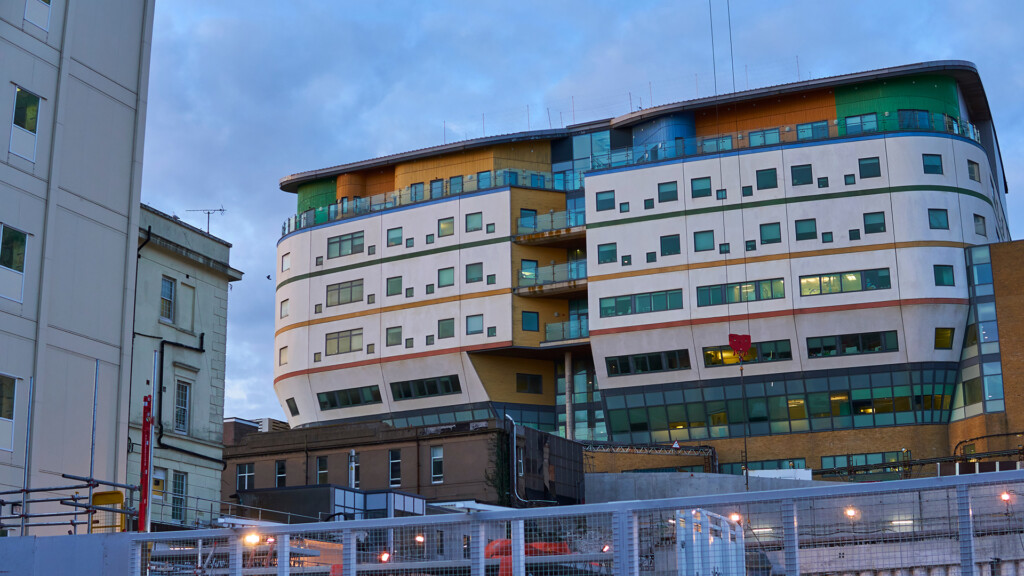
The Care Quality Commission (CQC) has upgraded the maternity service rating at Royal Sussex County Hospital, run by University Hospitals Sussex NHS Foundation Trust, from inadequate to requires improvement, but has told the trust that more work is needed to ensure maternity services are fully effective in meeting the needs of women and babies.
But the small print shows that there is a great deal of work still to do.
Inspectors found five breaches of regulation. These related to the induction of labour and caesarean section delays, safeguarding, medicines management, the premises at Sussex House and how well the department was being managed.
“The design and environment of the maternity unit didn’t fully meet the needs of women, people using the service and their babies,” said Amanda Williams, CQC deputy director of hospitals, secondary and specialist care in Sussex, who pointed out that there was still only one dedicated obstetric theatre, which impacted the flow of the department.
The trust ran a pilot in July 2024 to introduce a second theatre permanently. Even though the pilot had been successful and well-received, no permanent solution had been put in place.
Suzanne White, head of medical negligence at law firm Leigh Day and who recently settled a case against the Trust, said that she remained “deeply concerned” about maternity care at Royal Sussex County Hospital.
“In our cases, both here and more widely, we have seen a culture where mothers and their babies are treated with a lack of empathy. Too often, mothers’ voices are ignored, and their concerns are dismissed,” she said.
Message not getting through
The picture at Royal Sussex County Hospital is one that is reflected across the country.
Although the interim report from Valerie Amos, Baroness Amos – her initial thoughts into the inquiry – made for reading that was shocking, even for those inured to the poor state of maternity care across the country, as Healthcare Today has reported, the message is beginning to get through.
Last year’s Care Quality Commission (CQC) maternity survey gives some indication of progress and the NHS is clearly paying attention too. At the beginning of December, it rolled out a new safety signal system across maternity services. And one shouldn’t forget that individual Trusts are taking the issue into their own hands and making improvements at a local level.
But the problem remains that the message is not getting through quickly enough. The issues that the CQC highlighted as requiring improvement at Royal Sussex County Hospital are not those of education or technology, rather they are the basics.
The CQC said that leaders at the hospital needed “to address the delays women scheduled for elective caesarean sections and induction of labour faced”. Some of the delays were up to three days. Given that women using the service were asked to be nil by mouth from 0600 on the day of surgery, their discomfort when delays occurred was significant.
The department did not routinely undertake or embed audits and had no audit schedule. For example, sepsis cases were not audited, so data on case numbers or actions taken were unavailable. Leaders didn’t provide staff with up-to-date guidance aligned with legislation and evidence-based best practice. The Trust did not use benchmarking performance effectively to ensure consistent, positive outcomes.
Until these are addressed, improvements are going to be slow.