Add us as a preferred source
A wave of new clinics, service expansions and clinical breakthroughs from robotic and augmented reality surgery to AI-enabled platforms and incision-free procedures.
Cedars-Sinai launches London clinic
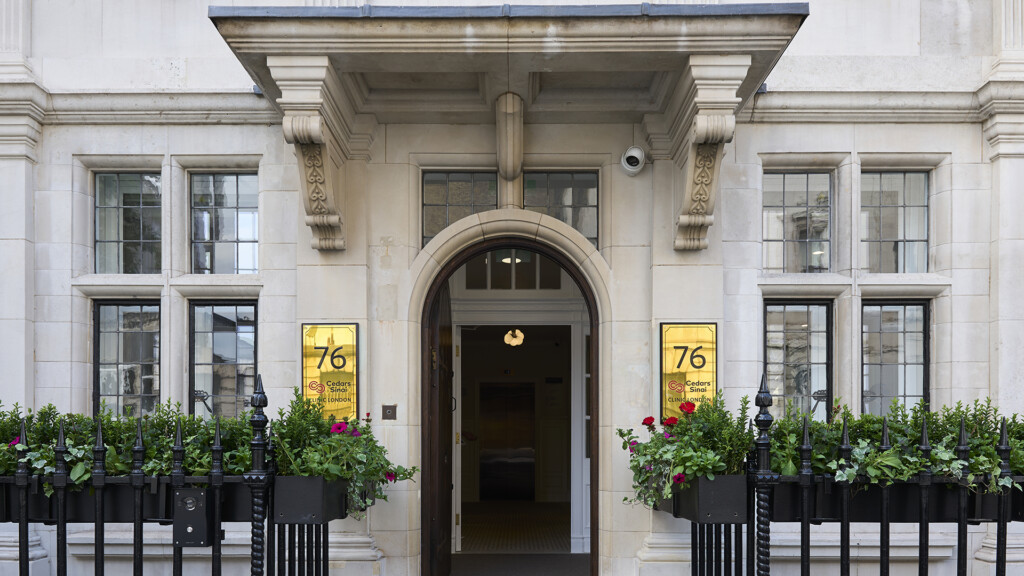
Cedars-Sinai has opened Cedars-Sinai Clinic London, its first flagship outpatient clinic outside the US. The new clinic in London’s Harley Street Health District will serve as a regional hub for patients in the UK and for global travellers, including those from the US. Spanning four floors, the new facility will provide primary care, executive health and concierge medicine. It also establishes an important international bridge to coordinate care between healthcare systems in the UK and Cedars-Sinai in Los Angeles.
To support the expansion, Cedars-Sinai has created 11 new clinical and operational roles, a figure that is expected to double when the clinic reaches full operational mode.
The space features a modern, calming reception area, four private exam rooms for in-depth consultations, and an exclusive lounge for patients and caregivers. Patients will also have access to on-site diagnostic services, including DEXA, ultrasound, and ECHO machines, alongside advanced imaging and testing.
The institution entered the UK market in March last year through a strategic collaboration with Guy’s and St Thomas’ NHS Foundation Trust, establishing a smaller, two-exam-room presence within the Royal Brompton & Harefield Specialist Care building.
Commenting on the new flagship, Mark Kildea, chief executive of the Howard de Walden Estate – landlord and long-term steward of the Harley Street Health District – said that the opening reflects a growing demand from leading international providers to establish a presence in the area, helping to advance a shared vision for an integrated, globally connected centre for healthcare innovation.
Read our recent interview with Cedars-Sinai International chief executive Heitham Hassoun here.

Bupa expands London footprint
Bupa has launched two facilities in London as part of its ongoing investment in private medical provision across the capital. The healthcare provider has opened a mental health centre at Broadgate Central to support workplace wellbeing and meet rising employee demand, alongside a separate 20,000 square foot outpatient, diagnostic and dental hub at 50 Bank Street in Canary Wharf.
The twin expansions follow Bupa’s wider clinical investment strategy in London, which recently included the acquisition of New Victoria Hospital and King Edward VII’s Hospital, alongside the expansion of Cromwell Hospital, to establish an integrated hub of medical services.
The Mindplace Broadgate facility is the first capital location in Bupa’s commitment to establish 70 mental health centres across the UK by 2027, with 20 sites now fully operational. The purpose-built centre operates seven days a week and is designed to care for more than 400 patients weekly through face-to-face talking therapies, including counselling, cognitive behavioural therapy (CBT), psychology and psychotherapy.
Meanwhile, the recently opened Bupa Health Care Canary Wharf centre integrates primary care, secondary specialist services and dental care under one roof for the 130,000 professionals and 150,000 residents in the local area.
The facility features on-site diagnostics – including MRI and CT scanners, X-ray machines and mammograms – enabling patients to move from an initial appointment to diagnostic testing and treatment within a day. Bupa has also relocated its Canary Wharf Dental Care practice into the 50 Bank Street site, allowing dental teams to coordinate directly with clinical specialists for rapid referrals when oral symptoms indicate wider systemic health concerns.
“There is an increasing need for mental health support across the UK and fast access to services has never been more important; early interventions improve outcomes,” said Sarah Melia, general manager for Bupa Health Services. Commenting on the integrated Canary Wharf launch, Mark Allan, general manager for Bupa Dental Care, added: “Early intervention changes health outcomes, so locating dental teams alongside clinical specialists enables faster treatment pathways where early concerns are identified.”

HCA Healthcare UK expands network with new fertility satellite clinic
HCA Healthcare UK has expanded its fertility services and has opened a new satellite clinic at its Canary Wharf Outpatients Centre.
Feeding directly into the Lister Fertility Clinic based in Chelsea, the Lister Fertility Clinic at Canary Wharf Outpatients offers those living and working in London’s central business district a new location for fertility care. Opened in 2024, the £18 million, 20,000 square foot Canary Wharf Outpatients Centre offers diagnostics and a range of specialities, from GP appointments and health screening to cancer, cardiac, orthopaedic, and women’s health services.
Patients who require further complex treatment will be referred to the main Lister Fertility Clinic in Chelsea, where procedures such as egg collection and embryo transfer are carried out.
The new centre will also offer HCA UK’s Fit for Fertility health screening, which provides a range of reproductive tests and consultations.
The Canary Wharf site joins HCA UK’s growing network of fertility satellite clinics – including locations at The Shard Outpatients, The Beaconsfield Clinic and The Portland Hospital.
“This development forms part of a wider programme of growth across HCA UK, with new openings already announced. It reflects HCA UK’s confidence in the future and commitment to meeting rising demand and strengthening the breadth of services available across our network,” said John Reay, president and chief executive of HCA Healthcare UK.
Cromwell Hospital performs European-first heart procedure
London’s Cromwell Hospital has performed a European and UK first in cardiac surgery after using new technology to treat various abnormal heart rhythms. Riyaz Kaba, leading consultant cardiologist at the hospital, became the first consultant across Europe to use a novel pulsed field ablation catheter to treat patients.
Six patients have already received the treatment within the hospital’s newly opened Cath Lab.
Unlike traditional methods, the technology uses non-thermal energy to create precise lesions to the heart without impacting surrounding tissues. Traditional thermal ablation – which relies on either heat (radiofrequency) or cold (cryo) – carries risks of causing unintended damage to adjacent structures, such as the oesophagus or nerves. This non-thermal approach offers improved safety, higher success rates with zero recurrence in treating atrial flutter, and supports a much faster recovery time for patients.
The system also enables shorter procedure times by allowing clinicians to make rapid, consistent and predictable lacerations. Following just one treatment and subsequent clinical follow-up, all six initial patients have remained fully clear of their abnormal heart conditions.
“This marks an incredible advancement in the treatment of heart abnormalities,” said Kaba. “As we continue to see more varieties of heart conditions, this technology enables us to act with efficiency and precision that benefits our patients massively”.
HCA Healthcare UK completes single-anaesthetic robotic lung surgery
HCA Healthcare UK’s London Bridge Hospital has completed a first-of-its-kind combined lung procedure in UK private healthcare, integrating robotic navigational bronchoscopy using the Ion Endoluminal System, followed immediately by a robotic lung resection using a Da Vinci Xi robot under a single anaesthetic.
The approach was used to treat a patient diagnosed with two cancerous lung nodules, one of which was non-solid and traditionally hard to locate. The robotic-assisted Ion system was used to mark the small nodule with sub-millimetre precision, allowing Andrea Bille, consultant thoracic surgeon at London Bridge Hospital, to perform an immediate, tissue-sparing surgical resection. By undergoing a single anaesthetic rather than staged procedures, the physical burden on the patient was significantly reduced, while the precision of the technology ensured maximum preservation of healthy lung tissue and long-term respiratory function.
“Combining robotic bronchoscopy with robotic surgery allows us to treat very small lung nodules with exceptional accuracy while preserving as much healthy lung as possible,” said Bille. “Not only does this benefit the patient, but for insurers and corporate health partners, a single, integrated pathway can also mean faster diagnosis and treatment, quicker recovery, and fewer procedures – helping reduce the overall cost of care.”
Spire Healthcare completes revision knee replacement
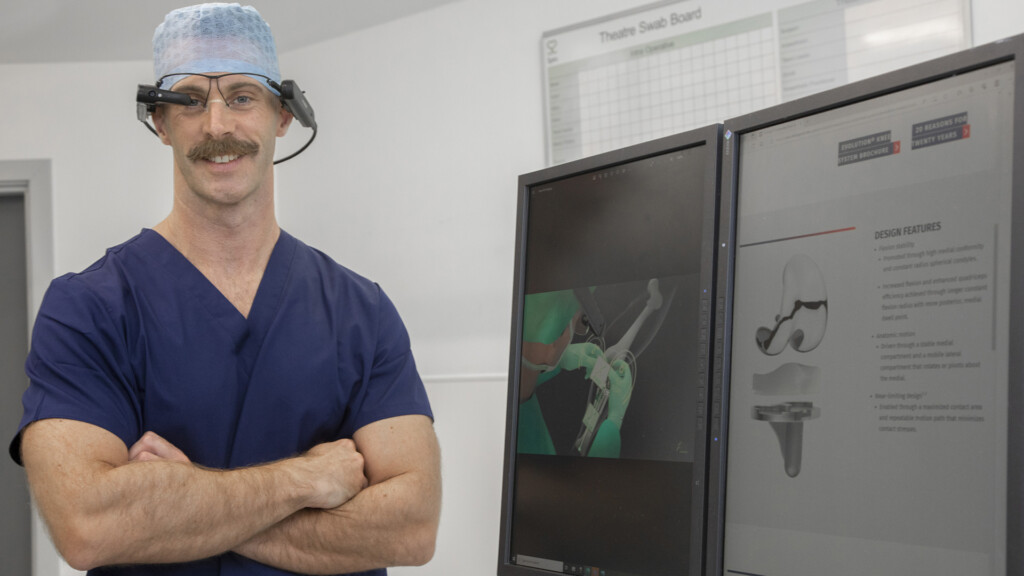
Spire Murrayfield Hospital, Wirral, has completed a revision of a partial to total knee replacement surgery using augmented reality (AR) technology. While AR systems have seen growing adoption internationally, this is the first time that the technology has been used for a complex revision procedure in the UK.
Consultant hip and knee surgeon, Alan Highcock, performed the operation using Pixee Knee+ AR technology and MicroPort systems, wearing smart glasses that projected real-time alignment data directly onto intact anatomical landmarks to ensure highly precise implant positioning.
Revision knee replacements are inherently demanding, particularly when dealing with altered anatomy or pre-existing implants, making real-time intraoperative guidance invaluable. Unlike traditional computer-assisted or robotic options that necessitate heavy hardware, extra imaging, or invasive reference points, Pixee provides advanced visualisation without expanding the surgical footprint. Incorporating this digital guidance into complex operations has the potential to elevate surgical accuracy, support personalised decision-making, and improve patient recovery in highly challenging revision cases.
“Revision knee replacement surgery is among the most complex procedures we perform, and precision is critical,” said Highcock. “Being able to use augmented reality technology on intact anatomical landmarks, in real time, allows us to visualise alignment and positioning with an added level of accuracy”.
Centre for Sight performs incision-free laser operation to treat glaucoma
Centre for Sight has become the first clinic in the world to perform an incision-free laser glaucoma procedure that takes just five minutes. The operation, known as FLIGHT, uses the ViaLuxe Laser System to deliver an image-guided femtosecond laser treatment for patients with open-angle glaucoma.
The initial UK procedure was completed at Centre for Sight’s London clinic by founder and medical director Sheraz Daya, on a 25-year-old patient.
Unlike conventional surgery, which requires an incision in the eye and must be conducted within an operating theatre, this non-invasive approach can be delivered in an outpatient clinic setting. The platform uses high-resolution OCT imaging alongside micron-level laser precision to create tiny channels through the eye’s drainage tissue. This restores natural fluid outflow and reduces intraocular pressure without needing a blade or opening the eye. Because lowering intraocular pressure remains the only proven treatment to reduce visual field progression, this ultra-precise visualisation and procedural accuracy is a shift toward safer, earlier interventions.
“Our purpose is to provide innovative treatments that transform lives. Glaucoma can be devastating because sight loss is irreversible, so futuristic inventions that may allow us to intervene earlier, more precisely and with less impact on the patient experience are hugely important,” said Daya.
Countess of Chester Hospital reshapes workforce planning to support sustainable care
The Countess of Chester Hospital NHS Foundation Trust has completed a comprehensive medical workforce planning programme designed to improve operational capacity and service delivery.
Together with workforce optimisation specialists SARD, the data-driven initiative has unlocked trust-wide clarity regarding clinical capacity and demand.
Spanning an eight-month period, the collaborative exercise enabled the trust to finalise 285 detailed consultant job plans, providing a clear overview of available clinical capacity and allowing teams to model demand across 18 core services. The project has engaged the entire clinical workforce in the job planning process, generating critical insights to inform targeted service re-designs and the strategic reassignment of existing resources. The trust can now identify and address capacity gaps within under-resourced specialities while rebalancing resources in other areas.
Key milestones achieved throughout the project included a diagnostics review of pre-existing job plans, data, and legacy processes alongside the creation of a revised, standardised job planning policy. The initiative also saw the roll-out of SARD’s e-job planning platform, the implementation of unified job planning language across the trust, and the establishment of a multi-stakeholder consistency panel. To ensure clinicians were fully engaged and supported, the trust conducted more than 120 one-to-one sessions and dedicated speciality workshops. The successful completion of the framework positions the Countess of Chester potentially to reach level three of the medical job planning attainment levels set by NHS England.
“By piecing job planning information together to create a full picture of capacity and demand, we can ensure resources are sufficiently balanced and distributed across clinical areas to support safer and more effective care,” said Nigel Scawn, medical director at the Trust.
Derbyshire Healthcare NHS Foundation Trust introduces new mental health platform
Derbyshire Healthcare NHS Foundation Trust has partnered with digital mental health company Psyomics to introduce a new digital platform designed to improve access, reduce clinical pressure, and integrate with the trust’s clinical systems.
The trust has procured Psyomics’ beseen adult platform to support clinical and administrative efficiency within its Community Mental Health Teams (CMHTs). The implementation forms a part of the trust’s wider CMHT transformation programme, which aims to improve overall system flow, strengthen patient involvement in the early stages of care, and enable clinicians to spend more time supporting patients.
Developed in collaboration with clinical psychologists, psychiatrists, and researchers at the University of Cambridge, the system captures detailed patient-reported information – including clinical symptoms alongside specific social and personal circumstances. By gathering these data points before the first appointment, the platform provides clinicians with an upfront understanding of each individual’s needs.
The beseen platform reduces administrative workloads and directly supports NHS England’s core metrics regarding clinical productivity. Routine, manual tasks – such as sending out validated measures in the post, scoring individual responses, and uploading the data – are automated and transferred straight into the electronic medical record. This automated data is then presented alongside other accessible information to support clinical formulation.
The Christie NHS Foundation Trust partners with Wolters Kluwer Health
The Christie NHS Foundation Trust has partnered with Wolters Kluwer Health to roll out its medication decision support (MDS) software. The implementation marks the first time the platform has been deployed within the NHS.
As the largest single-site cancer centre in Europe, the Manchester-based specialist oncology facility serves a local population of 3.2 million people across Greater Manchester and Cheshire, while managing national referrals for more than a quarter of its patients. Treating over 60,000 individuals annually, The Christie was the first facility in the UK to receive accreditation as a comprehensive cancer centre.
The integration of the platform provides clinicians across all inpatient wards with targeted screening and personalised alerts tailored to each patient’s unique clinical context. By cross-referencing information from individual patient profiles against data compiled from current medical and pharmaceutical literature, the solution helps clinical teams flag potential adverse drug effects and contraindications. These actionable insights are delivered via clinical APIs embedded into the Better Meds electronic prescribing and medicines administration (ePMA) software, which integrates directly with The Christie’s overarching electronic patient record (EPR) system.
“By embedding allergy and medicine-related information directly into the patient record, clinicians gain clear, actionable insights at the point of care,” said Hani Hanna, specialist clinical pharmacist – ePrescribing at The Christie NHS Foundation Trust.