Add us as a preferred source
The chief executive of Nuffield Health says that the only bar to working more closely with the NHS is funding.
In his first interview since becoming chief executive of Nuffield Health in September last year, Alex Perry spoke to Healthcare Today about why Britain’s largest not-for-profit independent hospital provider has been focusing on diagnostics, why human oversight remains essential for artificial intelligence (AI) and what it is like to work with the NHS.
Diagnostics has become one of the NHS’s biggest bottlenecks. What does Nuffield bring to solving that challenge – speed, innovation, geography, or capacity?
The diagnostic backlog in the NHS is fundamentally a problem of capacity. There is substantial untapped capacity in the independent sector that could be mobilised to help address it – indeed, likely more than enough to clear the backlog altogether. The challenge lies in unlocking the necessary funding and demonstrating the will to make this happen. Across several diagnostic modalities, that capacity clearly exists within the independent sector.
As demand surges, how do you avoid diagnostics becoming transactional – tests without meaningful follow-up care?
Appropriate follow-up and oversight are essential to ensure diagnostic results are properly interpreted and acted upon, whether that responsibility sits with a GP or a specialist. However, this is not generally the main issue when it comes to people’s ability to access diagnostic tests.
AI-supported diagnostics promise faster results. Where does AI fit into imaging and pathology today?
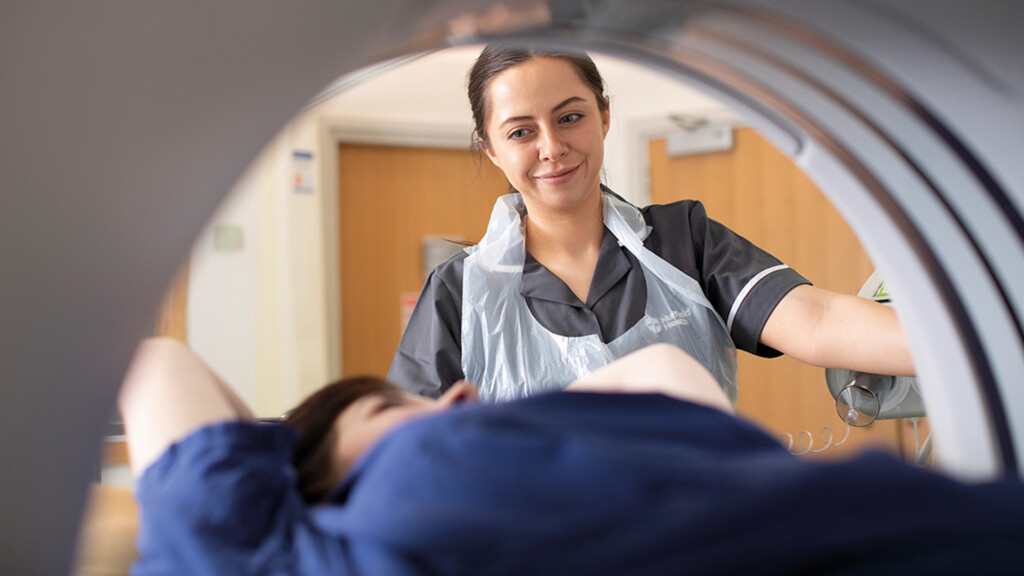
Predictions that artificial intelligence would make radiologists redundant within a decade have not materialised; in fact, more radiologists are now employed in the UK and the US than ever before. The reasons are complex, but AI is primarily augmenting rather than replacing clinical expertise. It is helping radiologists work more efficiently through support with report writing and administrative tasks, improving image quality to make interpretation easier, and, in some cases, shortening scanning times. There are also documented examples of AI identifying specific pathologies on scans. The technology has not, however, reached a point where it can operate independently. Human oversight remains essential, particularly because scans often reveal incidental findings that a model trained to detect a single condition may miss. For these reasons, radiologists are unlikely to be displaced in the near future; instead, AI is increasingly enabling them to do their jobs more efficiently and supporting, rather than supplanting, clinical interpretation of scans.
Security and data are frequently cited as the new risk with AI. Has that problem been overblown?
There is certainly a risk, but it sits alongside other equally significant concerns. These include the possibility of models hallucinating or misinterpreting information, as well as issues around data security. Such risks are not unique to artificial intelligence, but they do need to be carefully managed, and they are not the only challenges to consider.
“The independent sector is keen to support the NHS and to play its part in tackling the substantial treatment backlog.”
The government’s plans to work with the private sector earlier this year were a significant change of tone. Where do you see the opportunities for the private and public sectors to work more closely together?
The independent sector is keen to support the NHS and to play its part in tackling the substantial treatment backlog. It is important to remember that each person waiting represents a life affected by pain, disability or ongoing discomfort. There is ample capacity within the independent sector to do more, and many providers are eager to increase their contribution. The current obstacle is funding: resources are not in place to enable the independent sector to take on additional NHS work. As a result, it is not guaranteed that more treatment will be delivered through the independent sector this year than last. In some areas, integrated care boards are scaling back the use of independent providers because they cannot afford the costs, leaving patients facing longer waits for treatment. This is deeply regrettable, and the sector would welcome a reversal of this trend, standing ready to do more to support NHS patients.
Is this just a blip? Do you expect funding to be smoothed out?
I would love to believe it will be smoothed out in due course. It remains to be seen.
Are private healthcare providers prepared for a world where people expect immediate appointments, digital tracking, and personalised care pathways?
Expectations are increasingly shaped by on-demand services, with people looking for rapid access and immediate answers. We’ve all been trained by Amazon! Younger patients in particular are turning to independent healthcare for this reason. They want to be seen quickly at the time that suits them and get answers quickly, and which really is how healthcare should be. The independent sector still has work to do to improve accessibility and efficiency, but it already offers relatively fast appointments and a high standard of service. Patient satisfaction among those who use it is very high. There is always room for improvement, but overall, we’re not in a bad place.
Where is the demand for the private sector coming from? Is it via self-funded patients, or is there an uptake in private medical insurance (PMI)?
Private medical insurance has seen a significant uptick in subscriber numbers over the past few years, driven largely by the employer-paid market, with companies funding cover for their employees. This is expected to translate into higher treatment volumes over time, as policyholders gradually become more familiar with how to use their insurance and make claims.
By contrast, the self-pay market is closely influenced by local NHS performance. Where patients can access timely treatment free of charge, demand for self-pay tends to be lower; longer waits, however, push more people towards paying privately. Overall demand is holding up. While there was strong growth in self-pay immediately after the pandemic, this has since levelled off. More recently, there are signs of renewed growth in some areas, as patients lose confidence that waiting lists will be reduced decisively, but the market as a whole has been broadly flat for the past few years.

The growth of PMI has gone hand-in-hand with greater interest in prevention. Is that driving the growth of the market in preventative care?
The tenet that prevention is better than cure has long been accepted, but the Covid-19 pandemic marked a significant shift in attitudes. As people became more aware that underlying health conditions increased vulnerability, there was a growing recognition of the importance of maintaining good health. At the same time, employers placed health much higher on their agendas and began to think more seriously about how they support their workforce. This has led to greater investment in preventative services, such as on-site gyms, health assessments and similar initiatives that help people stay well. Interest in prevention remains strong and continues to grow.
We saw the figures earlier this year from NHS Resolution figures and the NAO figures that came up recently. How are you geared up to deal with clinical risk and clinical negligence liabilities?
All surgery carries an element of risk, and the priority is to do everything possible to ensure that treatment is successful and delivers the positive outcomes patients come to hospital expecting. That is the first and most important focus.
Secondly, while complications can occasionally arise, as they do in all healthcare settings, the key is being prepared to respond effectively. This means ensuring patients receive the best possible care and attention when something does go wrong, and that any incident is thoroughly investigated so lessons are learned and action is taken to reduce the likelihood of recurrence. The organisation has been an early adopter of the patient safety incident response framework, putting robust systems in place to ensure complications are handled appropriately and used as opportunities for learning and improvement.
We make sure that we when there is a complication that we respond to it and learn from it in the best possible way possible.