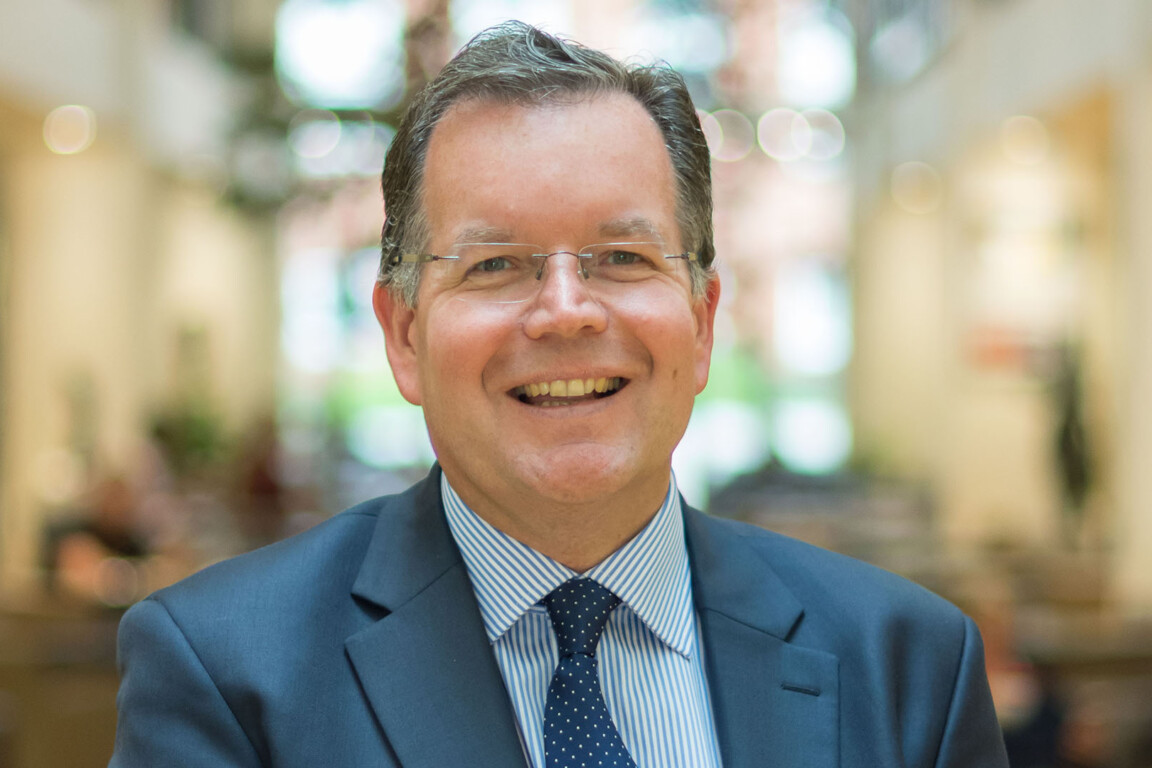
The chief executive of Circle Health discusses transitioning from the operating theatre to the boardroom and why the future of the sector must be medically led.
Since taking the helm of Circle Health in July last year, Paul Manning has moved quickly to implement a vision centred on clinical leadership.
A career physician who transitioned from chief medical officer to chief executive, Manning brings a practitioner’s perspective to a massive organisation that includes 54 clinical sites and a network of 6,500 doctors.
Here, he talks to Healthcare Today about drivers behind the surge in private medical insurance usage among younger demographics, the group’s evolving relationship with the NHS, and his plans to integrate high-acuity surgical care with new, digitally enabled preventative health platforms.
Circle saw an 18% jump in private medical insurance-funder treatment last year. What is behind this growth?
There has been significant growth in the total market size, which really kicked off during the COVID-19 pandemic because access to healthcare became so difficult.
With corporately funded health insurance, there is often an initial period where new entrants lack cover or eligibility – sometimes for as long as 12 months – until the next rollover cycle. Since then, the number of lives covered has progressively increased. There is no doubt, however, that within that insured group, certain demographics are now using their insurance much more frequently than before. We have seen unprecedented growth in the 30-to-44-year-old age group using private medical insurance for primary care access; historically, we saw tiny volumes in that area, but it has now become a substantial part of the business. Naturally, this leads to further healthcare encounters, as a reasonable proportion of those initial consultations develop into referrals and onward treatment.
That is a key driver of the growth. Furthermore, there has been a notable rise in employee benefit trusts, with employers opting for these over traditional underwritten products to provide care for their staff. We are also seeing an increase in the use of the occupational health route, as companies strive to get people back to work more quickly, bypassing the inevitable delays currently found in some NHS facilities.
“Certain parts of the NHS are facing material difficulties in deciding how best to deliver elective recovery targets.”
The government appears very open to working with the private sector in a way that previous governments haven’t. How does Circle view its role in complementing NHS capacity?
It is important to recognise that we are a very long-established, key supplier of services to the NHS and I don’t see that changing.
Naturally, the nature of that interaction shifts slightly with different administrations or – dare I say – various reorganisations of the NHS, and we have had to remain adaptable. It is also a regionally engaged customer rather than a centrally engaged one, and there are vast variations between the regions. Our strength lies in flexing to work with the NHS where appropriate.
While the NHS represents a relatively small part of our overall business – probably two-thirds, of our work comes through the privately funded route – it remains an important component, and we are proud of the contribution we make to the NHS in its various forms.
We have moved through the initial surprise of working with the private sector. How do you see it evolving from now on?
We are living in interesting times. Because we are in a financially constrained climate, certain parts of the NHS are facing material difficulties in deciding how best to deliver elective recovery targets.
Clearly, there is a focus on high-priority clinical conditions. I believe these will always be treated in the most accessible and appropriate location – primarily within mainstream NHS hospitals or, where the independent sector can deliver to that standard, we will certainly do so, and we will do it quickly.
The difficulty regarding funding availability arises, perhaps, with routine elective care. Amidst financial constraints, there is an inevitable need to secure the best possible value for every pound spent, both within the NHS and the private sector. We are very much up for delivering that in the most cost-effective way possible. As an industry, and certainly as a company, we are absolutely committed to working within the tariff – or better, if we can – across all forms of care.

Circle absorbed BMI Healthcare in 2020 and was itself acquired by Abu Dhabi’s PureHealth in 2023. With rapid growth and ongoing integration how do you uphold clinical governance and consistent care standards?
Ultimately, that transformation is what I was put in place to deliver during my tenure as chief medical officer. We are a very large organisation, operating across 54 different clinical sites and a variety of back-office locations. We have assimilated not only BMI and Circle, but several new acquisitions as well – most recently, the Fairfield Independent Hospital near St Helens.
To manage this, we maintain a single clinical policy across the entire organisation. We have one Board Assurance Framework, one underlying Governance Assurance Framework, and a unified modus operandi regarding governance at every site. This is supported by a consistent cadence of governance and assurance meetings, strongly driven by a well-funded central clinical team as well as a medical team.
We have 6,500 doctors engaged with us across the organisation. They primarily operate under practising privileges, which are controlled locally by site registered managers and the medical team. Regarding our clinical staff, we have an industry-leading programme of continuous improvement. We have an in-house learning and development department and an association with Liverpool John Moores University for professional development and continuous review.
At the board level, governance and the assurance of quality are our top priorities; it is the first matter we consider at every single operating board meeting to ensure it receives the time it deserves. We also participate in a large number of voluntary external accreditations. The vast majority of our sites are JAG accredited, and we are the only private provider to hold AfPP accreditation at each and every site.
We don’t shy away from external or mandated benchmarks. We now have a great relationship with the CQC. In fact, all but three of our facilities across the entire organisation – including our equivalents in Scotland and Wales – are now rated ‘good’ or ‘outstanding’. The only three that aren’t, I should add, simply haven’t been inspected for a very long time.
The recent report from the Public Accounts Committee on the costs of clinical negligence was an unpleasant wake-up call. How is Circle geared up to deal with these liabilities?
We take a rigorous in-house approach to malpractice and medical negligence. Each and every initial instruction, potential notification and subsequent letter of claim is reviewed by a full panel that includes the clinical and medical teams, alongside our in-house legal experts. This allows us to identify litigation trends as they emerge, whether they relate to a specific facility or to broader clinical and medical practices. If we spot a pattern, we react to it immediately.
While there is undeniably a growing climate of litigation, it is also vital to use this data as part of our consultant insights programme.
This is a unique initiative which uses various digitally interactive data sources to monitor the performance and behaviour of all our medical practitioners. We take a similar approach with our nursing and clinical staff to drive continuous improvement and mitigate risk.
As a company, we are, of course, fully indemnified against these risks. Generally speaking, we maintain a relatively consistent rate of claims across the organisation; however, should we spot a specific concern or trend, we are all over it. Because the key clinical leaders are in the room working directly with the legal team, they are involved in every step of the pathway – right through to the decision to settle.
“The digital enablement of healthcare isn’t just about the patient pathway or consumer interaction; it is about the provision of care itself.”
Circle has invested significantly in technology, digital pathways and robotic surgery. Is technology investment now essential?
If you had asked me ten years ago, I would have said the appetite for change was far lower, but we are seeing a real shift now.
This is particularly evident regarding robotics – not just hard-tissue robots in orthopaedics, but soft-tissue robots in intra-abdominal and visceral surgery. Increasingly, doctors on postgraduate training programmes are using robotics in NHS hospitals. Since we only have these doctors for perhaps 5% or 10% of their working week – the vast majority of their time being spent in the NHS – what they do there fundamentally drives what they do in the private sector.
We are committed to facilitating the best technology for our doctors. As a company, we are already the largest centre for orthopaedic robotics for one of our key suppliers across Europe, the Middle East, and North Africa.
The digital enablement of healthcare isn’t just about the patient pathway or consumer interaction; it is about the provision of care itself. We want to be active in the low-acuity space, increasing our reach as people take more accountability for their health, but also at the high-acuity end. We are seeing significant investment in cardiology and oncology, particularly at sites with intensive care facilities.
The nature of private healthcare is changing. It is no longer just about standard hip and knee replacements in provincial private hospitals; it is now about acute cardiac, intra-abdominal, and thoracic care. We are seeing high demand for these services, not only from insurers but, interestingly, from self-pay customers as well.

Where do you see your priorities? Is it the acute care that you’ve just outlined or preventative car? What will drive the next phase of Circle’s growth?
It is essentially a twofold strategy.
On the one hand, we are deeply committed to extending the duration of our relationship with customers who wish to take accountability for their own health. You will see Circle Health roll out a digitally enabled interactive platform: a digital companion that allows patients to engage with a broad range of products, from primary care access and medical screening to sports-related care and chronic disease management. Ultimately, it will act as a friend to the patient as they transition into acute care, providing access to their diagnostics, their full medical record, and all clinical correspondence.
At the other end of the spectrum – the high-acuity end – there is significant frustration and, we believe, clear market demand. Wait times in the NHS for high-acuity surgery, such as a TAVI [transcatheter aortic valve implantation] in certain parts of the country, are now quite substantial. Consequently, we are seeing an ever-increasing drive toward high-acuity provision within our own facilities, particularly in the fields of cardiology and oncology.